


Persistent Pulmonary Hypertension of Newborns Secondary to Labile Hypoxemia Associated With Cyanosis: A Case Series
- PMID: 38476788
- PMCID: PMC10928461
- DOI: 10.7759/cureus.54016
Persistent Pulmonary Hypertension of Newborns Secondary to Labile Hypoxemia Associated With Cyanosis: A Case Series
Abstract
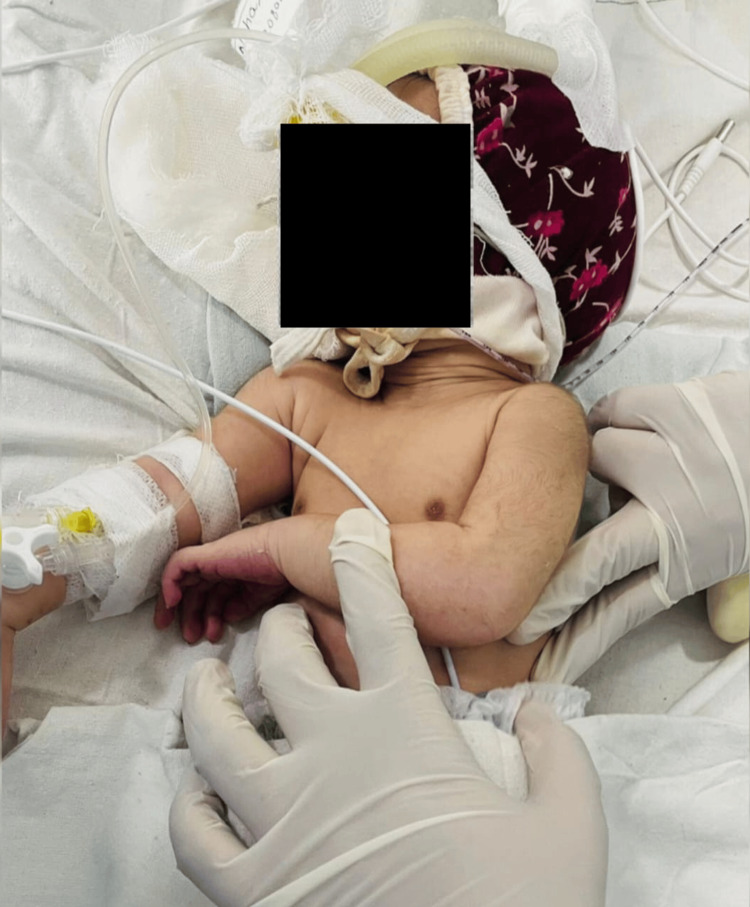
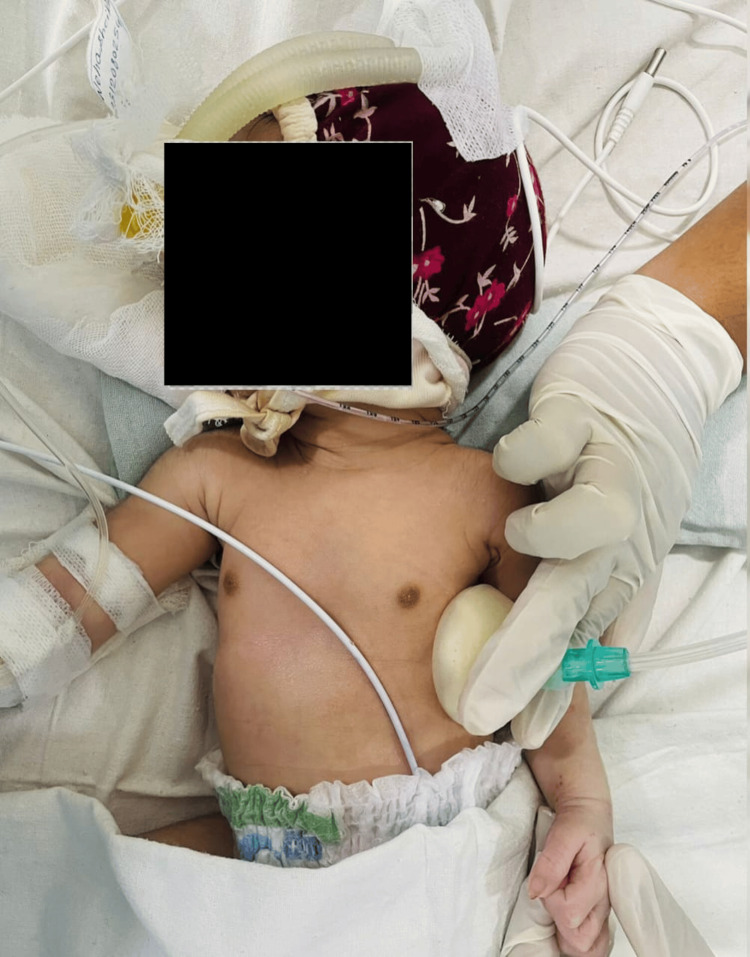
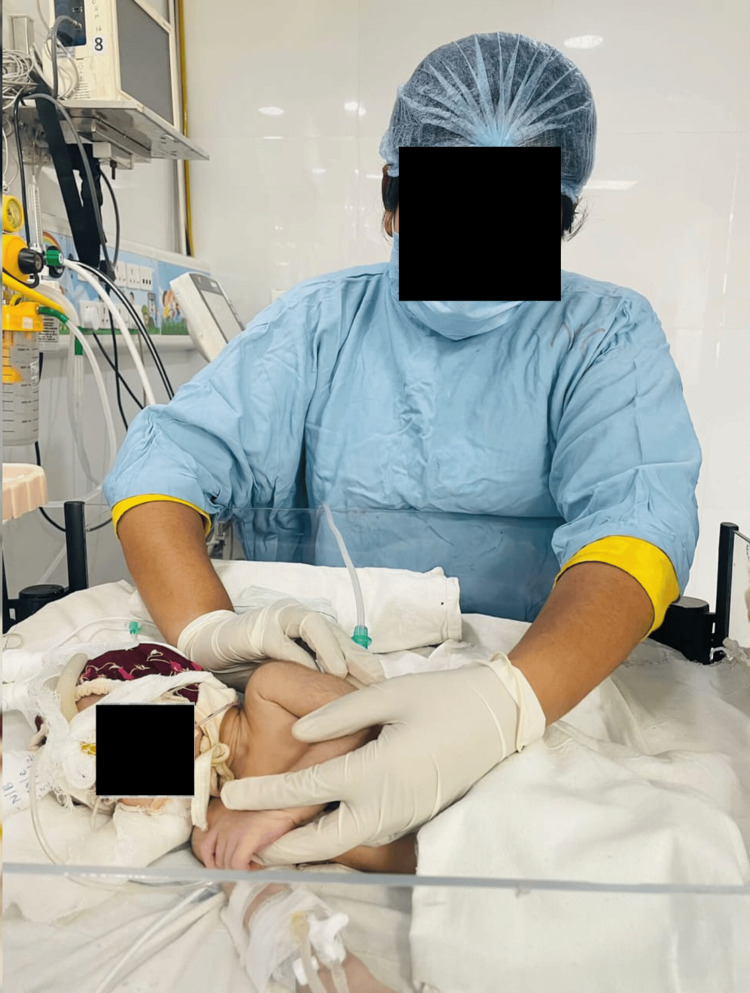
Persistent pulmonary hypertension of the newborn (PPHN) is a condition that can be fatal, marked by increased pulmonary vascular resistance that causes blood to shunt from the right to the left. Six infants that present with PPHN due to labile hypoxemia and related cyanosis are examined in this case series. Clinical manifestations, such as premature deliveries, maternal problems, and different reactions to early therapies, are revealed by perinatal and postnatal histories. The newborns' respiratory distress prompted the use of oxygen supplementation and continuous positive airway pressure (CPAP), but intubation was required due to continued hypoxemia. The series aims to establish a way for further study in this crucial area while offering insightful contributions to the clinical subtleties of PPHN and illustrating the importance of specific therapeutic approaches.
Keywords: bronchopulmonary dysplasia; chest physiotherapy; high-risk neonates; nrds; pphn.
Copyright © 2024, Bhagwat et al.
Conflict of interest statement
The authors have declared that no competing interests exist.
Figures
Similar articles
-
Persistent Pulmonary Hypertension of the Newborn.Neoreviews. 2015 Dec;16(12):e680-e692. doi: 10.1542/neo.16-12-e680. Neoreviews. 2015. PMID: 26783388 Free PMC article.
-
Asphyxia and Neonatal Respiratory Distress Syndrome Are Independent Predictors of the Non-response to Inhaled Nitric Oxide in the Newborns With PPHN.Front Pediatr. 2021 May 20;9:665830. doi: 10.3389/fped.2021.665830. eCollection 2021. Front Pediatr. 2021. PMID: 34095030 Free PMC article.
-
Case Report: Stüve-Wiedemann syndrome-a rare cause of persistent pulmonary hypertension of the newborn.Front Pediatr. 2024 Jan 4;11:1329404. doi: 10.3389/fped.2023.1329404. eCollection 2023. Front Pediatr. 2024. PMID: 38239591 Free PMC article.
-
Persistent Pulmonary Hypertension of the Newborn: Pathophysiological Mechanisms and Novel Therapeutic Approaches.Front Pediatr. 2020 Jul 24;8:342. doi: 10.3389/fped.2020.00342. eCollection 2020. Front Pediatr. 2020. PMID: 32850518 Free PMC article. Review.
-
Persistent pulmonary hypertension of the newborn.Semin Fetal Neonatal Med. 2017 Aug;22(4):220-226. doi: 10.1016/j.siny.2017.03.004. Epub 2017 Mar 23. Semin Fetal Neonatal Med. 2017. PMID: 28342684 Review.
Cited by
-
Current Pharmaceutical Strategies in the Management of Persistent Pulmonary Hypertension of the Newborn (PPHN): A Comprehensive Review of Therapeutic Agents.Cureus. 2024 Sep 27;16(9):e70307. doi: 10.7759/cureus.70307. eCollection 2024 Sep. Cureus. 2024. PMID: 39463604 Free PMC article. Review.
-
Effect of Paediatric Rehabilitation in Children With Guillain-Barré Syndrome: A Case Series.Cureus. 2024 May 7;16(5):e59815. doi: 10.7759/cureus.59815. eCollection 2024 May. Cureus. 2024. PMID: 38846247 Free PMC article.
-
Caesarean section and respiratory system disorders in newborns.Eur J Obstet Gynecol Reprod Biol X. 2024 Aug 10;23:100336. doi: 10.1016/j.eurox.2024.100336. eCollection 2024 Sep. Eur J Obstet Gynecol Reprod Biol X. 2024. PMID: 39253372 Free PMC article. Review.
References
-
- Persistent pulmonary hypertension of the newborn in the era before nitric oxide: practice variation and outcomes. Walsh-Sukys MC, Tyson JE, Wright LL, et al. Pediatrics. 2000;105:14–20. - PubMed
-
- Persistent pulmonary hypertension of the newborn with transposition of the great arteries. Roofthooft MT, Bergman KA, Waterbolk TW, Ebels T, Bartelds B, Berger RM. Ann Thorac Surg. 2007;83:1446–1450. - PubMed
-
- Inhaled nitric oxide in full-term and nearly full-term infants with hypoxic respiratory failure. Neonatal Inhaled Nitric Oxide Study Group. N Engl J Med. 1997;336:597–604. - PubMed
Publication types
LinkOut - more resources
Full Text Sources