


Atypical clinical variants of Alzheimer's disease: are they really atypical?
- PMID: 38482142
- PMCID: PMC10933030
- DOI: 10.3389/fnins.2024.1352822
Atypical clinical variants of Alzheimer's disease: are they really atypical?
Abstract
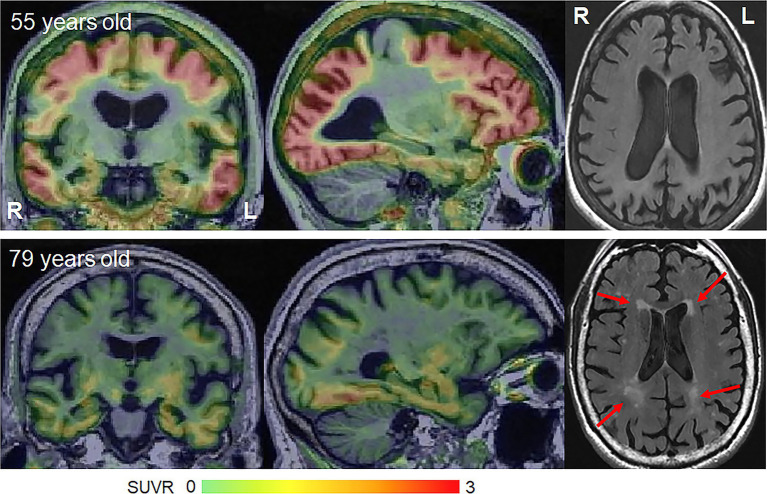
Alzheimer's disease (AD) is a neuropathological disorder defined by the deposition of the proteins, tau and β-amyloid. Alzheimer's disease is commonly thought of as a disease of the elderly that is associated with episodic memory loss. However, the very first patient described with AD was in her 50's with impairments in multiple cognitive domains. It is now clear that AD can present with multiple different non-amnestic clinical variants which have been labeled as atypical variants of AD. Instead of these variants of AD being considered "atypical," I propose that they provide an excellent disease model of AD and reflect the true clinical heterogeneity of AD. The atypical variants of AD usually have a relatively young age at onset, and they show striking cortical tau deposition on molecular PET imaging which relates strongly with patterns of neurodegeneration and clinical outcomes. In contrast, elderly patients with AD show less tau deposition on PET, and neuroimaging and clinical outcomes are confounded by other age-related pathologies, including TDP-43 and vascular pathology. There is also considerable clinical and anatomical heterogeneity across atypical and young-onset amnestic variants of AD which reflects the fact that AD is a disease that causes impairments in multiple cognitive domains. Future studies should focus on careful characterization of cognitive impairment in AD and consider the full clinical spectrum of AD, including atypical AD, in the design of research studies investigating disease mechanisms in AD and clinical treatment trials, particularly with therapeutics targeting tau.
Keywords: Alzheimer’s disease; TDP-43; biomarkers; corticobasal; logopenic aphasia; neuroimaging; posterior cortical atrophy; tau PET.
Copyright © 2024 Whitwell.
Conflict of interest statement
The author declares that the research was conducted in the absence of any commercial or financial relationships that could be construed as a potential conflict of interest. The author(s) declared that they were an editorial board member of Frontiers, at the time of submission. This had no impact on the peer review process and the final decision.
Figures

References
-
- Alzheimer A. (1907). Uber eine eignartige Erkrankung der Hirnrinde (about a peculiar disease of the cerebral cortex; English translation Alz dis ass dis 1:3–8, 1987). Allgemeine Z Psychiatrie Psychisch Gerichtliche Medizin 64, 146–148.
Grants and funding
LinkOut - more resources
Full Text Sources
