


Impact of climate change on temperature variations and extrinsic incubation period of malaria parasites in Chennai, India: implications for its disease transmission potential
- PMID: 38491547
- PMCID: PMC11334410
- DOI: 10.1186/s13071-024-06165-0
Impact of climate change on temperature variations and extrinsic incubation period of malaria parasites in Chennai, India: implications for its disease transmission potential
Abstract
Background: The global temperature has significantly risen in the past century. Studies have indicated that higher temperature intensifies malaria transmission in tropical and temperate countries. Temperature fluctuations will have a potential impact on parasite development in the vector Anopheles mosquito.
Methods: Year-long microclimate temperatures were recorded from a malaria-endemic area, Chennai, India, from September 2021 to August 2022. HOBO data loggers were placed in different vector resting sites including indoor and outdoor roof types. Downloaded temperatures were categorised by season, and the mean temperature was compared with data from the same study area recorded from November 2012 to October 2013. The extrinsic incubation period for Plasmodium falciparum and P. vivax was calculated from longitudinal temperatures recorded during both periods. Vector surveillance was also carried out in the area during the summer season.
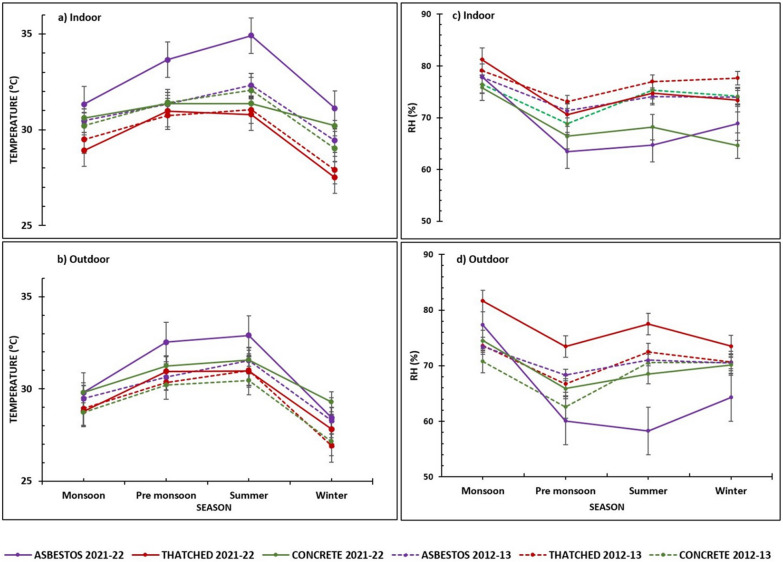
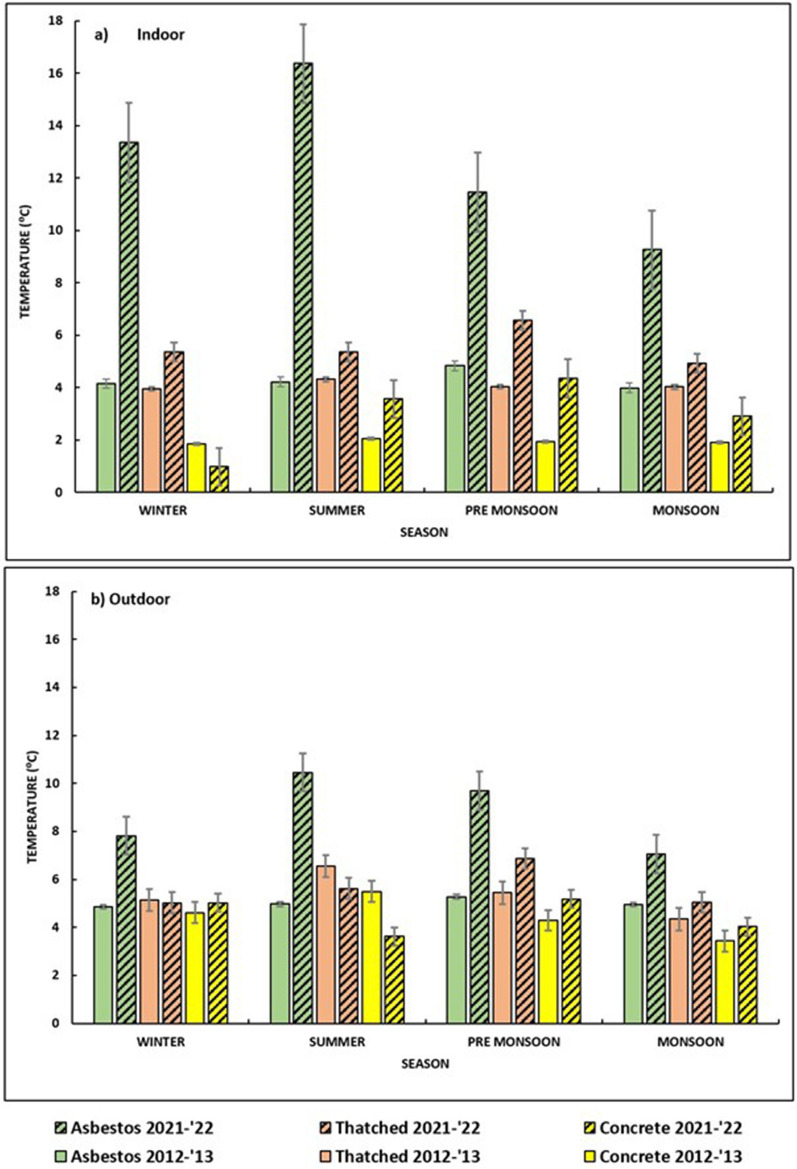
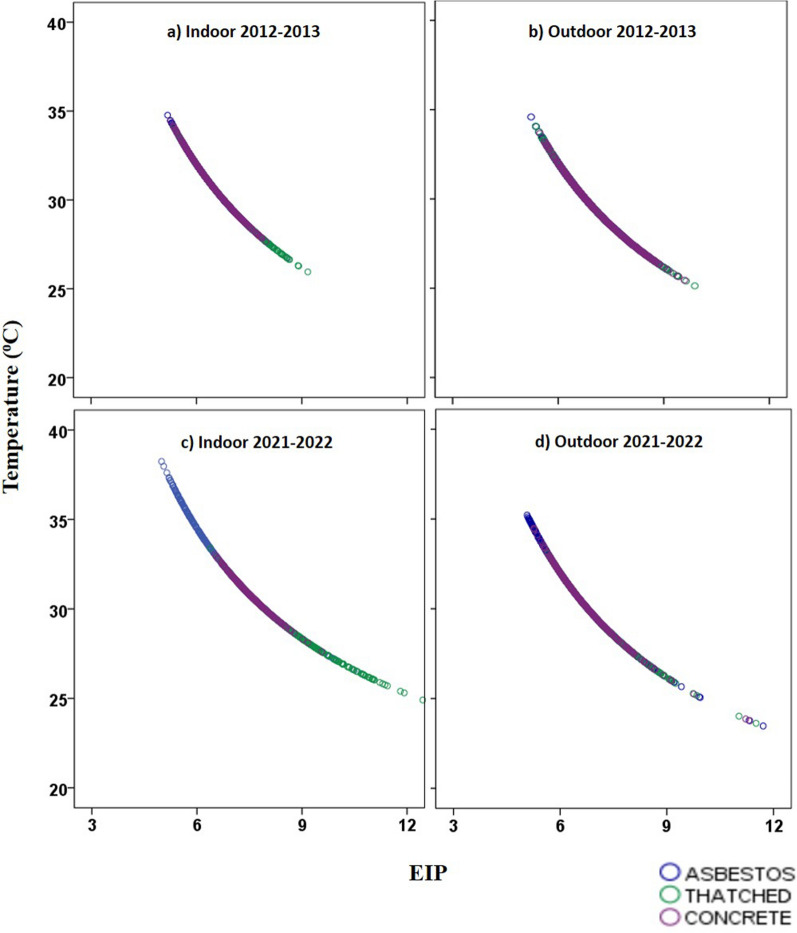
Results: In general, temperature and daily temperature range (DTR) have increased significantly compared to the 2012-2013 data, especially the DTR of indoor asbestos structures, from 4.30 ℃ to 12.62 ℃ in 2021-2022, unlike the marginal increase observed in thatched and concrete structures. Likewise, the average DTR of outdoor asbestos structures increased from 5.02 ℃ (2012-2013) to 8.76 ℃ (2021-2022) although the increase was marginal in thatched structures and, surprisingly, showed no such changes in concrete structures. The key finding of the extrinsic incubation period (EIP) is that a decreasing trend was observed in 2021-2022 compared to 2012-2013, mainly in indoor asbestos structures from 7.01 to 6.35 days, which negatively correlated with the current observation of an increase in temperature. Vector surveillance undertaken in the summer season revealed the presence of Anopheles breeding in various habitats. Anopheles stephensi could be collected using CDC light traps along with other mosquito species.
Conclusion: The microclimate temperature has increased significantly over the years, and mosquitoes are gradually adapting to this rising temperature. Temperature negatively correlates with the extrinsic incubation period of the parasite. As the temperature increases, the development of the parasite in An. stephensi will be faster because of a decrease in EIP, thus requiring relatively fewer days, posing a risk for disease transmission and a hindrance to malaria elimination efforts.
Keywords: Anopheles stephensi; Daily temperature range; Degree-day model; Extrinsic incubation period.
© 2024. The Author(s).
Conflict of interest statement
The authors have no competing interests to disclose.
Figures
References
-
- Organization. World Malaria Report. Geneva: World Health Organization; 2022.
-
- World Health Organization. WHO Initiative to Stop the Spread of Anopheles stephensi in Africa (No. WHO/UCN/GMP/2022.06). 2022.
-
- Zhao X, Chen F, Feng Z, Li X, Zhou X-H. Characterizing the effect of temperature fluctuation on the incidence of malaria: an epidemiological study in south-west China using the varying coefficient distributed lag non-linear model. Malar J. 2014;13(1):1–10. 10.1186/1475-2875-13-192. 10.1186/1475-2875-13-192 - DOI - PMC - PubMed
MeSH terms
Substances
LinkOut - more resources
Full Text Sources
Medical
Research Materials
Miscellaneous
