


Flavonoids: A treasure house of prospective pharmacological potentials
- PMID: 38496846
- PMCID: PMC10944245
- DOI: 10.1016/j.heliyon.2024.e27533
Flavonoids: A treasure house of prospective pharmacological potentials
Abstract
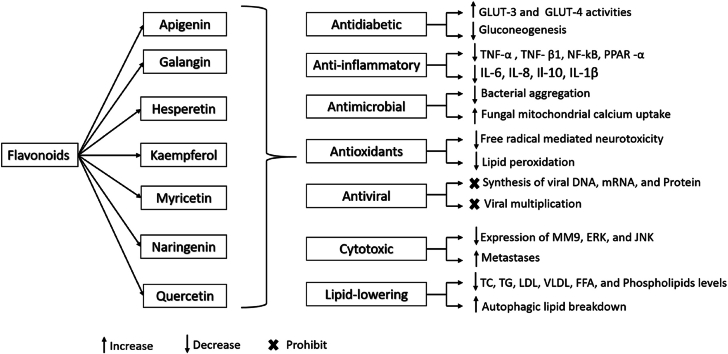
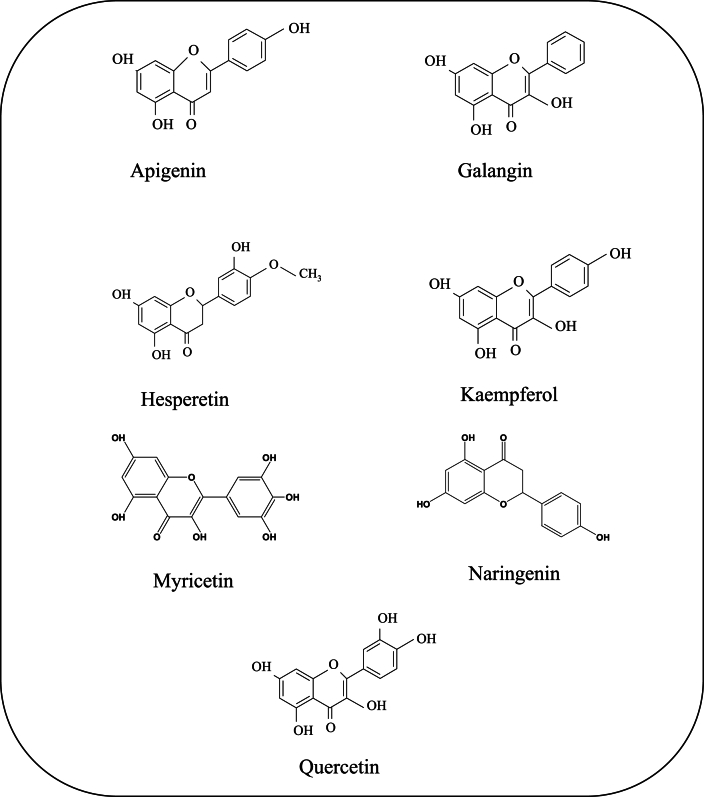
Flavonoids are organic compounds characterized by a range of phenolic structures, which are abundantly present in various natural sources such as fruits, vegetables, cereals, bark, roots, stems, flowers, tea, and wine. The health advantages of these natural substances are renowned, and initiatives are being taken to extract the flavonoids. Apigenin, galangin, hesperetin, kaempferol, myricetin, naringenin, and quercetin are the seven most common compounds belonging to this class. A thorough analysis of bibliographic records from reliable sources including Google Scholar, Web of Science, PubMed, ScienceDirect, MEDLINE, and others was done to learn more about the biological activities of these flavonoids. These flavonoids appear to have promising anti-diabetic, anti-inflammatory, antibacterial, antioxidant, antiviral, cytotoxic, and lipid-lowering activities, according to evidence from in vitro, in vivo, and clinical research. The review contains recent trends, therapeutical interventions, and futuristic aspects of flavonoids to treat several diseases like diabetes, inflammation, bacterial and viral infections, cancers, and cardiovascular diseases. However, this manuscript should be handy in future drug discovery. Despite these encouraging findings, a notable gap exists in clinical research, hindering a comprehensive understanding of the effects of flavonoids at both high and low concentrations on human health. Future investigations should prioritize exploring bioavailability, given the potential for high inter-individual variation. As a starting point for further study on these flavonoids, this review paper may promote identifying and creating innovative therapeutic uses.
Keywords: Antioxidants; Apigenin; Flavone; Flavonoids; Flavonol; Flavonone; Galangin; Hesperetin; Kaempferol; Myricetin; Naringenin; Quercetin.
© 2024 The Authors.
Conflict of interest statement
The authors declare that they have no known competing financial interests or personal relationships that could have appeared to influence the work reported in this paper.
Figures
References
-
- Asad S., Kabir F., Alam S., Richi F.T., Anny I.P., Nesa M.L., Rashid M.A. In vitro analysis provides new insights into the pharmacological actions of methanol extract of seeds of Tamarindus indica L. and its Kupchan fractions. Bangladesh Pharm. J. 2022;25(1):9–15.
-
- Emon N.U., Alam S., Rudra S., Haidar A., F I.K., Eh M.R.M., Ganguly A. Antipyretic activity of Caesalpinia digyna (Rottl.) leaves extract along with phytoconstituent's binding affinity to COX-1, COX-2, and mPGES-1 receptors: in vivo and in silico approaches. Saudi J. Biol. Sci. 2021;28(9):5302–5309. - PMC - PubMed
-
- Obonti A.T., Alam S., Kamal T.B., Zaman A., Hasnat H., Saha T., Islam M.A. Prospective plants with corroborated antimalarial actions: a review. Bangladesh Pharmacol. J. 2021;24(2):180–193.
Publication types
LinkOut - more resources
Full Text Sources
Research Materials
Miscellaneous
