


Granulomatous liver diseases
- PMID: 38497932
- PMCID: PMC10948139
- DOI: 10.1097/HC9.0000000000000392
Granulomatous liver diseases
Abstract
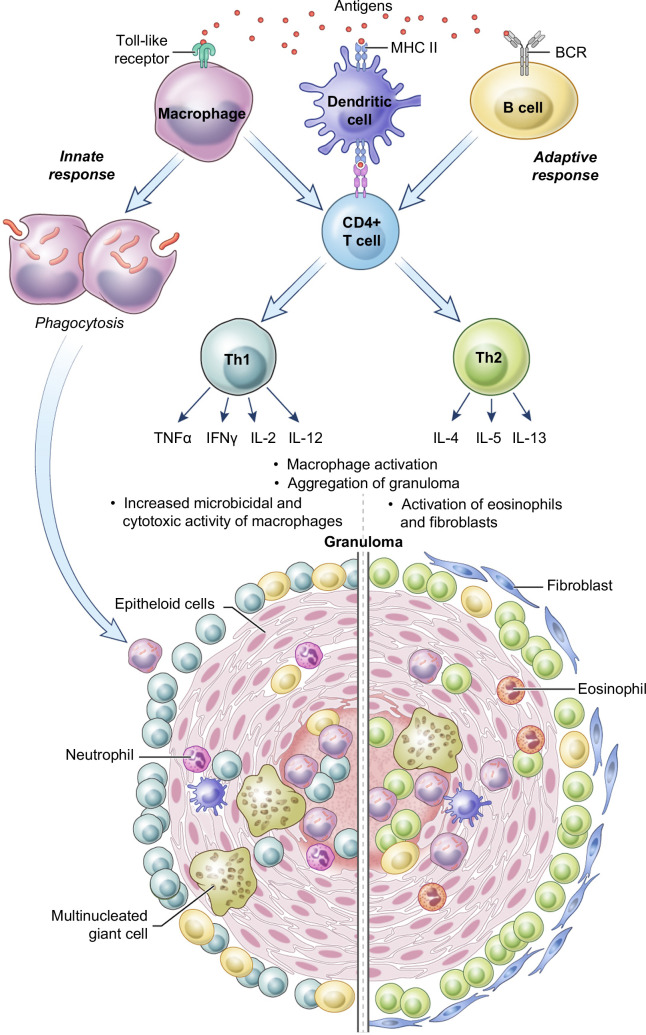
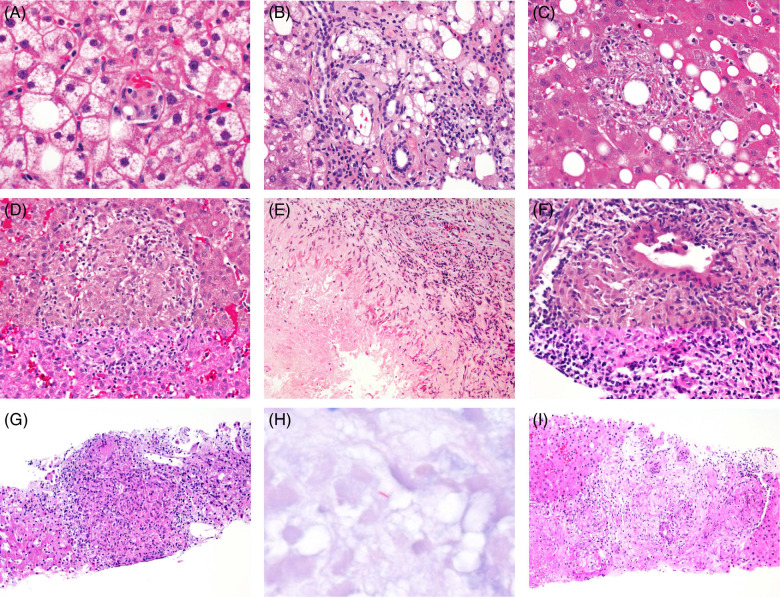
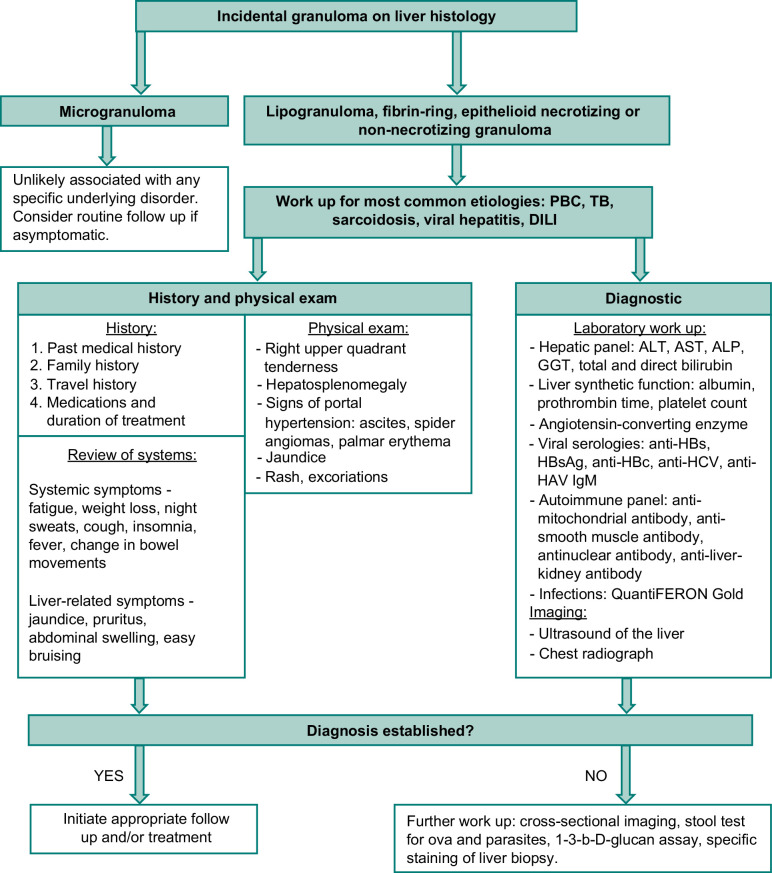
A granuloma is a discrete collection of activated macrophages and other inflammatory cells. Hepatic granulomas can be a manifestation of localized liver disease or be a part of a systemic process, usually infectious or autoimmune. A liver biopsy is required for the detection and evaluation of granulomatous liver diseases. The prevalence of granulomas on liver biopsy varies from 1% to 15%. They may be an incidental finding in an asymptomatic individual, or they may represent granulomatous hepatitis with potential to progress to liver failure, or in chronic disease, to cirrhosis. This review focuses on pathogenesis, histological features of granulomatous liver diseases, and most common etiologies, knowledge that is essential for timely diagnosis and intervention.
Conflict of interest statement
The authors have no conflicts to report.
Figures
References
-
- Almadi MA, Aljebreen AM, Sanai FM, Marcus V, Almeghaiseeb ES, Ghosh S. New insights into gastrointestinal and hepatic granulomatous disorders. Nat Rev Gastroenterol Hepatol. 2011;8:455–466. - PubMed
-
- Matheus T, Muñoz S. Granulomatous liver disease and cholestasis. Clin Liver Dis. 2004;8:229–246; ix. - PubMed
-
- Sartin JS, Walker RC. Granulomatous hepatitis: A retrospective review of 88 cases at the Mayo Clinic. Mayo Clin Proc. 1991;66:914–918. - PubMed
-
- Shaikh S, Shaikh RB, Rab SM. Granulomatous hepatitis: Analysis of twenty seven patients. Article. J Coll Phys Surgeons Pak. 1997;7:235–236.
-
- Geramizadeh B, Jahangiri R, Moradi E. Causes of hepatic granuloma: A 12-year single center experience from southern Iran. Arch Iran Med. 2011;14:288–289. - PubMed
Publication types
MeSH terms
LinkOut - more resources
Full Text Sources
Medical
