


Progression free survival of myeloma patients who become IFE-negative correlates with the detection of residual monoclonal free light chain (FLC) by mass spectrometry
- PMID: 38499538
- PMCID: PMC10948753
- DOI: 10.1038/s41408-024-00995-y
Progression free survival of myeloma patients who become IFE-negative correlates with the detection of residual monoclonal free light chain (FLC) by mass spectrometry
Abstract
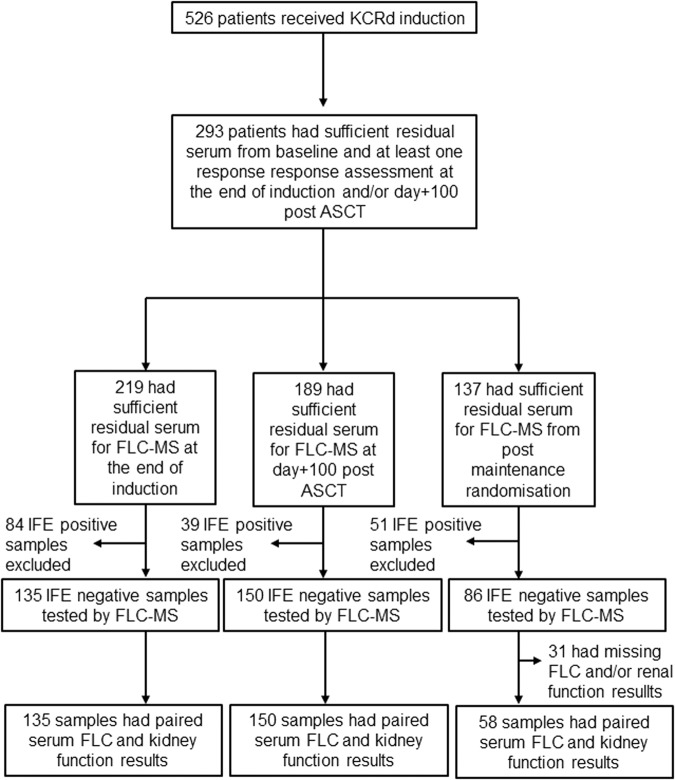
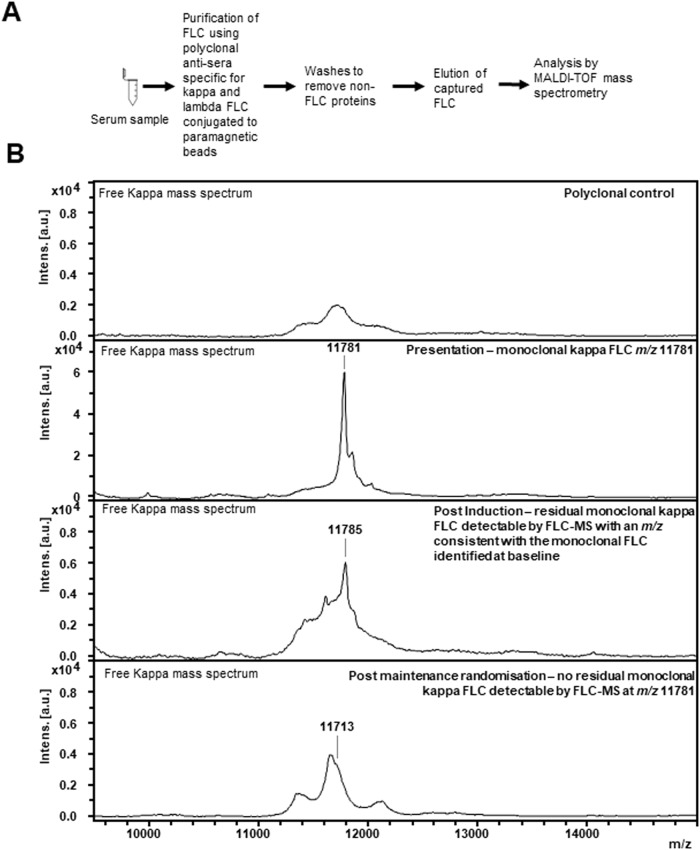
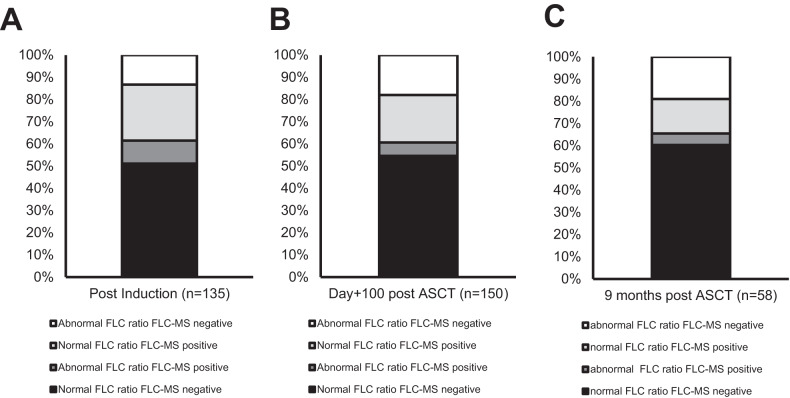
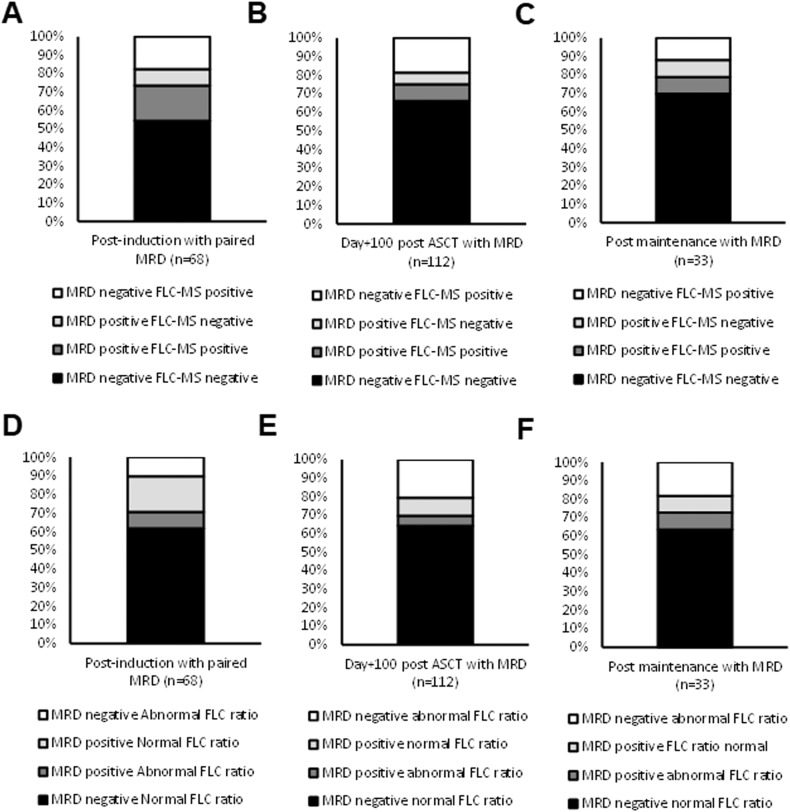
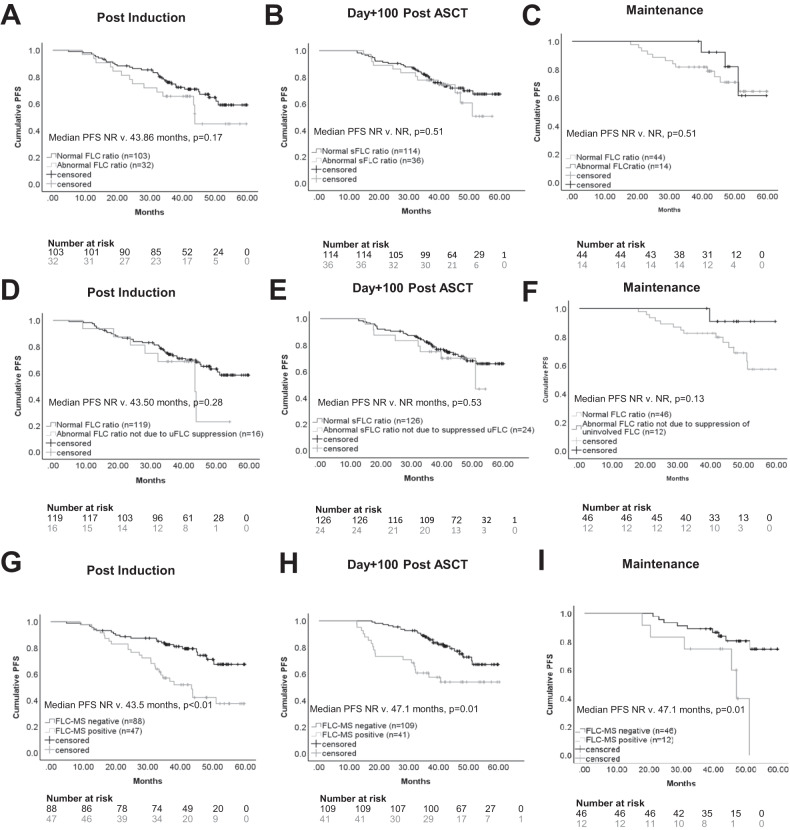
Deeper responses are associated with improved survival in patients being treated for myeloma. However, the sensitivity of the current blood-based assays is limited. Historical studies suggested that normalisation of the serum free light chain (FLC) ratio in patients who were negative by immunofixation electrophoresis (IFE) was associated with improved outcomes. However, recently this has been called into question. Mass spectrometry (MS)-based FLC assessments may offer a superior methodology for the detection of monoclonal FLC due to greater sensitivity. To test this hypothesis, all available samples from patients who were IFE negative after treatment with carfilzomib and lenalidomide-based induction and autologous stem cell transplantation (ASCT) in the Myeloma XI trial underwent FLC-MS testing. FLC-MS response assessments from post-induction, day+100 post-ASCT and six months post-maintenance randomisation were compared to serum FLC assay results. Almost 40% of patients had discordant results and 28.7% of patients with a normal FLC ratio had residual monoclonal FLC detectable by FLC-MS. FLC-MS positivity was associated with reduced progression-free survival (PFS) but an abnormal FLC ratio was not. This study demonstrates that FLC-MS provides a superior methodology for the detection of residual monoclonal FLC with FLC-MS positivity identifying IFE-negative patients who are at higher risk of early progression.
© 2024. The Author(s).
Conflict of interest statement
HVG has received research funding from The Binding Site Ltd, part of Thermo Fisher Scientific. GP is on the medical advisory board and has received educational funding from Janssen Oncology; BMS-Celgene; Amgen; Takeda; The Binding Site Ltd part of Thermo Fisher Scientific; Sanofi/Aventis; Beigene; and GlaxoSmithKline.
Figures
References
Publication types
MeSH terms
Substances
Grants and funding
LinkOut - more resources
Full Text Sources
Medical
