


Aminobenzotriazole inhibits and induces several key drug metabolizing enzymes complicating its utility as a pan CYP inhibitor for reaction phenotyping
- PMID: 38501263
- PMCID: PMC10949176
- DOI: 10.1111/cts.13746
Aminobenzotriazole inhibits and induces several key drug metabolizing enzymes complicating its utility as a pan CYP inhibitor for reaction phenotyping
Abstract
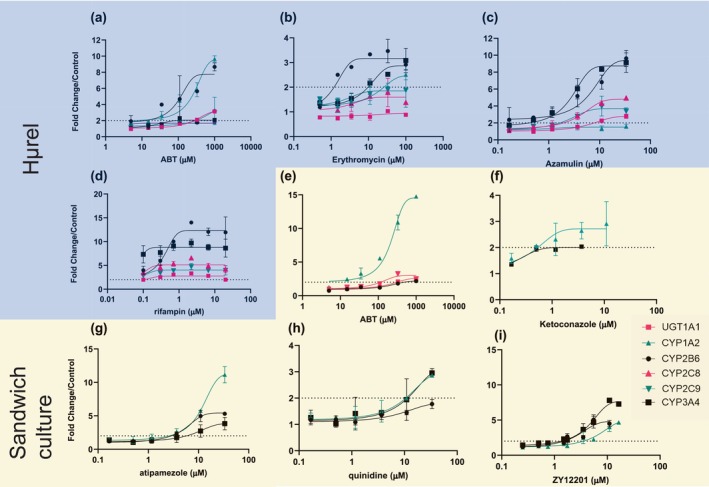
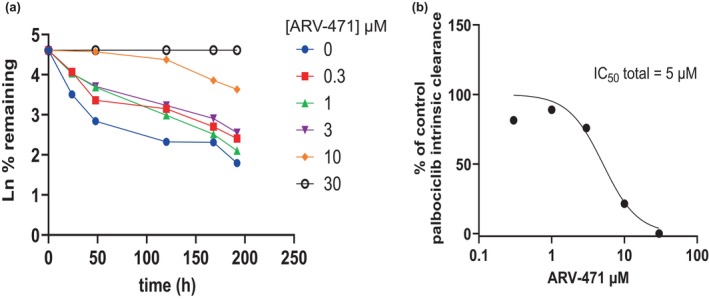
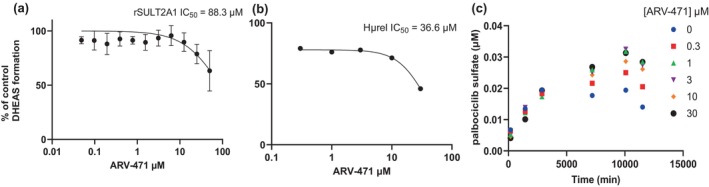
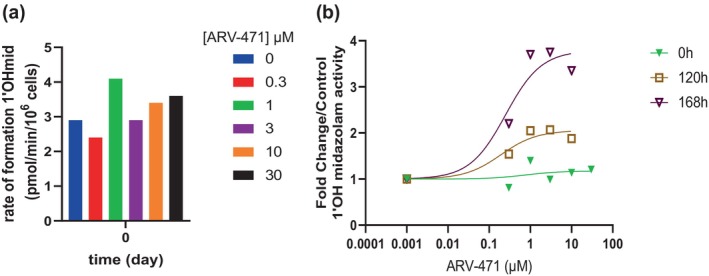
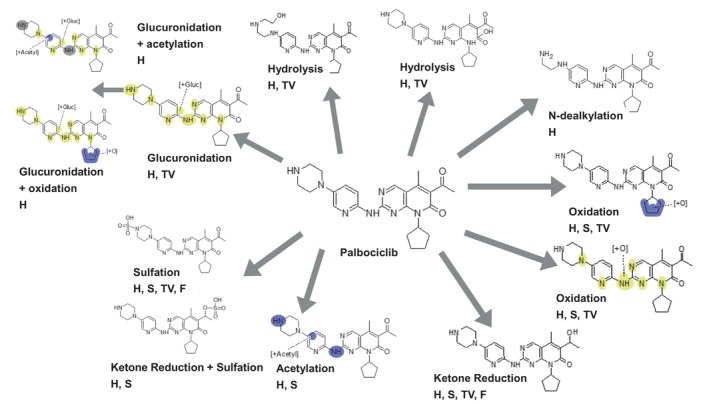
Aminobenzotriazole (ABT) is commonly used as a non-selective inhibitor of cytochrome P450 (CYP) enzymes to assign contributions of CYP versus non-CYP pathways to the metabolism of new chemical entities. Despite widespread use, a systematic review of the drug-drug interaction (DDI) potential for ABT has not been published nor have the implications for using it in plated hepatocyte models for low clearance reaction phenotyping. The goal being to investigate the utility of ABT as a pan-CYP inhibitor for reaction phenotyping of low clearance compounds by evaluating stability over the incubation period, inhibition potential against UGT and sulfotransferase enzymes, and interaction with nuclear receptors involved in the regulation of drug metabolizing enzymes and transporters. Induction potential for additional inhibitors used to ascribe fraction metabolism (fm ), pathway including erythromycin, ketoconazole, azamulin, atipamezole, ZY12201, and quinidine was also investigated. ABT significantly inhibited the clearance of a non-selective UGT substrate 4-methylumbelliferone, with several UGTs shown to be inhibited using selective probe substrates in human hepatocytes and rUGTs. The inhibitors screened in the induction assay were shown to induce enzymes regulated through Aryl Hydrocarbon Receptor, Constitutive Androstane Receptor, and Pregnane X Receptor. Lastly, a case study identifying the mechanisms of a clinical DDI between Palbociclib and ARV-471 is provided as an example of the potential consequences of using ABT to derive fm . This work demonstrates that ABT is not an ideal pan-CYP inhibitor for reaction phenotyping of low clearance compounds and establishes a workflow that can be used to enable robust characterization of other prospective inhibitors.
© 2024 The Authors. Clinical and Translational Science published by Wiley Periodicals LLC on behalf of American Society for Clinical Pharmacology and Therapeutics.
Conflict of interest statement
The authors declared no competing interests for this work.
Figures
References
-
- Masimirembwa CM, Thompson R, Andersson TB. In vitro high throughput screening of compounds for favorable metabolic properties in drug discovery. Comb Chem High Throughput Screen. 2001;4:245‐263. - PubMed
-
- Center for drug evaluation and research . In vitro drug interaction studies – cytochrome P450 enzyme‐ and transporter mediated drug interactions guidance for industry. 2020.
-
- ICH M12 on Drug Interaction Studies . International Council for Harmonisation of Technical Requirements for Pharmaceuticals for Human Use. 2022.
-
- Al‐Jahdari WS, Yamamoto K, Hiraoka H, Nakamura K, Goto F, Horiuchi R. Prediction of total propofol clearance based on enzyme activities in microsomes from human kidney and liver. Eur J Clin Pharmacol. 2006;62:527‐533. - PubMed
Publication types
MeSH terms
Substances
LinkOut - more resources
Full Text Sources
