


Patterns of reproductive health in inflammatory rheumatic diseases and other immune-mediated diseases: a nationwide registry study
- PMID: 38503536
- PMCID: PMC11443019
- DOI: 10.1093/rheumatology/keae122
Patterns of reproductive health in inflammatory rheumatic diseases and other immune-mediated diseases: a nationwide registry study
Abstract
Objectives: Rheumatic diseases may impair reproductive success and pregnancy outcomes, but systematic evaluations across diseases are lacking. We conducted a nationwide cohort study to examine the impact of rheumatic diseases on reproductive health measures, comparing the impacts with those of other immune-mediated diseases (IMDs).
Methods: Out of all of the 5 339 804 Finnish citizens, individuals born 1964-1984 and diagnosed with any of the 19 IMDs before age 30 (women) or 35 (men) were matched with 20 controls by birth year, sex, and education. We used data from nationwide health registers to study the impact of IMDs on reproductive health measures, such as reproductive success and, for women, ever having experienced adverse maternal and perinatal outcomes.
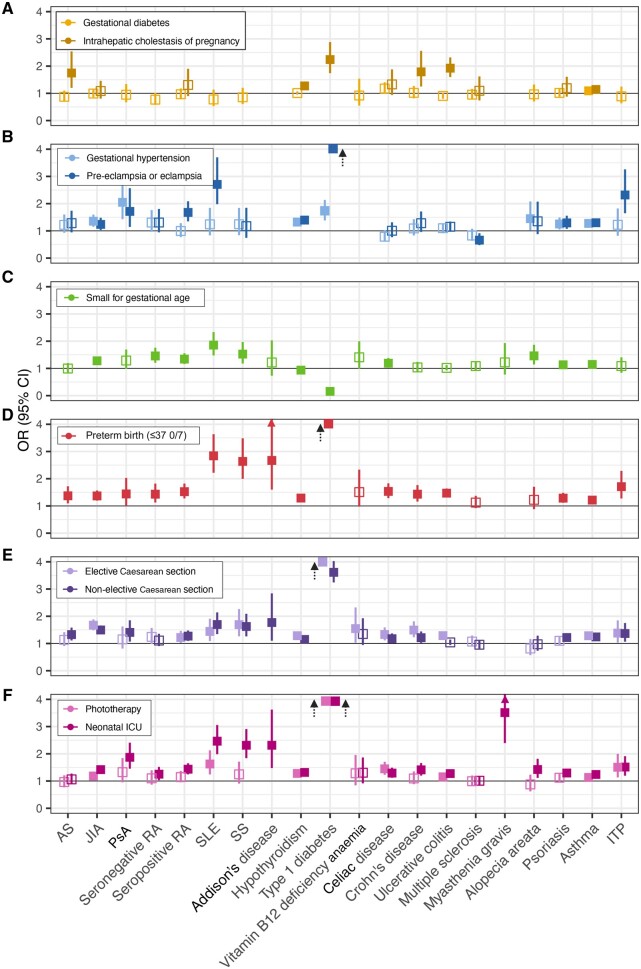
Results: Several of the rheumatic diseases, particularly SLE, JIA, and seropositive RA, were associated with higher rates of childlessness and fewer children. The risks for pre-eclampsia, newborns being small for gestational age, preterm delivery, non-elective Caesarean sections, and need of neonatal intensive care were increased in many IMDs. Particularly, SLE, SS, type 1 diabetes, and Addison's disease showed >2-fold risks for some of these outcomes. In most rheumatic diseases, moderate (1.1-1.5-fold) risk increases were observed for diverse adverse pregnancy outcomes, with similar effects in IBD, celiac disease, asthma, ITP, and psoriasis.
Conclusion: Rheumatic diseases have a broad impact on reproductive health, with effects comparable with that of several other IMDs. Of the rheumatic diseases, SLE and SS conferred the largest risk increases on perinatal adverse event outcomes.
Keywords: autoimmune diseases; inflammatory rheumatic diseases; male reproductive health; maternal health; reproductive health.
© The Author(s) 2024. Published by Oxford University Press on behalf of the British Society for Rheumatology.
Figures



References
-
- Bundhun PK, Soogund MZ, Huang F. Impact of systemic lupus erythematosus on maternal and fetal outcomes following pregnancy: a meta-analysis of studies published between years 2001-2016. J Autoimmun 2017;79:17–27. - PubMed
-
- Bobotsis R, Gulliver WP, Monaghan K, Lynde C, Fleming P. Psoriasis and adverse pregnancy outcomes: a systematic review of observational studies. Br J Dermatol 2016;175:464–72. - PubMed
-
- Hamroun S, Hamroun A, Bigna JJ et al. Fertility and pregnancy outcomes in women with spondyloarthritis: a systematic review and meta-analysis. Rheumatology (Oxford) 2022;61:1314–27. - PubMed
-
- Meissner Y, Strangfeld A, Molto A et al.; EuNeP Collaborator Group. Pregnancy and neonatal outcomes in women with axial spondyloarthritis: pooled data analysis from the European Network of Pregnancy Registries in Rheumatology (EuNeP). Ann Rheum Dis 2022;81:1524–33. - PubMed
