


<Editors' Choice> Thoracic endovascular aortic repair and spinal cord injury
- PMID: 38505712
- PMCID: PMC10945219
- DOI: 10.18999/nagjms.86.1.16
<Editors' Choice> Thoracic endovascular aortic repair and spinal cord injury
Abstract
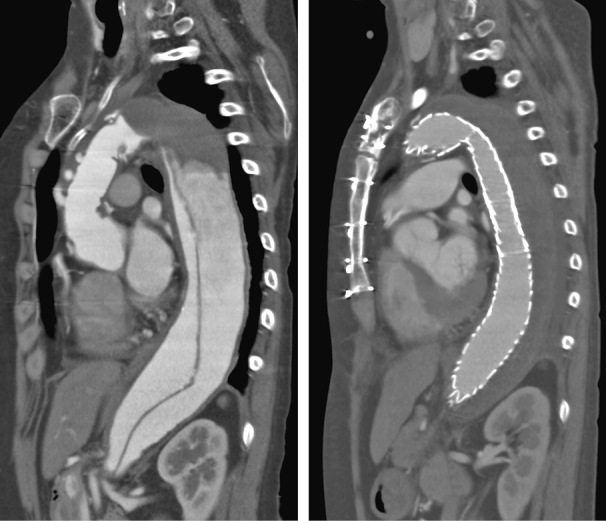
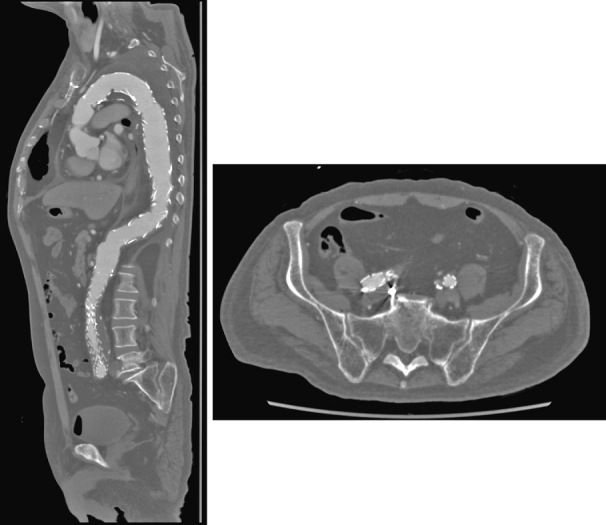
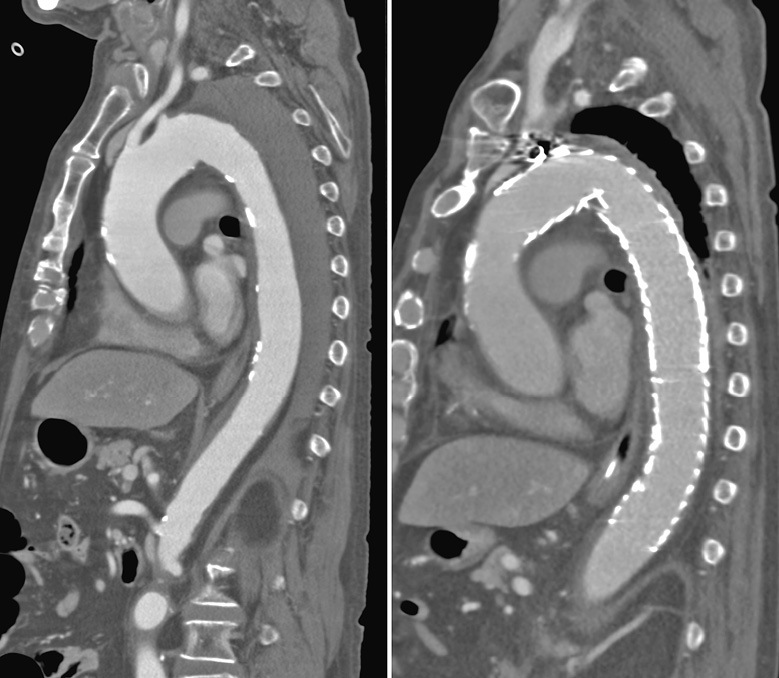
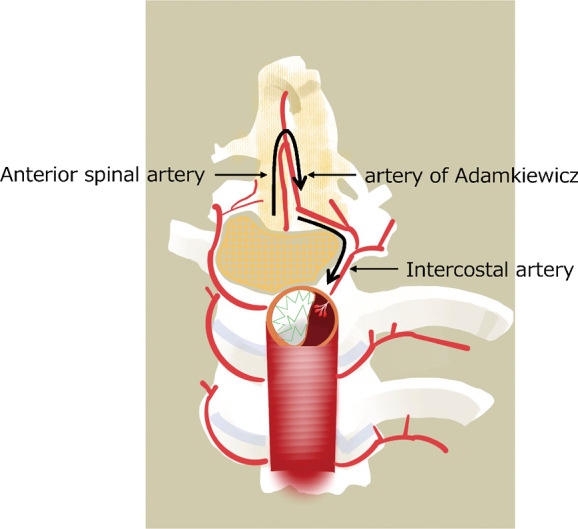
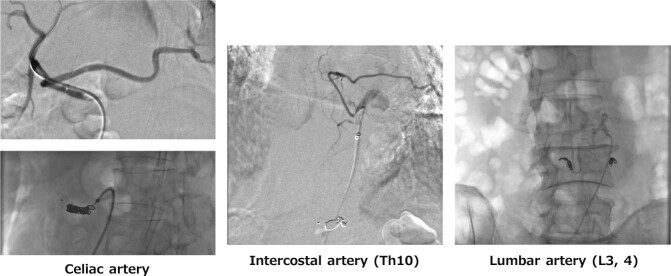
We previously reported that spinal cord injury following thoracic endovascular aortic repair for a thoracic aortic aneurysm is a micro embolism caused by a vulnerable mural thrombus. Conversely, patients who underwent thoracic endovascular aortic repair for aortic dissection develop spinal cord injury less frequently due to fewer mural thrombi. Paying attention to preserving blood flow toward the spinal cord, namely collateral circulation and steal phenomenon, prevents spinal cord injury following thoracic endovascular aortic repair for aortic dissection.
Keywords: spinal cord injury; thoracic endovascular aortic repair.
Conflict of interest statement
Hiroshi Banno received scholarship donations from Japan Gore, Medtronic Japan, and Terumo Corporation. Other co-authors declare no conflicts of interest.
Figures
Similar articles
-
Low-density vulnerable thrombus/plaque volume on preoperative computed tomography predicts for spinal cord ischemia after endovascular repair for thoracic aortic aneurysm.J Vasc Surg. 2021 May;73(5):1557-1565.e1. doi: 10.1016/j.jvs.2020.09.026. Epub 2020 Oct 14. J Vasc Surg. 2021. PMID: 33068765
-
First-in-man endovascular preconditioning of the paraspinal collateral network by segmental artery coil embolization to prevent ischemic spinal cord injury.J Thorac Cardiovasc Surg. 2015 Apr;149(4):1074-9. doi: 10.1016/j.jtcvs.2014.12.025. Epub 2014 Dec 18. J Thorac Cardiovasc Surg. 2015. PMID: 25906717
-
Extensive endovascular repair of thoracic aorta: observational analysis of the results and effects on spinal cord perfusion.J Cardiovasc Surg (Torino). 2013 Aug;54(4):523-30. Epub 2013 Feb 1. J Cardiovasc Surg (Torino). 2013. PMID: 23369947
-
Spinal cord injury after thoracic endovascular aortic aneurysm repair.Can J Anaesth. 2017 Dec;64(12):1218-1235. doi: 10.1007/s12630-017-0974-1. Epub 2017 Oct 10. Can J Anaesth. 2017. PMID: 29019146 Free PMC article. Review.
-
Spinal cord ischemia in open and endovascular thoracoabdominal aortic aneurysm repair: new concepts.J Cardiovasc Surg (Torino). 2014 Apr;55(2 Suppl 1):159-68. J Cardiovasc Surg (Torino). 2014. PMID: 24796909 Review.
References
Publication types
LinkOut - more resources
Full Text Sources