


222 nm far-UVC light markedly reduces the level of infectious airborne virus in an occupied room
- PMID: 38509265
- PMCID: PMC10954628
- DOI: 10.1038/s41598-024-57441-z
222 nm far-UVC light markedly reduces the level of infectious airborne virus in an occupied room
Abstract
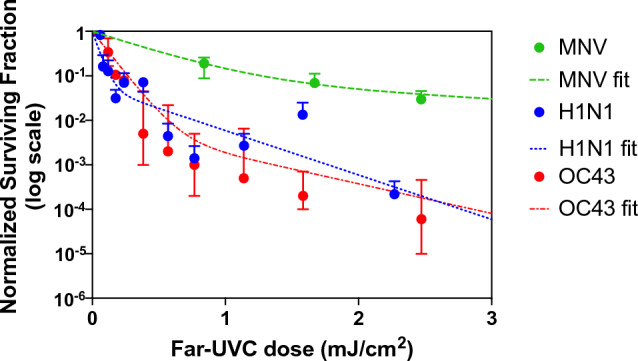
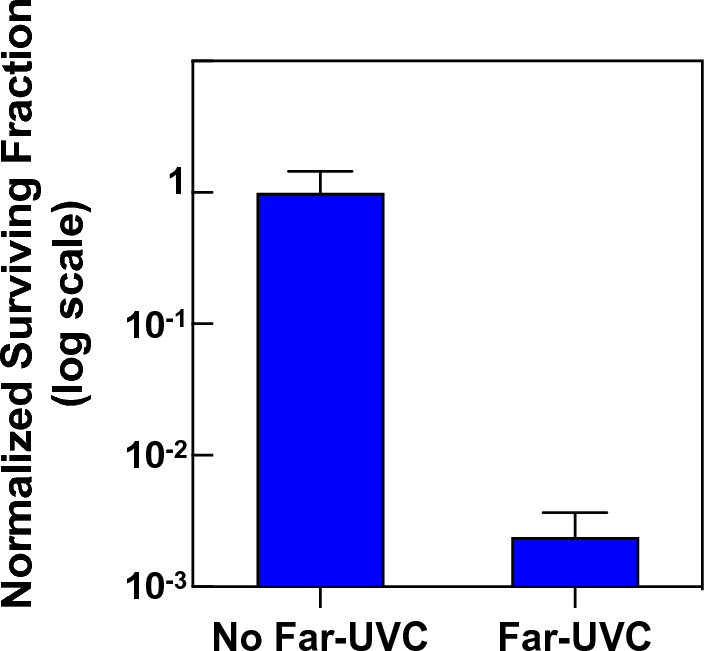
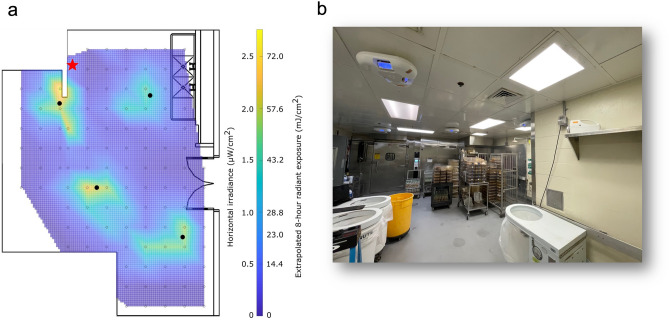
An emerging intervention for control of airborne-mediated pandemics and epidemics is whole-room far-UVC (200-235 nm). Laboratory studies have shown that 222-nm light inactivates airborne pathogens, potentially without harm to exposed occupants. While encouraging results have been reported in benchtop studies and in room-sized bioaerosol chambers, there is a need for quantitative studies of airborne pathogen reduction in occupied rooms. We quantified far-UVC mediated reduction of aerosolized murine norovirus (MNV) in an occupied mouse-cage cleaning room within an animal-care facility. Benchtop studies suggest that MNV is a conservative surrogate for airborne viruses such as influenza and coronavirus. Using four 222-nm fixtures installed in the ceiling, and staying well within current recommended regulatory limits, far-UVC reduced airborne infectious MNV by 99.8% (95% CI: 98.2-99.9%). Similar to previous room-sized bioaerosol chamber studies on far-UVC efficacy, these results suggest that aerosolized virus susceptibility is significantly higher in room-scale tests than in bench-scale laboratory studies. That said, as opposed to controlled laboratory studies, uncertainties in this study related to airflow patterns, virus residence time, and dose to the collected virus introduce uncertainty into the inactivation estimates. This study is the first to directly demonstrate far-UVC anti-microbial efficacy against airborne pathogens in an occupied indoor location.
© 2024. The Author(s).
Conflict of interest statement
D.J.B. and other coinventors have a granted US patent entitled ‘Apparatus, method and system for selectively affecting and/or killing a virus’ (US10780189B2). Columbia University has licensed aspects of filtered UV light technology to Ushio Inc, and has received research support from Ushio Inc and LumenLabs Inc, companies producing far-UVC sources. All other authors have no competing interest.
Figures
References
-
- Luckiesh, M. Application of Germidical, Erythemal and Infrared Energy (D. Van Nostrand, 1946).
MeSH terms
LinkOut - more resources
Full Text Sources
Medical
