


Identification of estrogen response-associated STRA6+ granulosa cells within high-grade serous ovarian carcinoma by single-cell sequencing
- PMID: 38509903
- PMCID: PMC10950672
- DOI: 10.1016/j.heliyon.2024.e27790
Identification of estrogen response-associated STRA6+ granulosa cells within high-grade serous ovarian carcinoma by single-cell sequencing
Abstract
Background: High-grade serous ovarian carcinoma (HGSOC) is a pathologic subtype of ovarian cancer (OC) with a more lethal prognosis. Extensive heterogeneity results in HGSOC being more susceptible to treatment resistance and adverse treatment effects. Revealing the heterogeneity involved is crucial.
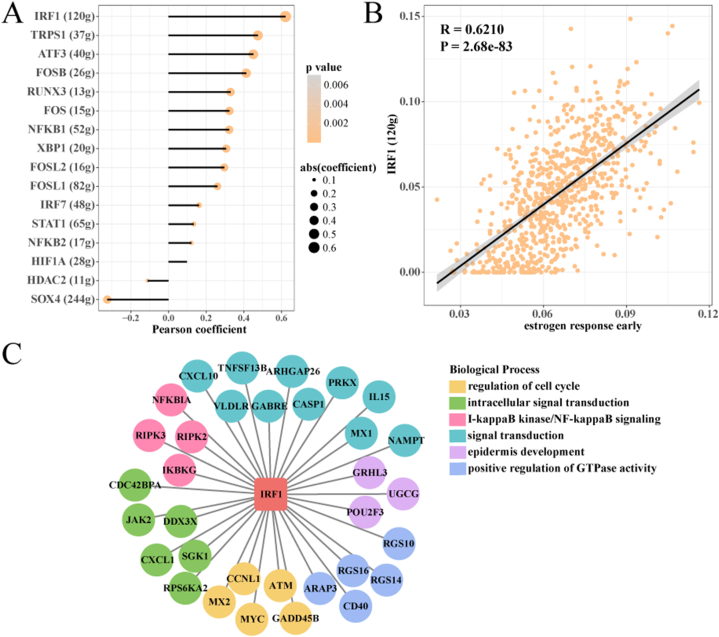
Methods: We downloaded the single-cell RNA-seq (scRNA) data from GEO database and performed a scRNA analysis for cell landscape of HGSOC by using the Seurat package. The highly expressed genes were uploaded into the DAVID and KEGG database for enrichment analysis, and the AUCell package was used to calculate cancer-associated hallmark score. The SCENIC analysis was used for key regulons, the estrogen response enrichment scores in TCGA-OV RNA-seq dataset were calculated by using the GSVA package. Besides, the expression of STRA6 and IRF1 and the cell invasion and migration in si-STRA6 OC cells were detected by using the quantitative reverse transcription (qRT)-PCR method and Transwell assay respectively.
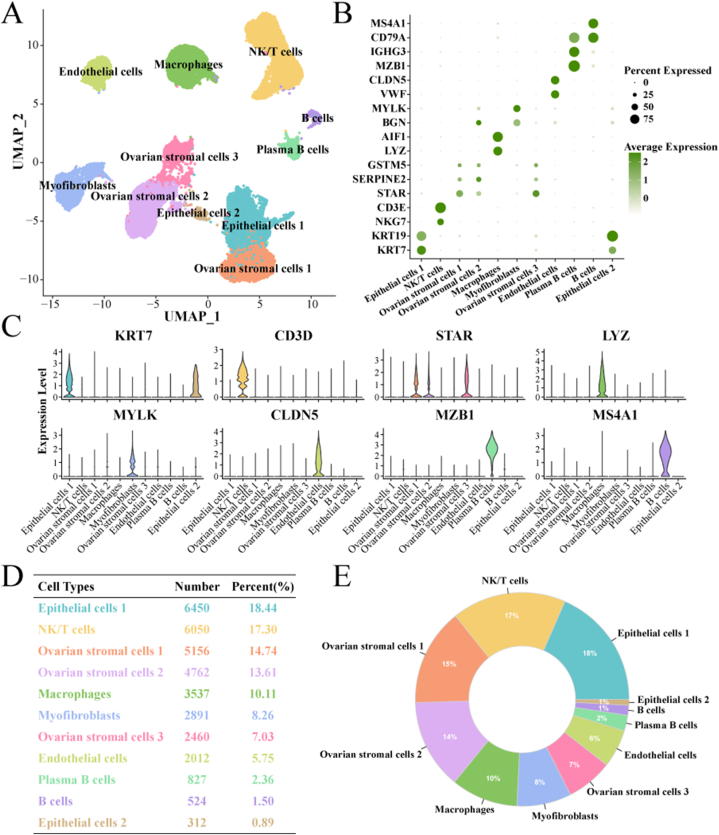
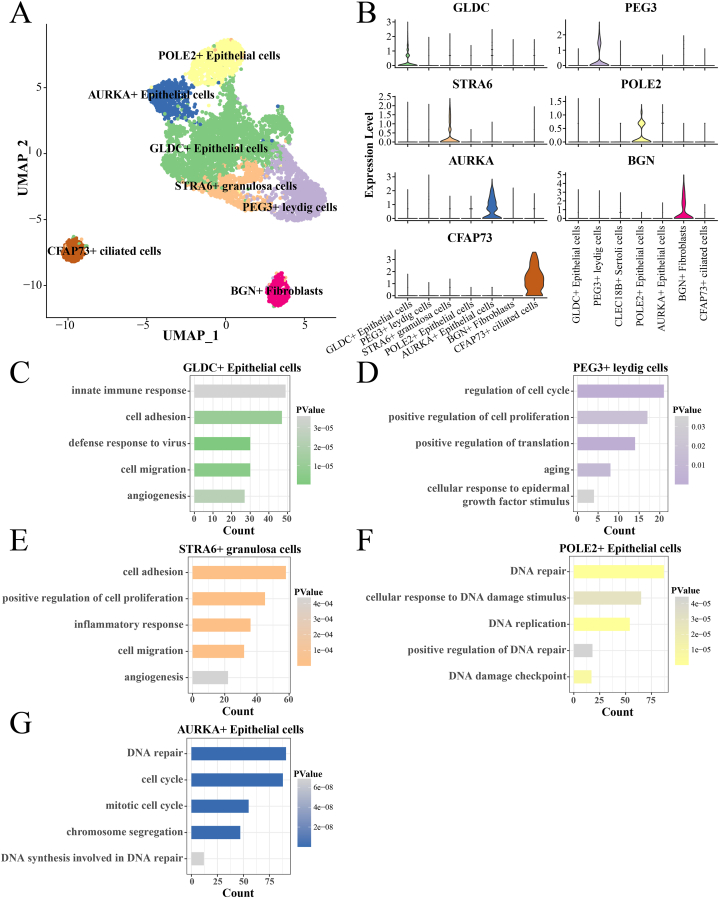
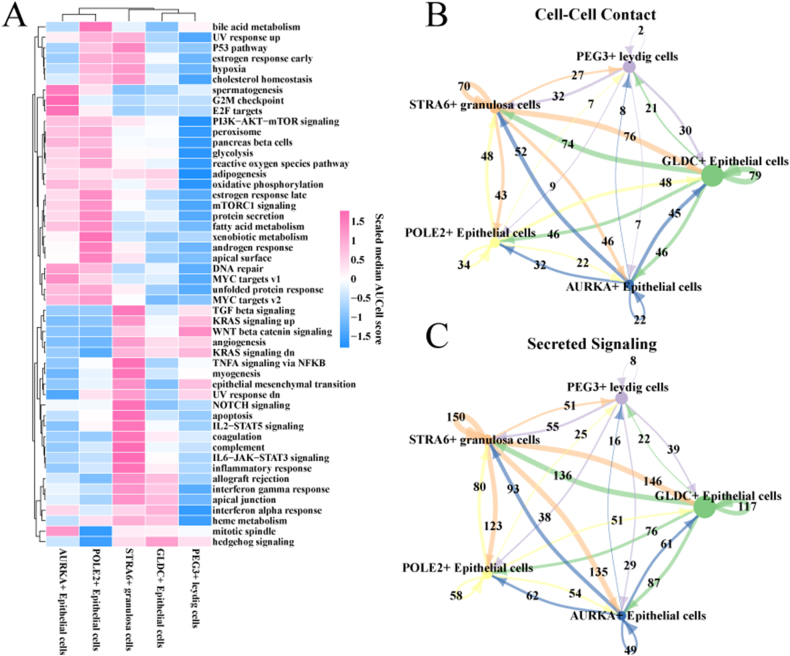
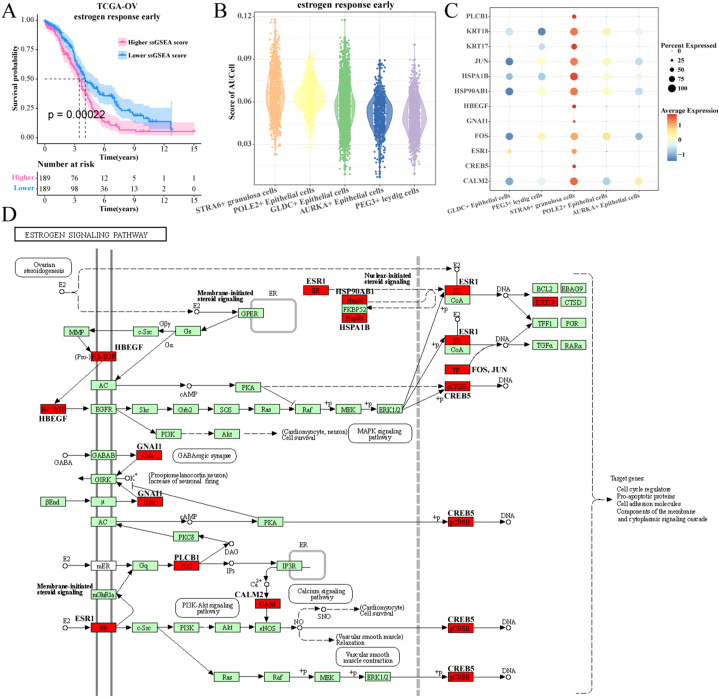
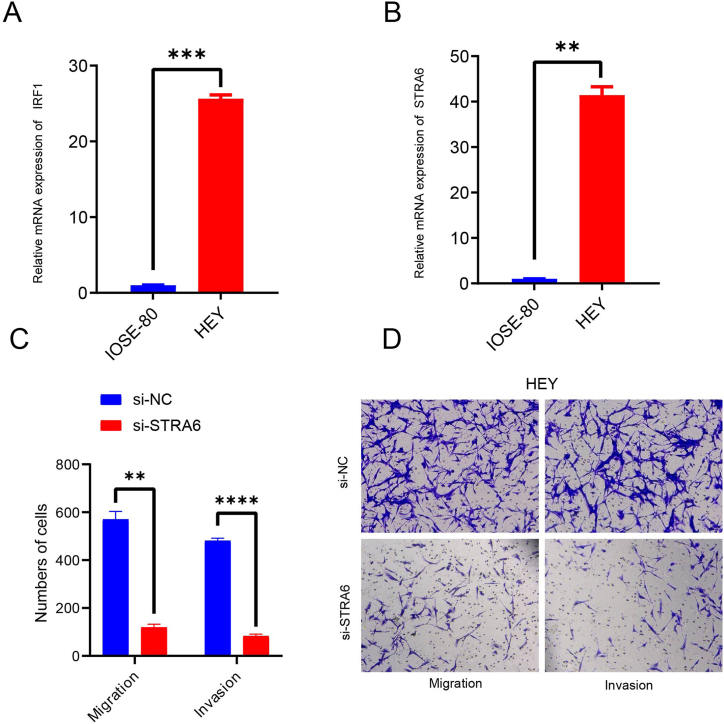
Results: We successfully constructed a single-cell atlas of HGSOC and delineated the heterogeneity of epithelial cells therein. There were five epithelial cell subpopulations, GLDC + Epithelial cells, PEG3+ leydig cells, STRA6+ granulosa cells, POLE2+ Epithelial cells, and AURKA + Epithelial cells. STRA6+ granulosa cells have the potential to promote tumor growth as well as the highest estrogen response early activity through the biological pathways analysis of highly expressed genes and estrogen response score of ssGSEA. We found that IRF1 and STRA6 expression was remarkably upregulated in the OC cancer cell line HEY. Silencing of STRA6 markedly decreased the invasion and migration ability of the OC cancer cell line HEY.
Conclusion: There is extreme heterogeneity of epithelial cells in HGSOC, and STRA6+ granulosa cells may be able to promote cancer progression. Our findings are benefit to the heterogeneity identification of HGSOC and develop targeted therapy strategy for HGSOC patients.
Keywords: GRNs; High-grade serous ovarian carcinoma; SCENIC; STRA6+ granulosa cells; Single-cell sequencing; TFs.
© 2024 The Authors.
Conflict of interest statement
The authors declare that they have no known competing financial interests or personal relationships that could have appeared to influence the work reported in this paper.
Figures
Similar articles
-
Single-cell RNA sequencing reveals the change in cytotoxic NK/T cells, epithelial cells and myeloid cells of the tumor microenvironment of high-grade serous ovarian carcinoma.Discov Oncol. 2024 Sep 9;15(1):417. doi: 10.1007/s12672-024-01290-9. Discov Oncol. 2024. PMID: 39249551 Free PMC article.
-
Biological and prognostic value of ETV5 in high-grade serous ovarian cancer.J Ovarian Res. 2021 Nov 4;14(1):149. doi: 10.1186/s13048-021-00899-6. J Ovarian Res. 2021. PMID: 34736492 Free PMC article.
-
Revealing Cellular Heterogeneity and Key Regulatory Factors of Triple-Negative Breast Cancer through Single-Cell RNA Sequencing.Front Biosci (Landmark Ed). 2024 Aug 19;29(8):290. doi: 10.31083/j.fbl2908290. Front Biosci (Landmark Ed). 2024. PMID: 39206896
-
[Identification of key molecules in miRNA-mRNA regulatory network associated with high-grade serous ovarian cancer recurrence using bioinformatic analysis].Nan Fang Yi Ke Da Xue Xue Bao. 2023 Jan 20;43(1):8-16. doi: 10.12122/j.issn.1673-4254.2023.01.02. Nan Fang Yi Ke Da Xue Xue Bao. 2023. PMID: 36856205 Free PMC article. Chinese.
-
Single-Cell RNA Sequencing Reveals the Tissue Architecture in Human High-Grade Serous Ovarian Cancer.Clin Cancer Res. 2022 Aug 15;28(16):3590-3602. doi: 10.1158/1078-0432.CCR-22-0296. Clin Cancer Res. 2022. PMID: 35675036 Free PMC article.
Cited by
-
Single-cell RNA sequencing reveals the change in cytotoxic NK/T cells, epithelial cells and myeloid cells of the tumor microenvironment of high-grade serous ovarian carcinoma.Discov Oncol. 2024 Sep 9;15(1):417. doi: 10.1007/s12672-024-01290-9. Discov Oncol. 2024. PMID: 39249551 Free PMC article.
References
-
- Sung H., et al. Global cancer statistics 2020: GLOBOCAN Estimates of incidence and mortality worldwide for 36 cancers in 185 countries. CA Cancer J Clin. 2021;71(3):209–249. - PubMed
-
- Siegel R.L., et al. Cancer statistics, 2023. CA Cancer J Clin. 2023;73(1):17–48. - PubMed
-
- Armstrong D.K., et al. NCCN guidelines(R) insights: ovarian cancer, version 3.2022. J Natl Compr Canc Netw. 2022;20(9):972–980. - PubMed
LinkOut - more resources
Full Text Sources
Miscellaneous
