. 2024 Feb 23:6:100216.
doi: 10.1016/j.cccb.2024.100216. eCollection 2024.

Fluid biomarkers of the neurovascular unit in cerebrovascular disease and vascular cognitive disorders: A systematic review and meta-analysis

Affiliations

Fluid biomarkers of the neurovascular unit in cerebrovascular disease and vascular cognitive disorders: A systematic review and meta-analysis

Gurpreet Kaur Hansra et al. Cereb Circ Cogn Behav. .

Abstract

Background: The disruption of the neurovascular unit (NVU), which maintains the integrity of the blood brain barrier (BBB), has been identified as a critical mechanism in the development of cerebrovascular and neurodegenerative disorders. However, the understanding of the pathophysiological mechanisms linking NVU dysfunction to the disorders is incomplete, and reliable blood biomarkers to measure NVU dysfunction are yet to be established. This systematic review and meta-analysis aimed to identify biomarkers associated with BBB dysfunction in large vessel disease, small vessel disease (SVD) and vascular cognitive disorders (VCD).

Methods: A literature search was conducted in PubMed, EMBASE, Scopus and PsychINFO to identify blood biomarkers related to dysfunction of the NVU in disorders with vascular pathologies published until 20 November 2023. Studies that assayed one or more specific markers in human serum or plasma were included. Quality of studies was assessed using the Newcastle-Ottawa Quality Assessment Scale. Effects were pooled and methodological heterogeneity examined using the random effects model.

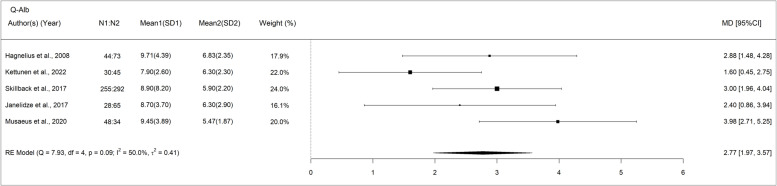
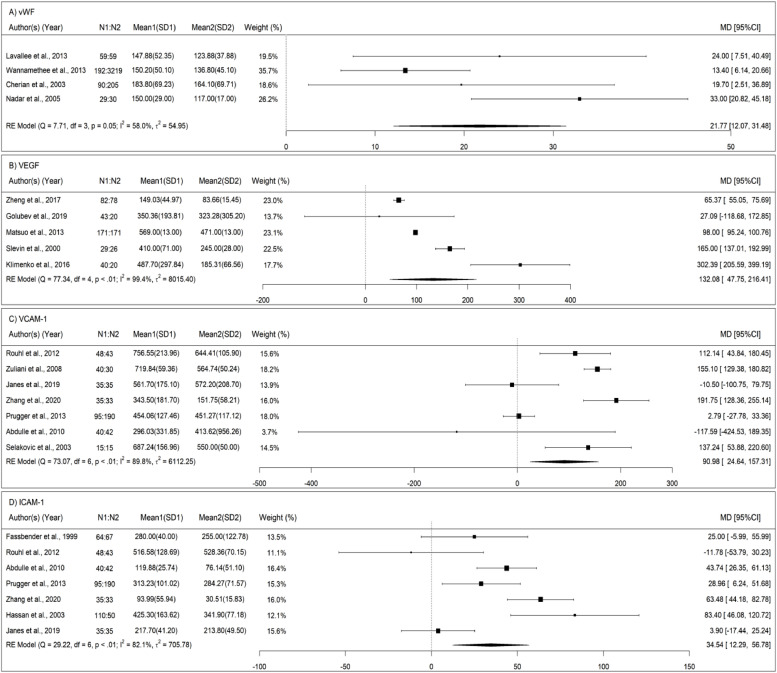
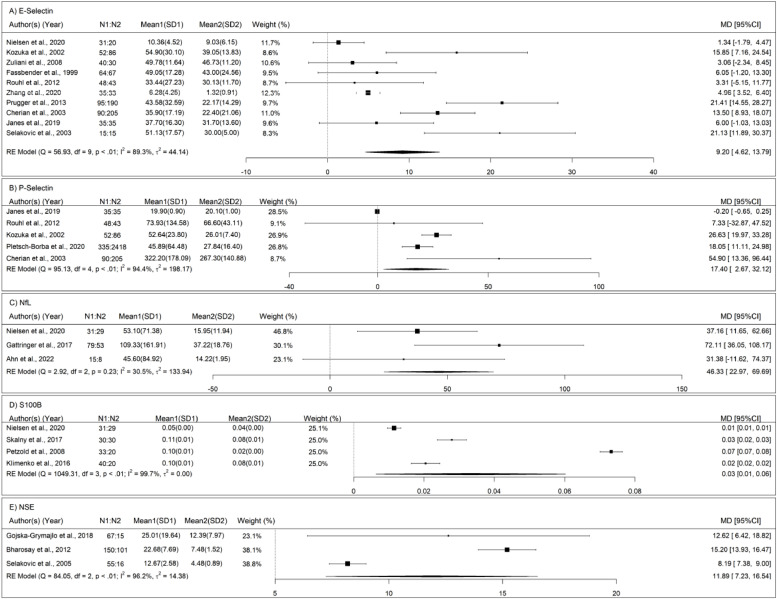
Results: A total of 112 studies were included in this review. Where study numbers allowed, biomarkers were analysed using random effect meta-analysis for VCD (1 biomarker; 5 studies) and cerebrovascular disorders, including stroke and SVD (9 biomarkers; 29 studies) while all remaining biomarkers (n = 17 biomarkers; 78 studies) were examined through qualitative analysis. Results of the meta-analysis revealed that cerebrospinal fluid/serum albumin quotient (Q-Alb) reliably differentiates VCD patients from healthy controls (MD = 2.77; 95 % CI = 1.97-3.57; p < 0.0001) while commonly measured biomarkers of endothelial dysfunction (VEGF, VCAM-1, ICAM-1, vWF and E-selectin) and neuronal injury (NfL) were significantly elevated in vascular pathologies. A qualitative assessment of non-meta-analysed biomarkers revealed NSE, NfL, vWF, ICAM-1, VCAM-1, lipocalin-2, MMP-2 and MMP-9 levels to be upregulated in VCD, although these findings were not consistently replicated.

Conclusions: This review identifies several promising biomarkers of NVU dysfunction which require further validation. A panel of biomarkers representing multiple pathophysiological pathways may offer greater discriminative power in distinguishing possible disease mechanisms of VCD.

Keywords: Biomarkers; Blood; Cerebrovascular disorders; Neurovascular unit; Stroke; Vascular cognitive disorders; Vascular cognitive impairment and dementia.


Conflict of interest statement

None.

Figures

Fig 1
Fig. 1
PRISMA flowchart of Identification and Selection of studies based on the eligibility criteria.
Fig 2
Fig. 2
Meta-analysis plot for CSF-Serum albumin quotient (Q-Alb) in vascular neurocognitive disorders (VCD). Abbreviations - N1: Number of case subjects; N2: Number of control subjects; Mean 1: Mean of case subjects; SD 1: Standard deviation of case subjects; Mean 2: Mean difference of controls; SD 2: Standard deviation of controls. The summary results within parentheses followed by the RE model correspond to the test of heterogeneity among the studies. P-value for significance of the MD is shown in supplementary table S9.
Fig 31
Fig. 3.1
Meta-analyses of biomarkers in cerebrovascular disorders. Abbreviations – N1: Number of case subjects; N2: Number of control subjects; Mean 1: Mean of case subjects; SD 1: Standard deviation of case subjects; Mean 2: Mean difference of controls; SD 2: Standard deviation of controls. The summary results within parentheses followed by the RE model correspond to the test of heterogeneity among the studies. P-value for significance of the MD is shown in supplementary table S9.
Fig 32
Fig. 3.2
Meta-analyses of biomarkers in cerebrovascular disorders. Abbreviations – N1: Number of case subjects; N2: Number of control subjects; Mean 1: Mean of case subjects; SD 1: Standard deviation of case subjects; Mean 2: Mean difference of controls; SD 2: Standard deviation of controls. The summary results within parentheses followed by the RE model correspond to the test of heterogeneity among the studies. P-value for significance of the MD is shown in supplementary table S9.
Fig 4
Fig. 4
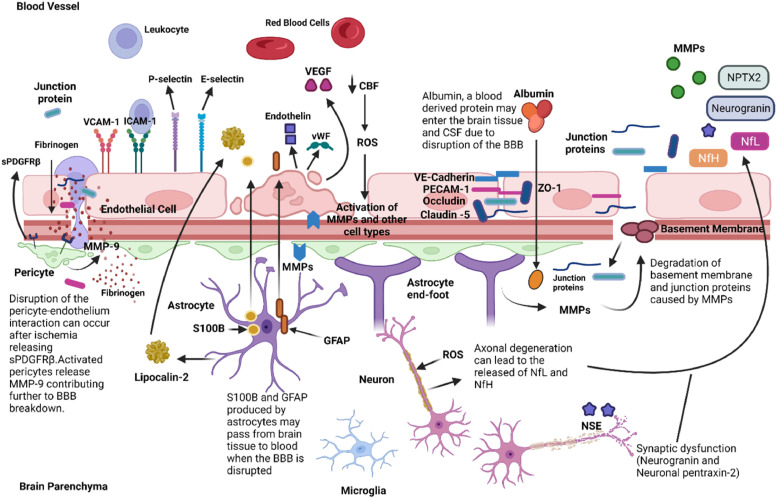
Overview of the NVU and its associated blood biomarkers. The NVU is comprised of endothelial cells, a basement membrane, pericytes, glial cells and neurons. It is postulated that hypoperfusion and reduced cerebral blood flow arising from vascular pathologies trigger a sequence of events, such as the release of ROS which can activate pericytes and astrocytes to secrete MMPs as well as other cellular components. MMPs have been linked to the degradation of the basement membrane and junction proteins, which can be detected in the brain tissue or peripheral circulation. Additionally, ischemic conditions can disrupt pericyte-endothelium interaction causing the release of soluble PDGFRβ and disruption of junction proteins. Activated pericytes release MMP-9 further contributing to the breakdown of the BBB. Increase in activated MMPs, ROS and cytokines can potentially induce neuronal dysfunction and damage. With the disruption of the BBB, blood proteins such as albumin enter the brain tissue and CSF. Additionally, proteins indicative of neuronal injury (NfL, NfH, NSE), synaptic dysfunction (neurogranin, neuronal pentraxin-2), astrocyte injury (S100B, GFAP and lipocalin-2) and pericyte dysfunction (sPDGFRβ) may enter the bloodstream. In response to inflammation, endothelial cells release various molecules such as VCAM-1, ICAM-1, P-selectin, E-selectin, endothelin, VEGF and vWF into the blood. Most of the derived biomarkers apart from Tau, microglial antibodies and galectin-3 are included here. Image created by first author GKH using the program BioRender.com.

References

    1. Dichgans M., Leys D. Vascular cognitive impairment. Circ. Res. 2017;120:573–591. doi: 10.1161/CIRCRESAHA.116.308426. - DOI - PubMed
    1. Hosoki S., Hansra G.K., Jayasena T., et al. Molecular biomarkers for vascular cognitive impairment and dementia. Nature Rev. Neuro. 2023;19:737–753. doi: 10.1038/s41582-023-00884-1. - DOI - PubMed
    1. Iadecola C. The neurovascular unit coming of age: a journey through neurovascular coupling in health and disease. Neuron. 2017;96:17–42. doi: 10.1016/j.neuron.2017.07.030. - DOI - PMC - PubMed
    1. Zlokovic B.V. Neurovascular pathways to neurodegeneration in Alzheimer's disease and other disorders. Nature Rev. Neurosci. 2011;12:723–738. doi: 10.1038/nrn3114. - DOI - PMC - PubMed
    1. Knox E.G., Aburto M.R., Clarke G., et al. The blood-brain barrier in aging and neurodegeneration. Mol. Psychiatr. 2022;27:2659–2673. doi: 10.1038/s41380-022-01511-z. - DOI - PMC - PubMed

LinkOut - more resources