Review
. 2024 May;44(5):1031-1041.
doi: 10.1161/ATVBAHA.124.319851. Epub 2024 Mar 21.

Colchicine's Role in Cardiovascular Disease Management

Affiliations
Review

Colchicine's Role in Cardiovascular Disease Management

Leo F Buckley et al. Arterioscler Thromb Vasc Biol. 2024 May.

Erratum in

Abstract

Colchicine-an anti-inflammatory alkaloid-has assumed an important role in the management of cardiovascular inflammation ≈3500 years after its first medicinal use in ancient Egypt. Primarily used in high doses for the treatment of acute gout flares during the 20th century, research in the early 21st century demonstrated that low-dose colchicine effectively treats acute gout attacks, lowers the risk of recurrent pericarditis, and can add to secondary prevention of major adverse cardiovascular events. As the first Food and Drug Administration-approved targeted anti-inflammatory cardiovascular therapy, colchicine currently has a unique role in the management of atherosclerotic cardiovascular disease. The safe use of colchicine requires careful monitoring for drug-drug interactions, changes in kidney and liver function, and counseling regarding gastrointestinal upset. Future research should elucidate the mechanisms of anti-inflammatory effects of colchicine relevant to atherosclerosis, the potential role of colchicine in primary prevention, in other cardiometabolic conditions, colchicine's safety in cardiovascular patients, and opportunities for individualizing colchicine therapy using clinical and molecular diagnostics.

Keywords: cardiovascular system; colchicine; humans; inflammation; kidney; liver.


Conflict of interest statement

Disclosures L.F. Buckley has received consulting fees from Kiniksa Pharmaceuticals and speaker fees from Boehringer Ingelheim Pharmaceuticals, Inc, and Eli Lilly and Company through ASHP Advantage. P. Libby is an unpaid consultant to, or involved in clinical trials for, Amgen, AstraZeneca, Baim Institute, Beren Therapeutics, Esperion Therapeutics, Genentech, Kancera, Kowa Pharmaceuticals, Medimmune, Merck, Moderna, Novo Nordisk, Novartis, Pfizer, and Sanofi-Regeneron. P. Libby is a member of the scientific advisory board for Amgen, Caristo Diagnostics, Cartesian Therapeutics, CSL Behring, DalCor Pharmaceuticals, Dewpoint Therapeutics, Eulicid Bioimaging, Kancera, Kowa Pharmaceuticals, Olatec Therapeutics, Medimmune, Novartis, PlaqueTec, TenSixteen Bio, Soley Therapeutics, and XBiotech, Inc. P. Libby’s laboratory has received research funding in the last 2 years from Novartis, Novo Nordisk, and Genentech. P. Libby is on the Board of Directors of XBiotech, Inc. P. Libby has a financial interest in Xbiotech, a company developing therapeutic human antibodies, in TenSixteen Bio, a company targeting somatic mosaicism and clonal hematopoiesis of indeterminate potential to discover and develop novel therapeutics to treat age-related diseases, and in Soley Therapeutics, a biotechnology company that is combining artificial intelligence with molecular and cellular response detection for discovering and developing new drugs, currently focusing on cancer therapeutics. P. Libby’s interests were reviewed and are managed by Brigham and Women’s Hospital and Mass General Brigham in accordance with their conflicts-of-interest policies.

Figures

Figure 1.
Figure 1.. Notable historical moments related to colchicine use since 1500 BCE
The figure displays approximate geographical locations of historical mentions of colchicine according to Hartung’s comprehensive history on the subject (Hartung EF. Arthritis Rheum. 1961;4:18–26.). Present-day names of the locations are used. All dates are approximate. Recruitment locations for landmark ASCVD clinical trials are indicated as blue circles. Map image downloaded from: https://www.vecteezy.com/free-vector/world-map-outline. ASCVD = atherosclerotic cardiovascular disease; BCE = before common era; CE = common era
Figure 1.
Figure 1.. Notable historical moments related to colchicine use since 1500 BCE
The figure displays approximate geographical locations of historical mentions of colchicine according to Hartung’s comprehensive history on the subject (Hartung EF. Arthritis Rheum. 1961;4:18–26.). Present-day names of the locations are used. All dates are approximate. Recruitment locations for landmark ASCVD clinical trials are indicated as blue circles. Map image downloaded from: https://www.vecteezy.com/free-vector/world-map-outline. ASCVD = atherosclerotic cardiovascular disease; BCE = before common era; CE = common era
Figure 2.
Figure 2.. Effects of colchicine on major adverse cardiovascular events
The LoDoCo2 and COLCOT studies demonstrated the efficacy of colchicine in lowering the risk of major adverse cardiovascular events in people with stable coronary artery disease (LoDoCo2) and recent myocardial infarction (COLCOT). The primary endpoints were the composite of cardiovascular death, myocardial infarction, ischemic stroke, or ischemia-driven revascularization in LoDoCo2 and the composite of cardiovascular death, myocardial infarction, stroke, urgent hospitalization for angina leading to revascularization, and resuscitated cardiac arrest in COLCOT. The secondary endpoints shown are the composite of cardiovascular death, myocardial infarction and stroke for LoDoCo2 and the composite of cardiovascular death, myocardial infarction, stroke and resuscitated cardiac arrest in COLCOT (resuscitated cardiac arrest occurred in 0.2% of COLCOT participants and did not contribute meaningfully to the endpoint). CI = confidence interval; COLCOT = Colchicine Cardiovascular Outcomes Trial; HR = hazard ratio; LoDoCo2 = Low-Dose Colchicine-2
Figure 3.
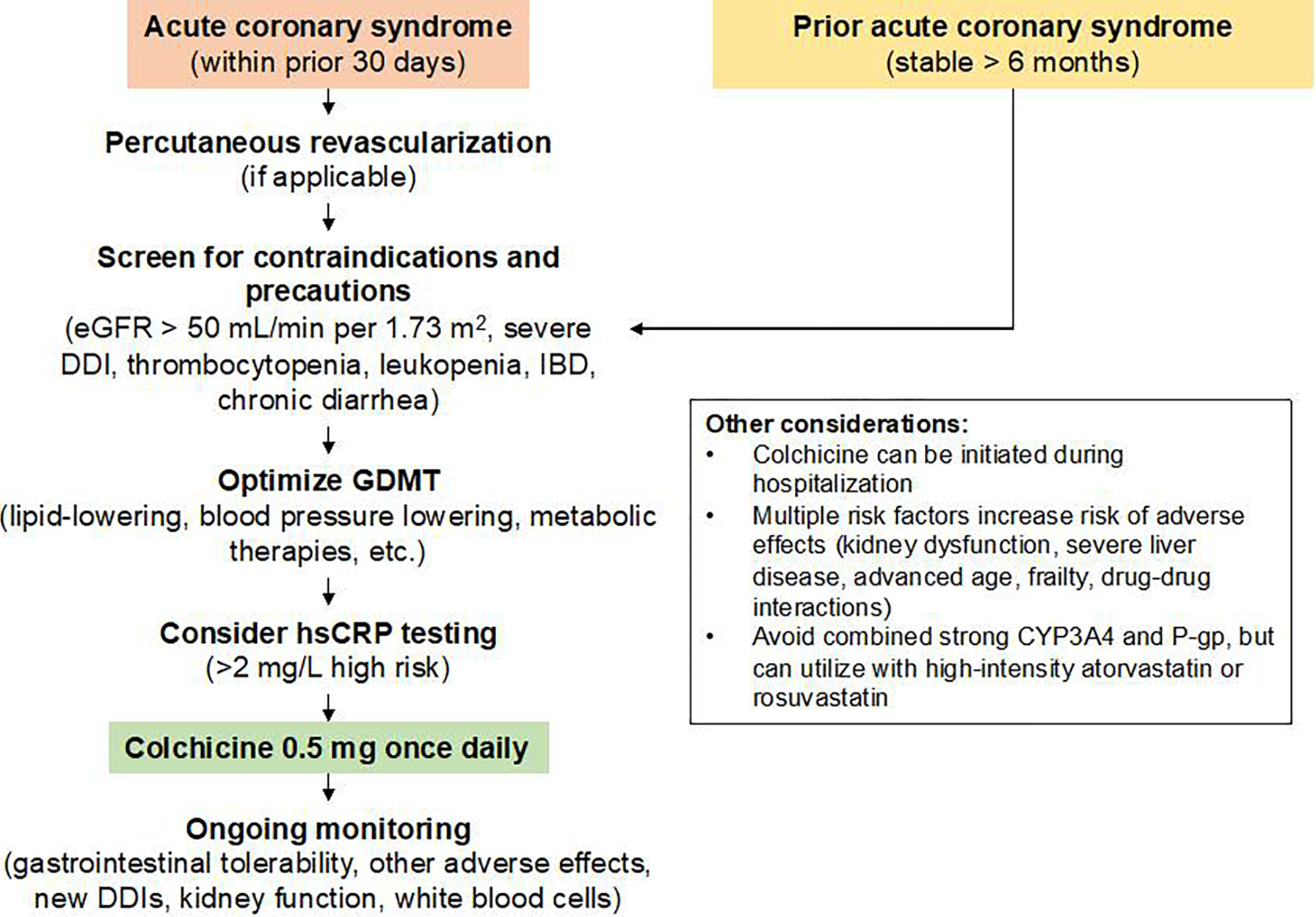
Figure 3.. Proposed algorithm for use of low-dose colchicine in secondary atherosclerosis prevention
This figure summarizes an approach for the use of low-dose colchicine in secondary atherosclerosis prevention. Low-dose colchicine can be initiated in people with an acute coronary syndrome during hospitalization or within the next 30 days as well as in people with stable coronary artery disease whose acute coronary syndrome occurred more than 6 months ago. Individuals should be screened for potential contraindications and precautions prior to colchicine initiation, and have optimal guideline-directed medical therapy. Measuring high-sensitivity C-reactive protein (hsCRP) can provide evidence of residual inflammatory risk, although the landmark colchicine clinical trials did not require a specific hsCRP level for inclusion. CYP = cytochrome P450; DDI = drug-drug interaction; eGFR = estimated glomerular filtration rate; hsCRP = high-sensitivity C-reactive protein; IBD = inflammatory bowel disease; P-gp = P-glycoprotein
Figure 4.
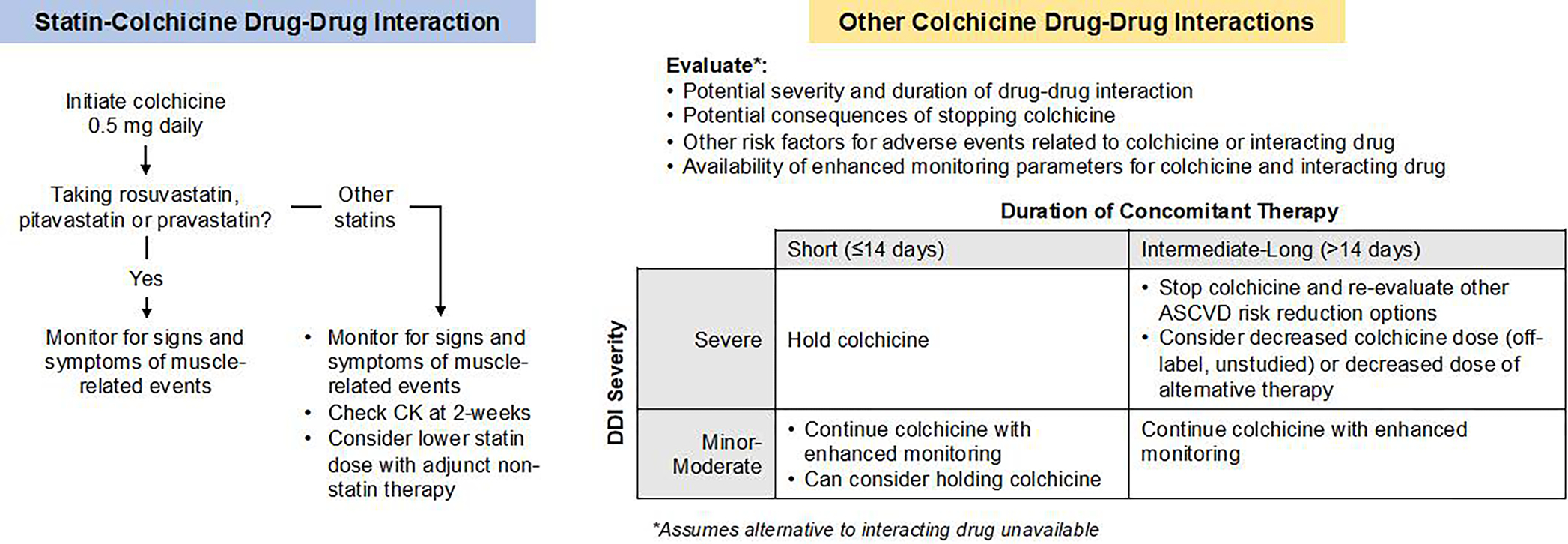
Figure 4.. Proposed management of statin and non-statin drug-drug interactions with colchicine
Colchicine interacts with many commonly used cardiovascular therapies, including statins. Colchicine can be used concomitantly with rosuvastatin, pitavastatin, or pravastatin without enhanced monitoring or dose adjustments. Concomitant use of colchicine with other statins requires enhanced monitoring for muscle-related adverse effects. The management of other drug-drug interactions with colchicine should consider the severity and duration of the interaction, the consequences of withholding colchicine therapy, other risk factors for colchicine adverse effects and the availability of alternative therapies or enhanced monitoring.
Figure 5.
Figure 5.. Non-linear relationship between colchicine plasma concentrations and circulating leukocyte concentrations
Colchicine concentrations in plasma (total bound and unbound colchicine) and in granulocytes and mononuclear cells was measured in people with Familial Mediterranean Fever who were taking colchicine 0.5 to 2.0 mg daily. Annotations indicate the approximate plasma concentration at which leukocyte concentrations plateau, estimated maximal concentrations (Cmax) observed in people according to kidney function and the estimated safe upper limit plasma concentration. Granulocyte and mononuclear cell concentrations were extrapolated visually across the higher end of the plasma concentration range. Figure was based on data from Br J Clin Pharmacol. 1994;38(1):87–9. and Am J Med. 2022;135(1):32–38. Cmax = maximal concentration

References

    1. Terkeltaub RA, Furst DE, Bennett K, Kook KA, Crockett RS, Davis MW. High versus low dosing of oral colchicine for early acute gout flare: Twenty-four-hour outcome of the first multicenter, randomized, double-blind, placebo-controlled, parallel-group, dose-comparison colchicine study. Arthritis Rheum. 2010;62:1060–1068. - PubMed
    1. Dinarello CA, Wolff SM, Goldfinger SE, Dale DC, Alling DW. Colchicine therapy for familial mediterranean fever. A double-blind trial. N Engl J Med. 1974;291:934–937. - PubMed
    1. Chiabrando JG, Bonaventura A, Vecchié A, Wohlford GF, Mauro AG, Jordan JH, Grizzard JD, Montecucco F, Berrocal DH, Brucato A, Imazio M, Abbate A. Management of Acute and Recurrent Pericarditis: JACC State-of-the-Art Review. J Am Coll Cardiol. 2020;75:76–92. - PubMed
    1. Tardif J-C, Kouz S, Waters DD, Bertrand OF, Diaz R, Maggioni AP, Pinto FJ, Ibrahim R, Gamra H, Kiwan GS, Berry C, López-Sendón J, Ostadal P, Koenig W, Angoulvant D, Grégoire JC, Lavoie M-A, Dubé M-P, Rhainds D, Provencher M, Blondeau L, Orfanos A, L’Allier PL, Guertin M-C, Roubille F. Efficacy and Safety of Low-Dose Colchicine after Myocardial Infarction. N Engl J Med. 2019;381:2497–2505. - PubMed
    1. Nidorf SM, Fiolet ATL, Mosterd A, Eikelboom JW, Schut A, Opstal TSJ, The SHK, Xu X-F, Ireland MA, Lenderink T, Latchem D, Hoogslag P, Jerzewski A, Nierop P, Whelan A, Hendriks R, Swart H, Schaap J, Kuijper AFM, van Hessen MWJ, Saklani P, Tan I, Thompson AG, Morton A, Judkins C, Bax WA, Dirksen M, Alings M, Hankey GJ, Budgeon CA, Tijssen JGP, Cornel JH, Thompson PL. Colchicine in Patients with Chronic Coronary Disease. N Engl J Med. 2020; - PubMed

Publication types

MeSH terms