Positioning centrioles and centrosomes
- PMID: 38512059
- PMCID: PMC10959756
- DOI: 10.1083/jcb.202311140
Positioning centrioles and centrosomes
Abstract
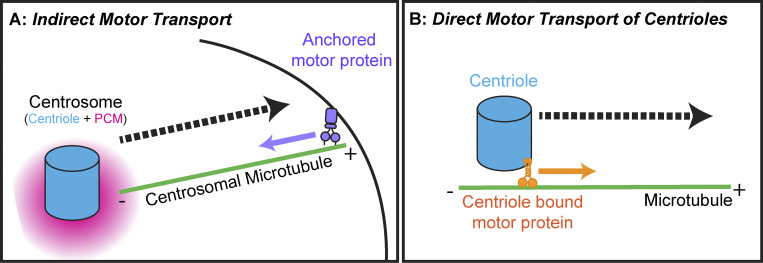
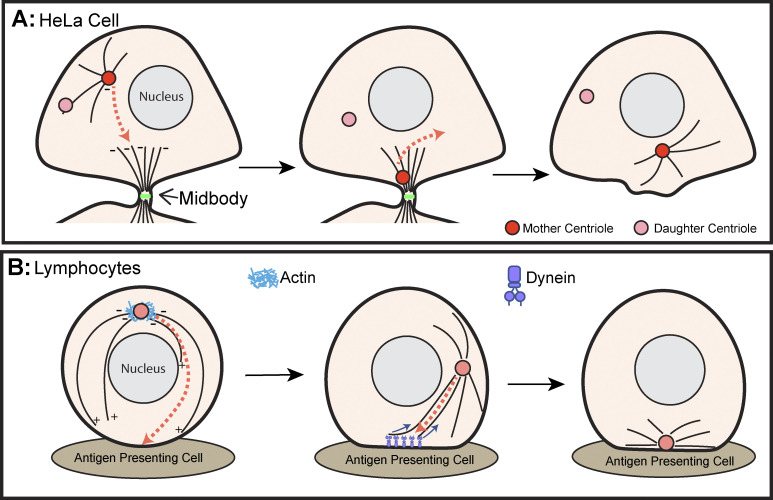
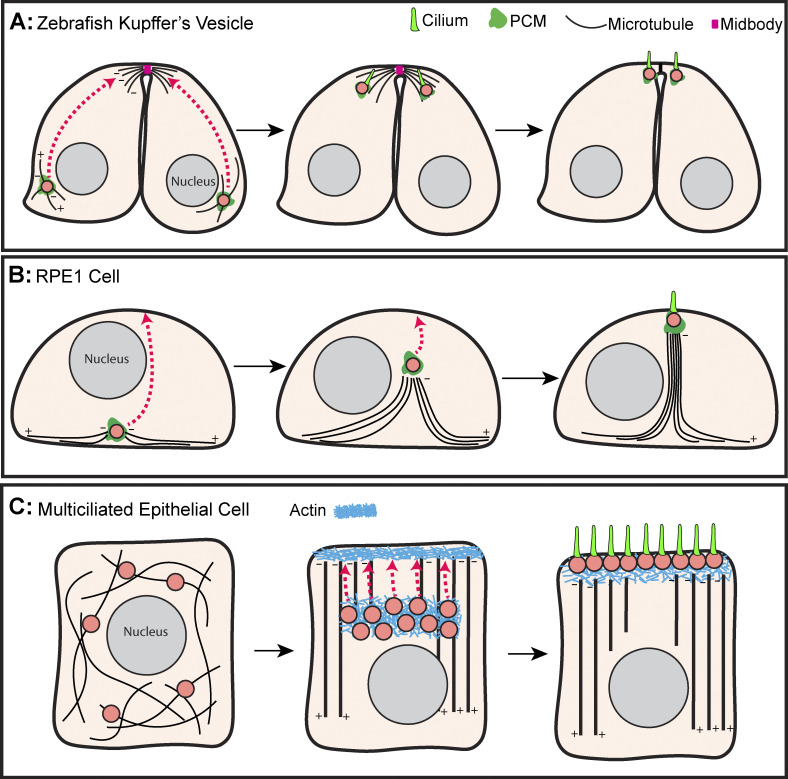
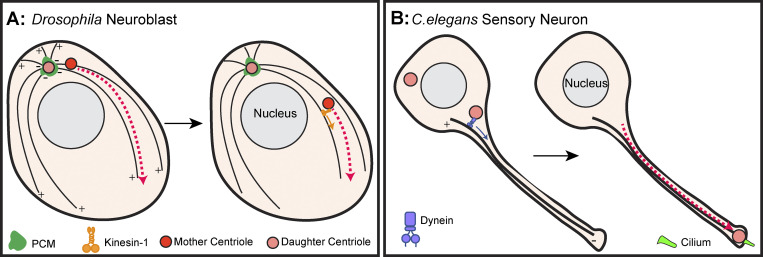
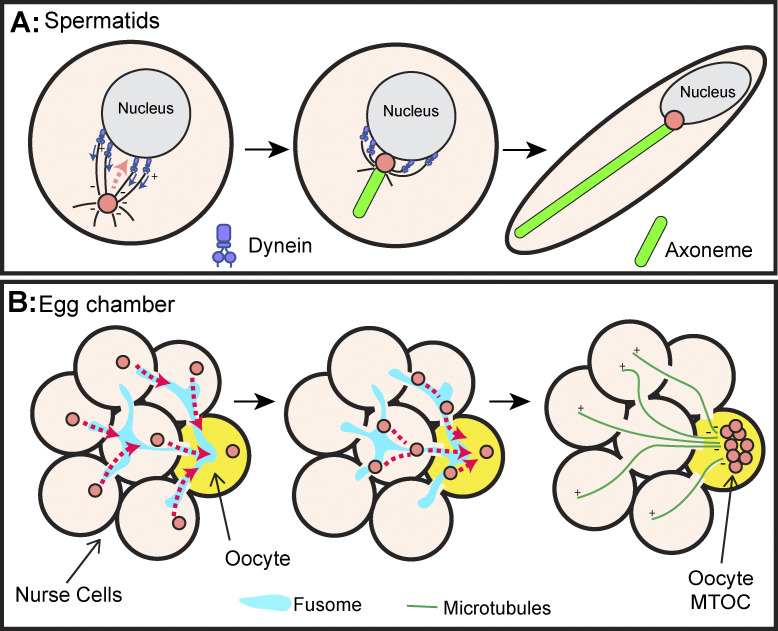
Centrosomes are the primary microtubule organizer in eukaryotic cells. In addition to shaping the intracellular microtubule network and the mitotic spindle, centrosomes are responsible for positioning cilia and flagella. To fulfill these diverse functions, centrosomes must be properly located within cells, which requires that they undergo intracellular transport. Importantly, centrosome mispositioning has been linked to ciliopathies, cancer, and infertility. The mechanisms by which centrosomes migrate are diverse and context dependent. In many cells, centrosomes move via indirect motor transport, whereby centrosomal microtubules engage anchored motor proteins that exert forces on those microtubules, resulting in centrosome movement. However, in some cases, centrosomes move via direct motor transport, whereby the centrosome or centriole functions as cargo that directly binds molecular motors which then walk on stationary microtubules. In this review, we summarize the mechanisms of centrosome motility and the consequences of centrosome mispositioning and identify key questions that remain to be addressed.
This is a work of the U.S. Government and is not subject to copyright protection in the United States. Foreign copyrights may apply.
Conflict of interest statement
Disclosures: The authors declare no competing interests exist.
Figures
References
-
- Aljiboury, A.A., Ingram E., Krishnan N., Ononiwu F., Pal D., Manikas J., Taveras C., Hall N.A., Da Silva J., Freshour J., and Hehnly H.. 2023. Rab8, Rab11, and Rab35 coordinate lumen and cilia formation during zebrafish left-right organizer development. PLoS Genet. 19:e1010765. 10.1371/journal.pgen.1010765 - DOI - PMC - PubMed
Publication types
MeSH terms
Substances
Grants and funding
LinkOut - more resources
Full Text Sources