Review
. 2024 Jan 11;9(2):547-559.
doi: 10.1016/j.ncrna.2024.01.006. eCollection 2024 Jun.

Puzzling out the role of MIAT LncRNA in hepatocellular carcinoma

Affiliations
Review

Puzzling out the role of MIAT LncRNA in hepatocellular carcinoma

Rawan Amr Elmasri et al. Noncoding RNA Res. .

Abstract

A non-negligible part of our DNA has been proven to be transcribed into non-protein coding RNA and its intricate involvement in several physiological processes has been highly evidenced. The significant biological role of non-coding RNAs (ncRNAs), including long non-coding RNAs (lncRNAs) has been variously reported. In the current review, the authors highlight the multifaceted role of myocardial infarction-associated transcript (MIAT), a well-known lncRNA, in hepatocellular carcinoma (HCC). Since its discovery, MIAT has been described as a regulator of carcinogenesis in several malignant tumors and its overexpression predicts poor prognosis in most of them. At the molecular level, MIAT is closely linked to the initiation of metastasis, invasion, cellular migration, and proliferation, as evidenced by several in-vitro and in-vivo models. Thus, MIAT is considered a possible theranostic agent and therapeutic target in several malignancies. In this review, the authors provide a comprehensive overview of the underlying molecular mechanisms of MIAT in terms of its downstream target genes, interaction with other classes of ncRNAs, and potential clinical implications as a diagnostic and/or prognostic biomarker in HCC.

Keywords: Liver cancer; Long non-coding RNA (lncRNA); Metastasis; Myocardial infarction associated transcript (MIAT); Theranostics; microRNA (miRNA).


Figures

Image 1
Graphical abstract
Fig. 1
Fig. 1
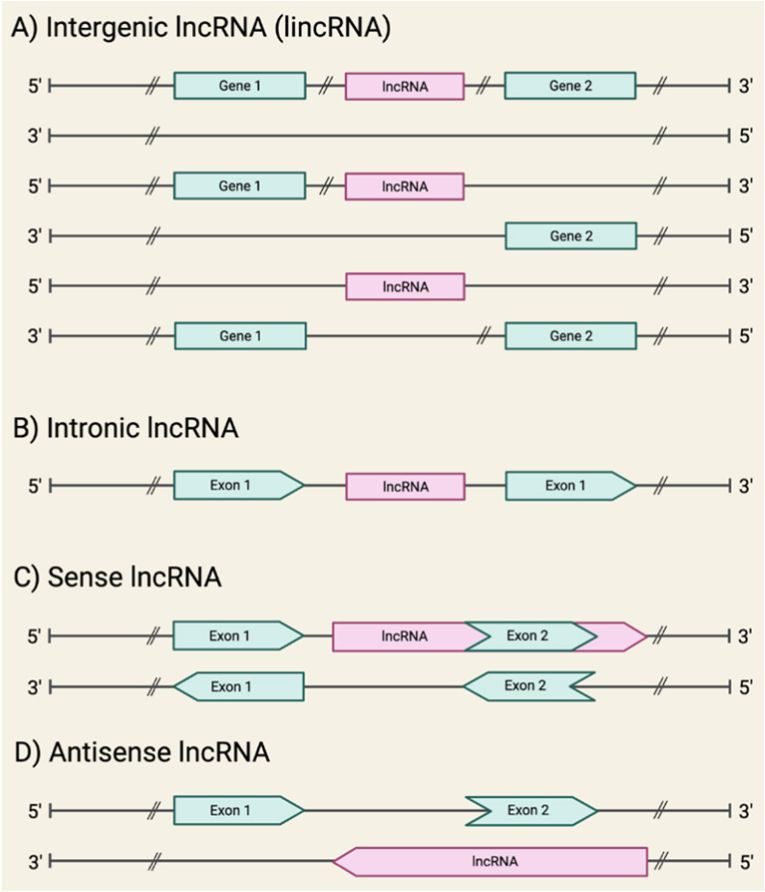
The possible genomic locations of lncRNAs. Protein-coding genes and their exons are represented by green segments, while lncRNAs and their introns are represented by pink segments. (A) An intergenic lncRNA, transcribed from either DNA strand between two protein-coding genes. (B) An intronic lncRNA, transcribed from protein-coding gene introns. (C) A sense lncRNA, transcribed from the sense strand of protein-coding genes, overlapping with part (or entirely) of a protein-coding sequence and one or more introns. (D) An antisense lncRNA, transcribed from the antisense strand of protein-coding genes, overlapping with a part (or entirely) of a protein-coding sequence and 1 or more introns. (*) Sense and Antisense lncRNAs are subcategories of a larger class called genic lncRNAs.
Fig. 2
Fig. 2
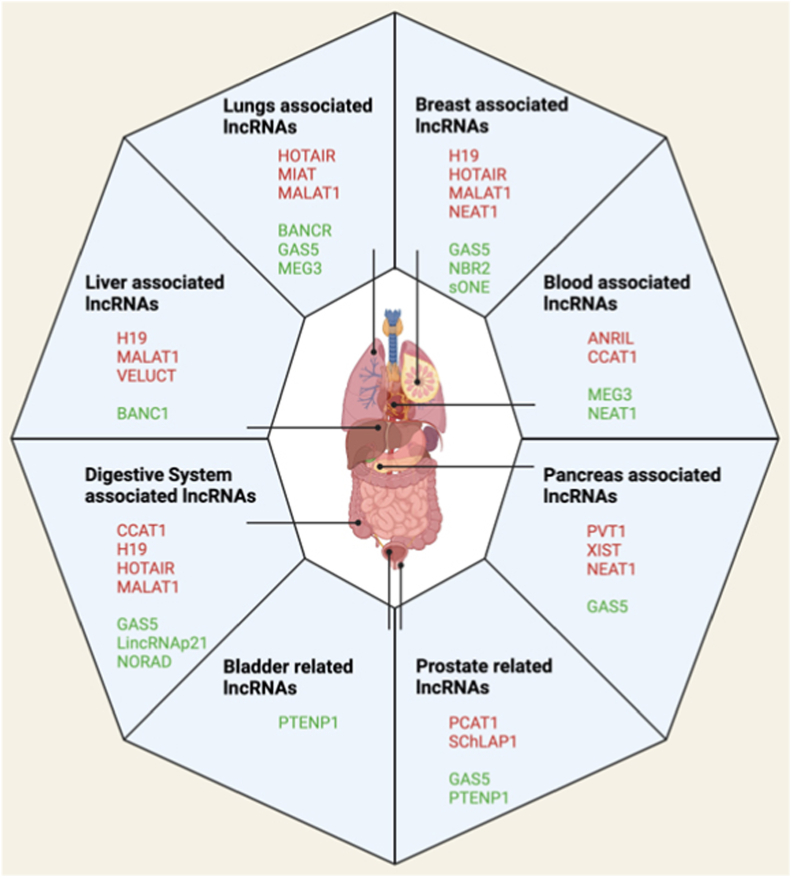
Graphical representation of human tumors and related lncRNAs. Red labels indicate oncogenic lncRNAs, while green labels indicate tumor-suppressive lncRNAs.
Fig. 3
Fig. 3
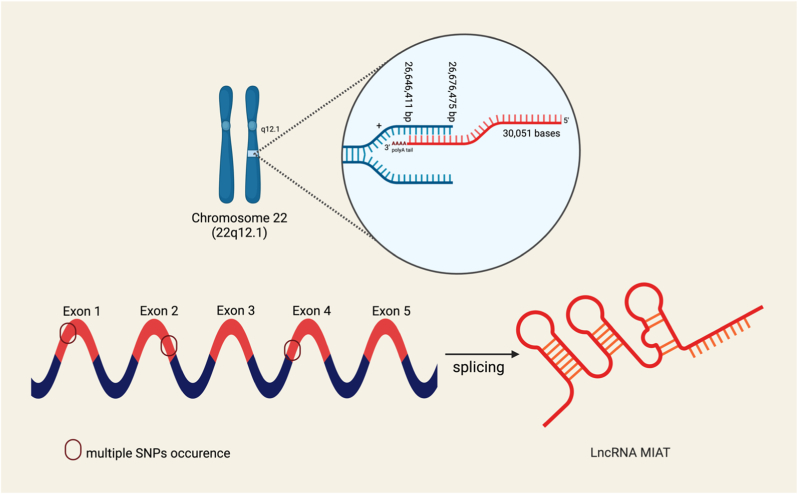
Chromosomal locations and Single Nucleotide Polymorphisms (SNPs) in MIAT. MIAT is located on chromosome 22, band q12.1. A simplified view of MIAT is also illustrated with its exons with various splicing combinations and SNPs.
Fig. 4
Fig. 4
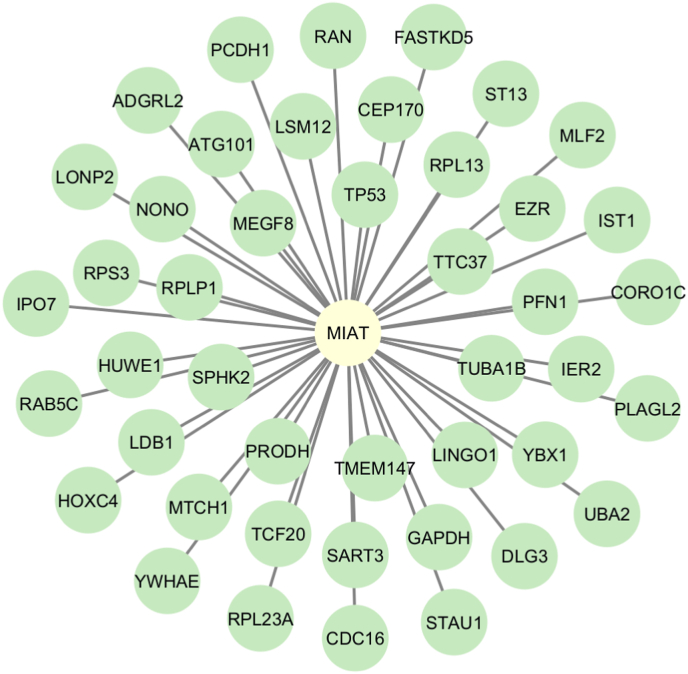
MIAT-mRNA interaction network. A network plot representing MIAT-mRNA regulatory network. Data was retrieved from the ENCODE database.
Fig. 5
Fig. 5
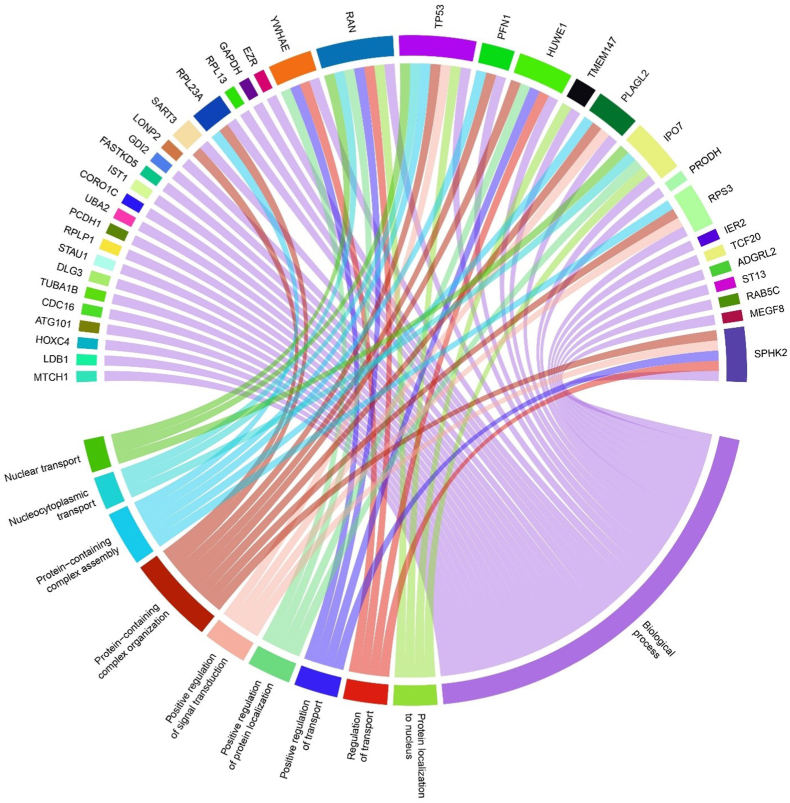
Chord diagram for MIAT gene-function network using GO and ENCORI databases; this diagram describes the top GO expressed biological functions for the 45 genes interacting with MIAT. Results showed that SPHK2, RPS3, IPO7, TP53, RAN, and YWHAE are highly expressed genes from MIAT-based network and are directly interacting with higher of functions compared to the other genes.
Fig. 6
Fig. 6
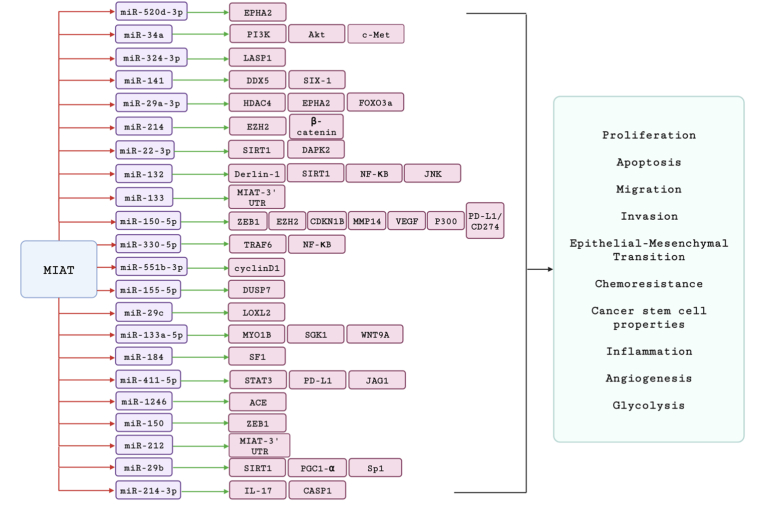
Validated MIAT lncRNA-miRNAs-mRNAs interaction network in carcinogenesis. Crosstalk between MIAT lncRNA, its microRNA prey and their respective targets, and the cancer hallmarks that are altered due to these interactions, in different malignant contexts. The potential of some microRNAs, such as miR-133 and miR-212, to target MIAT, is also highlighted. Red arrows signify downregulation effect mediated by lncRNA MIAT on the several microRNAs. Green arrows signify upregulation effect on the downstream targets, subsequent to the respective microRNA suppression.
Fig. 7
Fig. 7
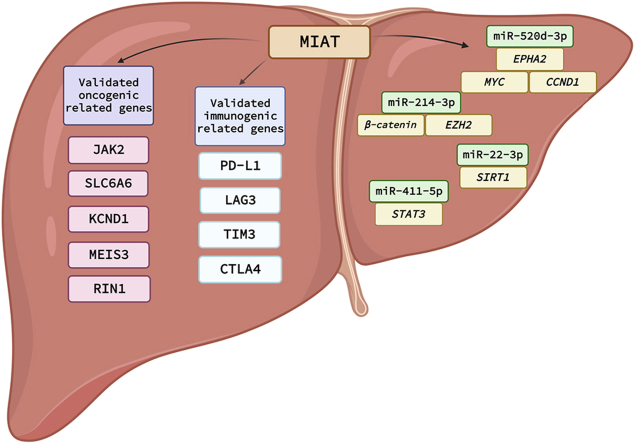
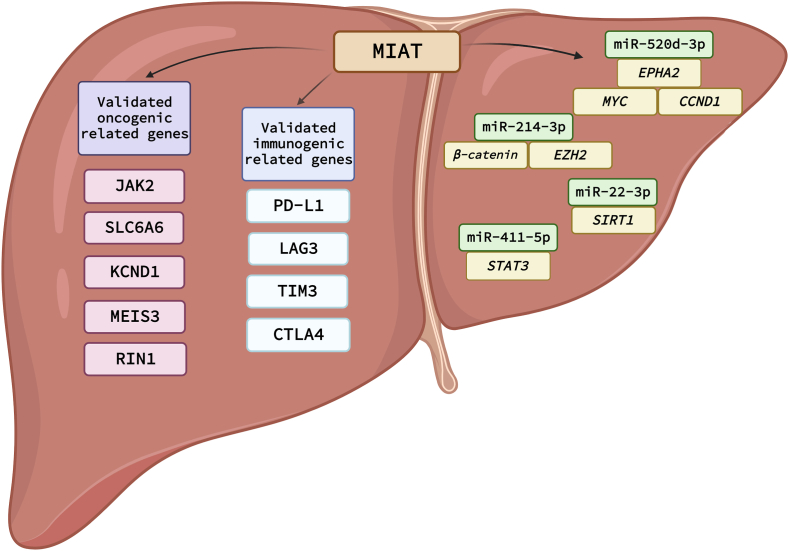
Graphical representation of signaling cascades and ncRNAs circuits drawn downstream MIAT in HCC. A summary for all reported oncogenic related genes, immunogenic related genes and ncRNA-miRNA circuits reported to be modulated by MIAT in HCC.

References

    1. Gibbs R.A. The human genome Project changed everything. Nat. Rev. Genet. 2020;21(10):575–576. - PMC - PubMed
    1. Lander E.S., Linton L.M., Birren B., Nusbaum C., Zody M.C., Baldwin J., et al. Initial sequencing and analysis of the human genome. Nature. 2001;409(6822):860–921. - PubMed
    1. Abaza T., El-Aziz M.K.A., Daniel K.A., Karousi P., Papatsirou M., Fahmy S.A., et al. Emerging role of circular RNAs in hepatocellular carcinoma immunotherapy. Int. J. Mol. Sci. 2023;24(22) - PMC - PubMed
    1. Dawoud A., Ihab Zakaria Z., Hisham Rashwan H., Braoudaki M., Youness R.A. Circular RNAs: new layer of complexity evading breast cancer heterogeneity. Noncoding RNA Res. 2023;8(1):60–74. - PMC - PubMed
    1. El-Daly S.M., Talaat R.M., Braoudaki M., Youness R.A., Cho W.C. Editorial: recent breakthroughs in the decoding of circulating nucleic acids and their applications to human diseases. Front. Mol. Biosci. 2023;10 - PMC - PubMed

LinkOut - more resources