


Efficacy of eHealth interventions to reduce depression symptoms in individuals with obesity: a systematic review of randomized controlled trials
- PMID: 38516265
- PMCID: PMC10954845
- DOI: 10.3389/fpsyt.2024.1296433
Efficacy of eHealth interventions to reduce depression symptoms in individuals with obesity: a systematic review of randomized controlled trials
Abstract
Introduction: Obesity and depression are inter-related health concerns, demanding a high level of treatment and costs in the health care system. The development of eHealth interventions that simultaneously address obesity and mental health can be supportive in this regard. However, evidence of the efficacy of eHealth interventions in the treatment of depression symptoms in individuals with obesity is lacking. The aim of this systematic literature review is to evaluate the efficacy of existing eHealth interventions for individuals with obesity that target depression symptoms.
Methods: We systematically searched electronic databases (Cochrane Library, PubMed, Scopus) to identify studies published in English between January 2016 and January 2023, that focused on eHealth interventions, targeting depression symptoms in individuals with obesity people. Exclusion criteria were study objectives that (1) focused specifically on one or more metabolic comorbidities of individuals with obesity, e.g., hypertension, hyperlipidemia, diabetes; (2) focused specifically on eating disorders comorbidities e.g., binge eating disorder, and (3) focused specifically on patients before or after bariatric surgery.
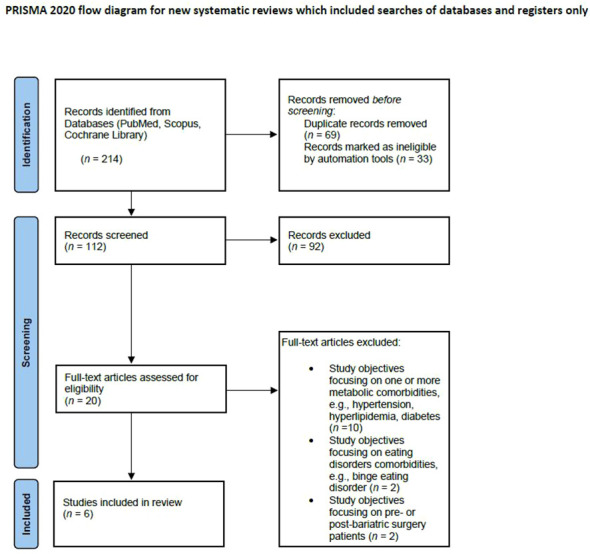
Results: The database search identified 214 records. Six articles were included in this review. Sample sizes ranged from 70 to 1267 participants of ages 18-60 years. All included studies were randomized controlled trials. Two of the six included studies were web-based interventions guided either by medical doctors or psychologists. All interventions included video, printed materials, and interactive parts of which two studies integrated elements of Cognitive Behavioural Therapy and Social Cognitive Therapy. The findings showed that eHealth treatment services, supported and guided throughout the intervention had high acceptance and efficacy in the reduction of depression symptoms among individuals with obesity.
Conclusion: EHealth interventions that address and target both mental and physical health with interactive strategies calls for better efficacy in the reduction of depression symptoms. Future eHealth interventions that target depression symptoms in individuals with obesity should integrate digital strategies that address both mental and physical health through interactive modules.
Keywords: depression; e-mental health; eHealth intervention; mental health; obesity.
Copyright © 2024 Kocol, Bäuerle, Schadendorf, Geiger, Krakowczyk, Skoda and Teufel.
Conflict of interest statement
The authors declare that the research was conducted in the absence of any commercial or financial relationships that could be construed as a potential conflict of interest.
Figures
References
-
- World Health Organization . Obesity and overweight (2021). Available online at: https://www.who.int/newsroom/fact-sheets/detail/obesity-and-overweight (Accessed 12.12.2021).
-
- Eurostat . Over half of adults in the EU are overweight (2021). Available online at: https://ec.europa.eu/eurostat/de/web/products-eurostat-news/-/ddn-202107... (Accessed 15.12.2021).
-
- Dai H, Alsalhe TA, Chalghaf N, Riccò M, Bragazzi NL, Wu J. The global burden of disease attributable to high body mass index in 195 countries and territories, 1990-2017: An analysis of the Global Burden of Disease Study. PloS Med. (2020) 17:e1003198. doi: 10.1371/journal.pmed.1003198 - DOI - PMC - PubMed
-
- Puigdomenech Puig E, Robles N, Saigi-Rubio F, Zamora A, Moharra M, Paluzie G, et al. Assessment of the efficacy, safety, and effectiveness of weight control and obesity management mobile health interventions: Systematic review. JMIR Mhealth Uhealth. (2019) 7:e12612. doi: 10.2196/12612 - DOI - PMC - PubMed
Publication types
LinkOut - more resources
Full Text Sources
