Canadian COVID-19 host genetics cohort replicates known severity associations
- PMID: 38517939
- PMCID: PMC10990181
- DOI: 10.1371/journal.pgen.1011192
Canadian COVID-19 host genetics cohort replicates known severity associations
Erratum in
-
Correction: Canadian COVID-19 host genetics cohort replicates known severity associations.PLoS Genet. 2025 Mar 4;21(3):e1011628. doi: 10.1371/journal.pgen.1011628. eCollection 2025 Mar. PLoS Genet. 2025. PMID: 40036184 Free PMC article.
Abstract
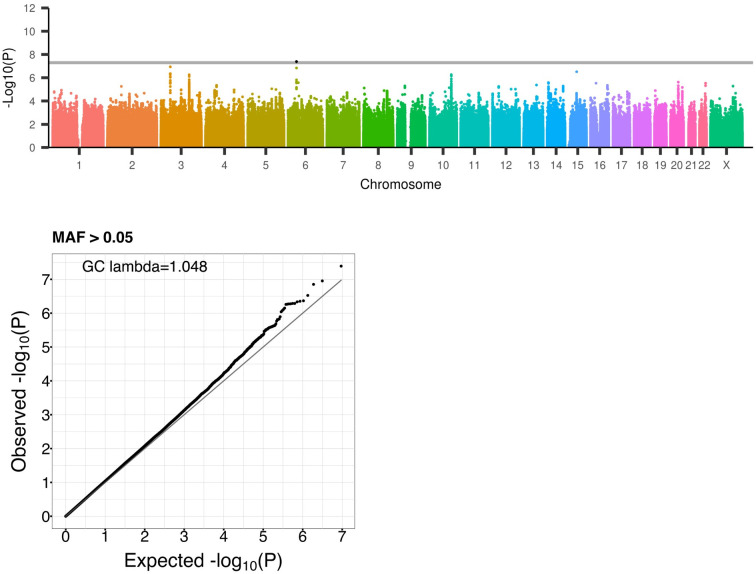
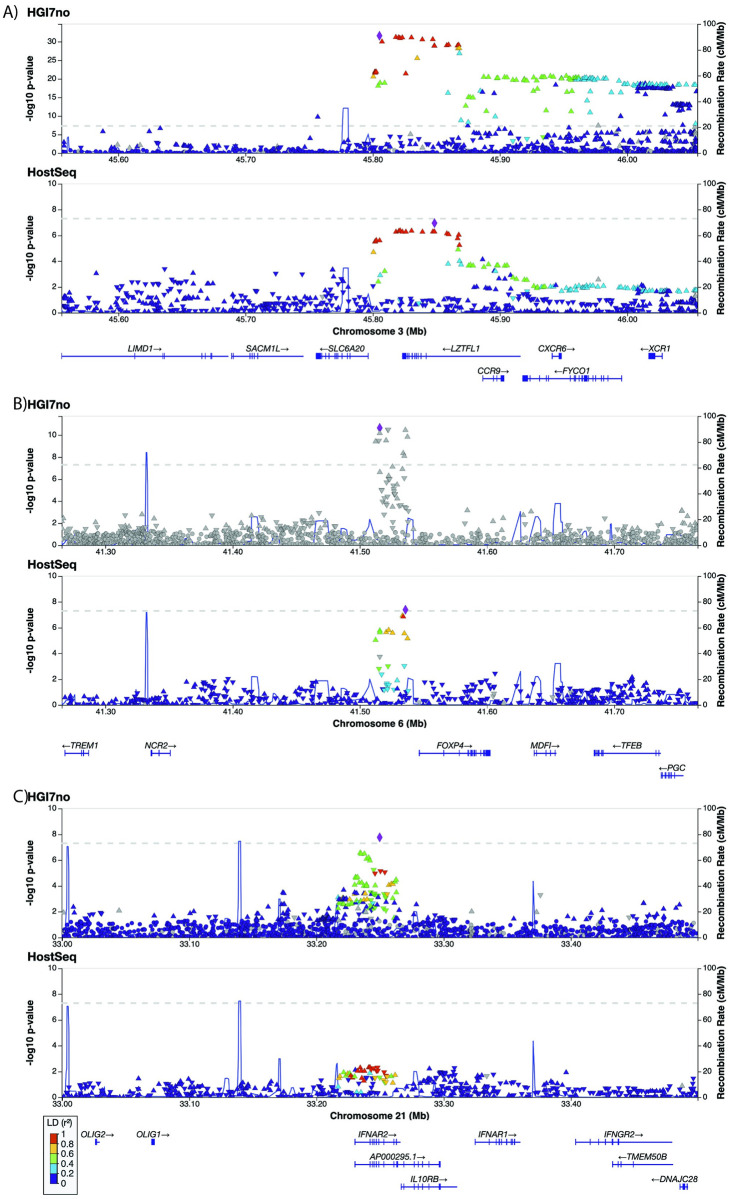
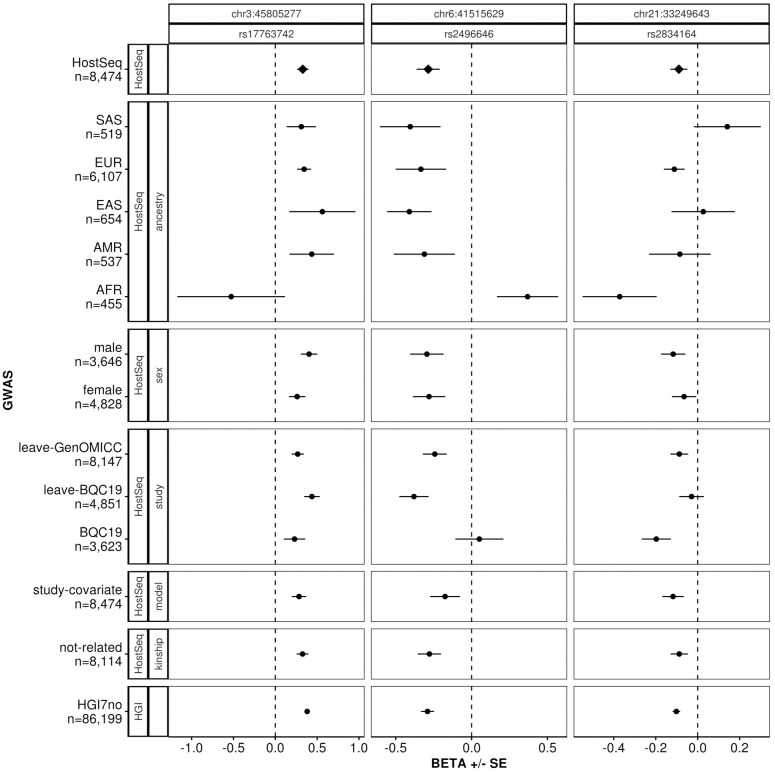
The HostSeq initiative recruited 10,059 Canadians infected with SARS-CoV-2 between March 2020 and March 2023, obtained clinical information on their disease experience and whole genome sequenced (WGS) their DNA. We analyzed the WGS data for genetic contributors to severe COVID-19 (considering 3,499 hospitalized cases and 4,975 non-hospitalized after quality control). We investigated the evidence for replication of loci reported by the International Host Genetics Initiative (HGI); analyzed the X chromosome; conducted rare variant gene-based analysis and polygenic risk score testing. Population stratification was adjusted for using meta-analysis across ancestry groups. We replicated two loci identified by the HGI for COVID-19 severity: the LZTFL1/SLC6A20 locus on chromosome 3 and the FOXP4 locus on chromosome 6 (the latter with a variant significant at P < 5E-8). We found novel significant associations with MRAS and WDR89 in gene-based analyses, and constructed a polygenic risk score that explained 1.01% of the variance in severe COVID-19. This study provides independent evidence confirming the robustness of previously identified COVID-19 severity loci by the HGI and identifies novel genes for further investigation.
Copyright: © 2024 Garg et al. This is an open access article distributed under the terms of the Creative Commons Attribution License, which permits unrestricted use, distribution, and reproduction in any medium, provided the original author and source are credited.
Conflict of interest statement
The authors have declared that no competing interests exist.
Figures
References
Publication types
MeSH terms
Substances
Supplementary concepts
LinkOut - more resources
Full Text Sources
Medical
Miscellaneous