


Platinum iodido drugs show potential anti-tumor activity, affecting cancer cell metabolism and inducing ROS and senescence in gastrointestinal cancer cells
- PMID: 38519773
- PMCID: PMC10959927
- DOI: 10.1038/s42003-024-06052-5
Platinum iodido drugs show potential anti-tumor activity, affecting cancer cell metabolism and inducing ROS and senescence in gastrointestinal cancer cells
Abstract
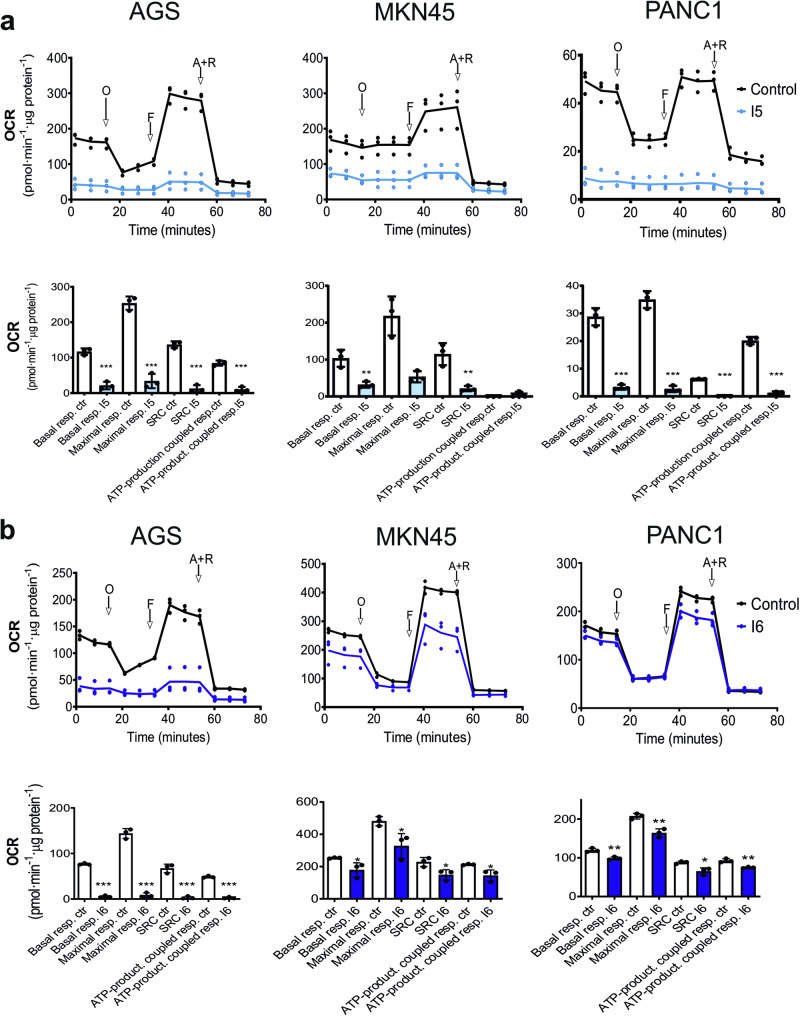
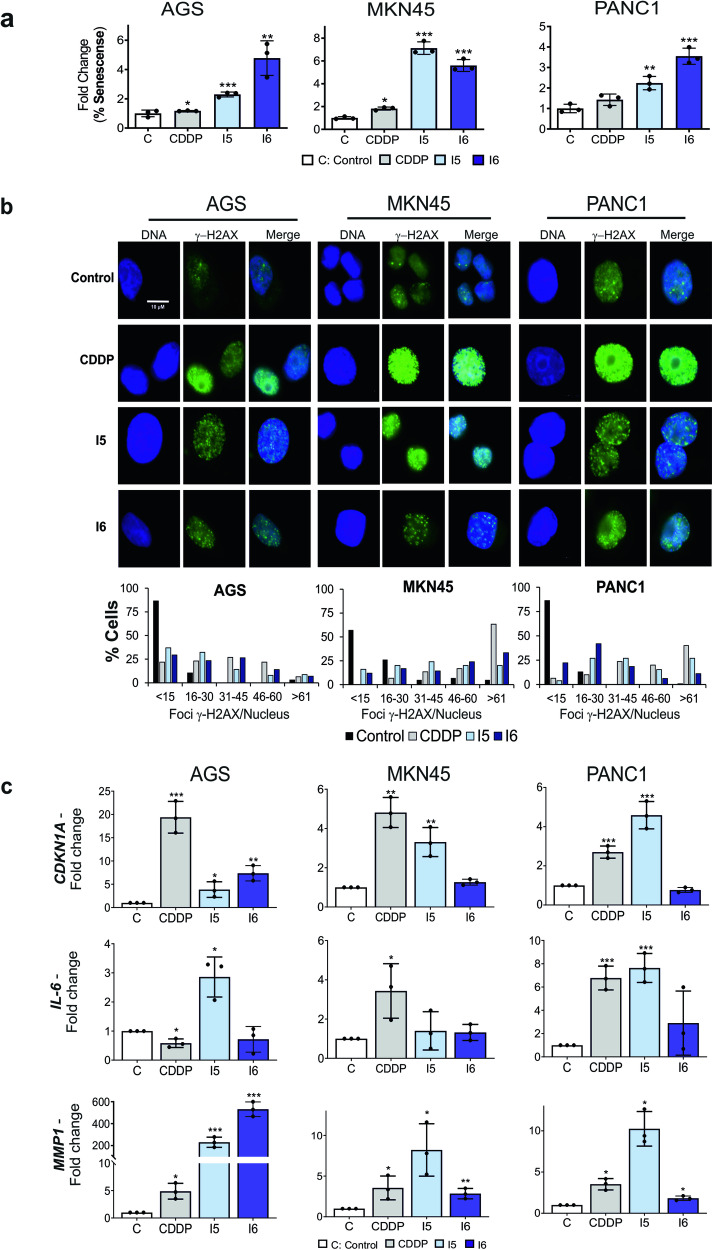
Cisplatin-based chemotherapy has associated clinical disadvantages, such as high toxicity and resistance. Thus, the development of new antitumor metallodrugs able to overcome different clinical barriers is a public healthcare priority. Here, we studied the mechanism of action of the isomers trans and cis-[PtI2(isopropylamine)2] (I5 and I6, respectively) against gastrointestinal cancer cells. We demonstrate that I5 and I6 modulate mitochondrial metabolism, decreasing OXPHOS activity and negatively affecting ATP-linked oxygen consumption rate. Consequently, I5 and I6 generated Reactive Oxygen Species (ROS), provoking oxidative damage and eventually the induction of senescence. Thus, herein we propose a loop with three interconnected processes modulated by these iodido agents: (i) mitochondrial dysfunction and metabolic disruptions; (ii) ROS generation and oxidative damage; and (iii) cellular senescence. Functionally, I5 reduces cancer cell clonogenicity and tumor growth in a pancreatic xenograft model without systemic toxicity, highlighting a potential anticancer complex that warrants additional pre-clinical studies.
© 2024. The Author(s).
Conflict of interest statement
The authors declare no competing interest.
Figures



References
Publication types
MeSH terms
Substances
Grants and funding
LinkOut - more resources
Full Text Sources
