


The Mediterranean diet: a historical perspective
- PMID: 38520653
- PMCID: PMC10960751
- DOI: 10.1007/s40520-023-02686-3
The Mediterranean diet: a historical perspective
Abstract
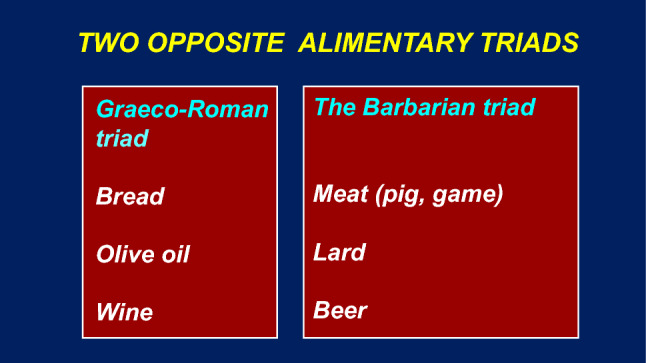
The Mediterranean diet, which was born in the Mediterranean basin, was initially quite poor and simple, essentially based on the products that grew almost spontaneously along the shores of the Mediterranean, i.e., olives, grapes, and wheat, which were long cultivated in the Mediterranean region. The invasions of the Roman Empire by barbarian populations, between 400 and 800 AD, made the diet enriched with products from wild uncultivated areas, meat from game and pigs, and vegetables. With the arrival of the Arabs in southern Italy in the ninth century, the focus of the diet shifted to carbohydrates, particularly to dried pasta and to other new ingredients. The Arabs primarily brought a new imaginative spirit to the kitchen by introducing and using an infinity of condiments and seasonings. The discovery of the Americas and the arrival of new ingredients from the New World brought the final adjustments to the Mediterranean diet: new meat (turkey), new vegetables (potatoes, broad beans, corn, tomatoes,) new fruits (strawberries, pineapples, coconuts, peanuts), chocolate, coffee and sugar completed the list of components of the Mediterranean diet as we know it today.
Keywords: Arabs; Barbarians; Christopher Columbus; Mediterranean diet; Romans.
© 2024. The Author(s).
Conflict of interest statement
There is no confict of interest.
Figures
References
-
- Arnoni Y, Berry EM. Chapter 1: On the origins and evolution of the Mediterranean diet. In: Preedy VR, Watson RR, editors. The Mediterranean diet an evidence-based approach. London: Academic Press; 2015. pp. 3–11.
-
- Gibbon E (2001) The history of the decline and fall of the Roman Empire, Abridged ed. Edited by Womersley D. Penguin Classics, New York
-
- Heather P. The barbarian in late Antiquity. In: Miles R, editor. Constructing identities in late Antiquity. London: Routledge; 2002. pp. 137–154.
-
- Montanari M. Production structures and food systems in the Early Middle Ages. In: Flandrin JL, Montanari M, editors. Food: a culinary history from Antiquity to the present. New York: Columbia University Press; 1999. pp. 168–177.
-
- Ward-Perkins B. The fall of Rome and the end of civilization. New York: Oxford University Press; 2005.
Publication types
MeSH terms
LinkOut - more resources
Full Text Sources
