Review
. 2024 Feb 28;16(2):200-215.
doi: 10.3390/idr16020016.

Pulmonary Involvement in Recurrent Respiratory Papillomatosis: A Systematic Review

Affiliations
Review

Pulmonary Involvement in Recurrent Respiratory Papillomatosis: A Systematic Review

Illari Sechi et al. Infect Dis Rep. .

Abstract

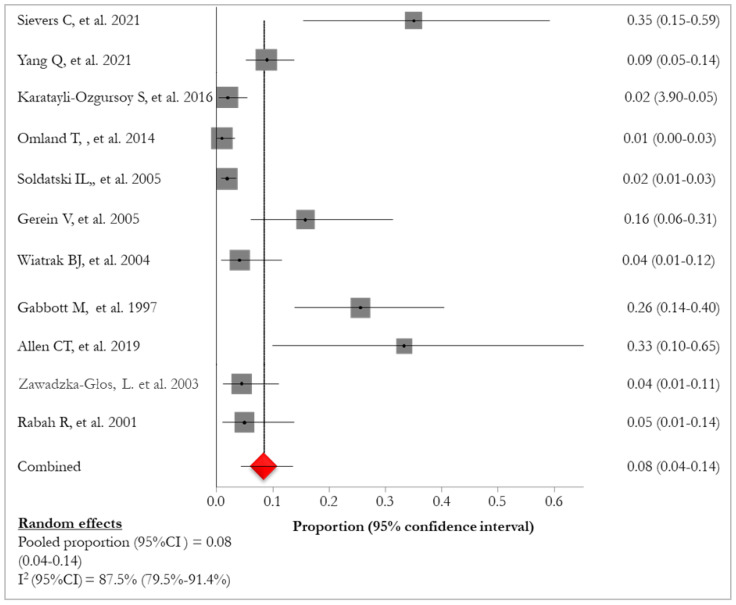
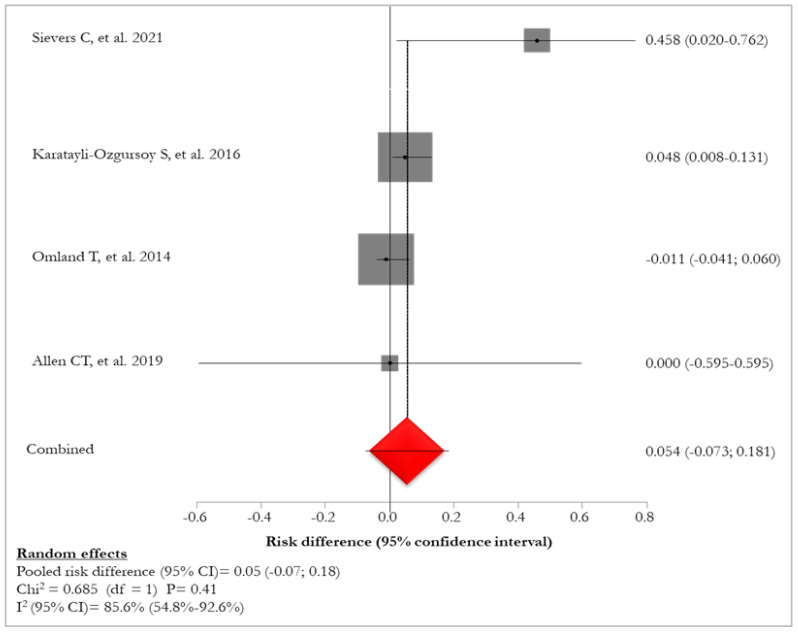
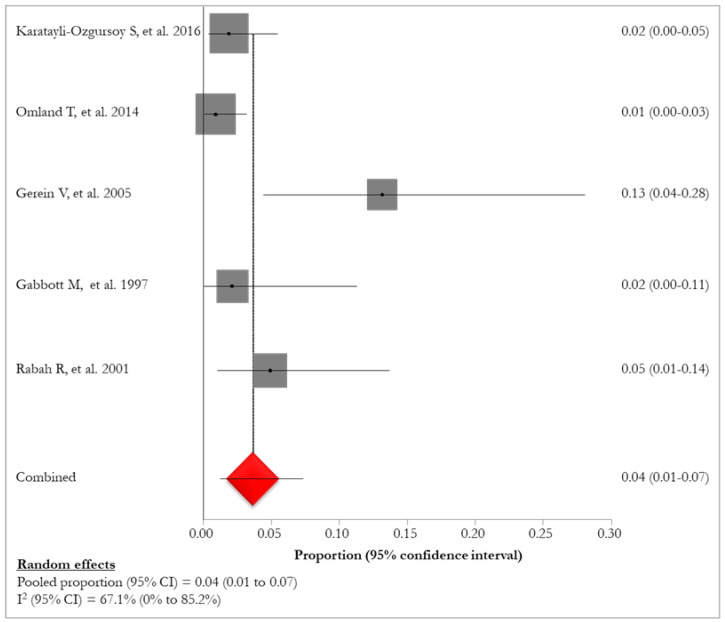
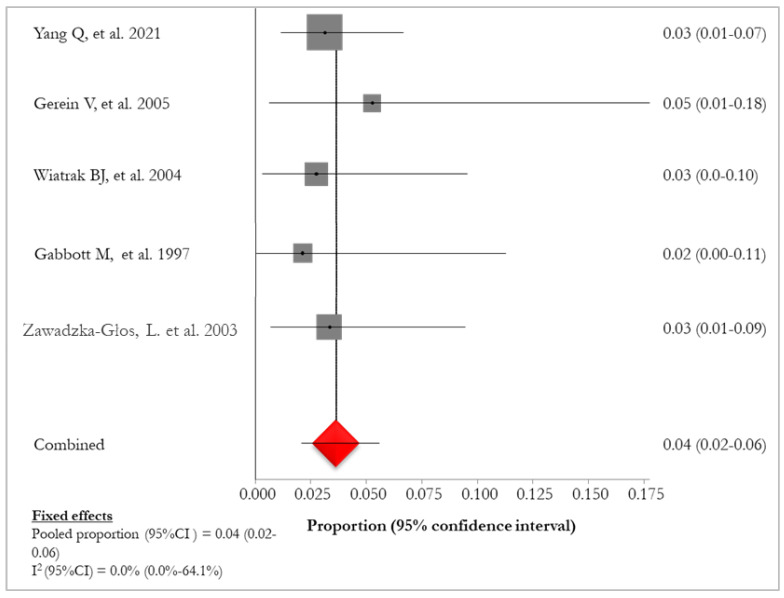
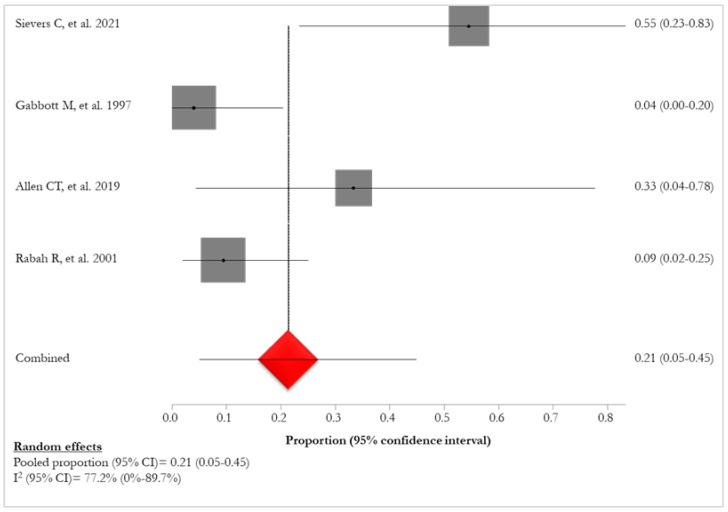
Recurrent respiratory papillomatosis (RRP) is a non-malignant disease, characterized by the production of wart-like growths in the respiratory tract, affecting both young people and adults (juvenile-onset recurrent respiratory papillomatosis, JORRP, and adult-onset recurrent respiratory papillomatosis, AORRP, respectively). Infection caused by human papillomavirus (HPV) is known as the main factor involved in RRP development. Complications of RRP may rarely occur, including lung involvement and malignant transformation. The present systematic review aimed to evaluate the prevalence of severe complications, such as lung involvement and lung tumor in JORRP and AORRP patients, and assess the role of HPV genotypes in the progression of disease severity following the guideline for reporting systematic reviews and meta-analysis (PRISMA Statement). A total of 378 studies were found on PubMed and Scopus using the following MESH terms: "recurrent respiratory papillomatosis and lung tumor" and "pulmonary tumor and recurrent respiratory papillomatosis". Basing on inclusion and exclusion criteria, a total of 11 studies were included in the systematic review. We found a pooled prevalence of 8% (95% CI: 4-14%; I2: 87.5%) for lung involvement in RRP patients. In addition, we found a pooled risk difference of 5% in lung involvement between JORRP and AORRP (95% CI: -7-18%; I2: 85.6%, p-value: 0.41). Among patients with lung involvement, we observed a pooled prevalence of lung tumor of 4% (95% CI:1-7%; I2: 67.1%) and a pooled prevalence mortality for this group of 4% (95% CI:2-6%; I2: 0%). Overall, the positivity rate for HPV-6 and -11 in patients with RRP was 91%. Considering only cases with pulmonary involvement, the pooled prevalence for HPV-11 was 21% (95% CI: 5-45%; I2: 77.2%). Our results evidenced a low/middle risk of pulmonary involvement and lung tumor in JORRP and AORRP patients, with an increased risk for HPV-11-positive patients. Further studies should be performed to improve knowledge and adopt preventive measures to contrast the progression to severe diseases in RRP patients.

Keywords: HPV; lung cancer; lung involvement; pulmonary involvement; recurrent respiratory papillomatosis.


Conflict of interest statement

The authors declare no conflicts of interest.

Figures
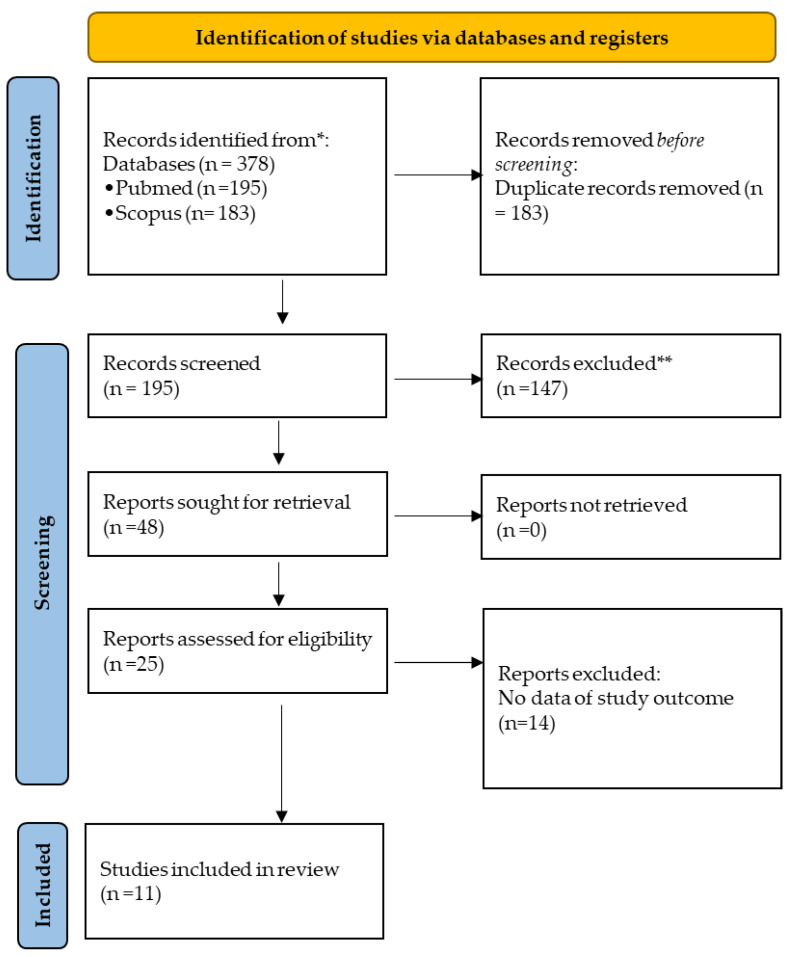
Figure 1
Figure 1
PRISMA 2020 flow diagram for new systematic reviews that included searches of databases and registers only. * Consider, if feasible to do so, reporting the number of records identified from each database or register searched (rather than the total number across all databases/registers). ** If automation tools were used, indicate how many records were excluded by a human and how many were excluded by automation tools.
Figure 2
Figure 2
Forest plot of prevalence of lung involvement in RRP patients [25,26,27,28,29,30,31,32,33,34,35]. The red diamond represents the overall pooled effect from the included studies.
Figure 3
Figure 3
Forest plot of risk difference of pulmonary involvement between JORRP and AORRP patients [25,26,31,35]. The red diamond represents the overall pooled effect from the included studies.
Figure 4
Figure 4
Forest plot of prevalence of lung tumor in RRP patients [26,28,30,33,35]. The red diamond represents the overall pooled effect from the included studies.
Figure 5
Figure 5
Forest plot of mortality in RRP [28,29,30,32,34]. The red diamond represents the overall pooled effect from the included studies.
Figure 6
Figure 6
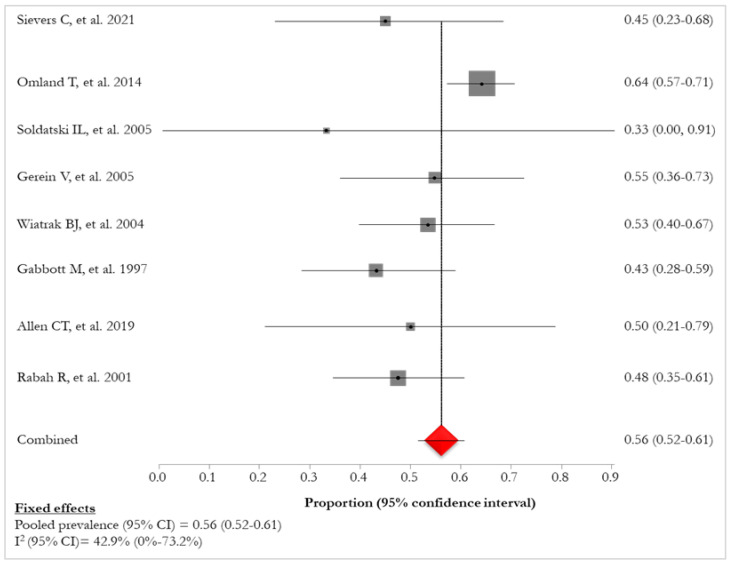
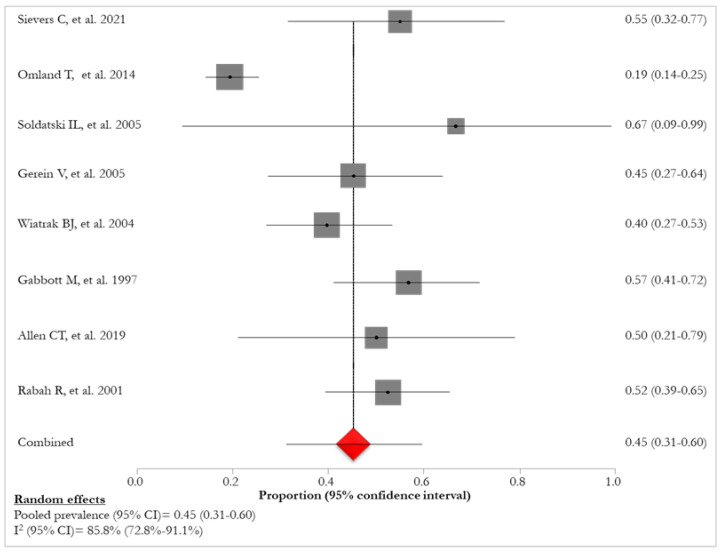
Prevalence of HPV-6 infections in patients with RRP [25,27,28,29,30,31,33,35]. The red diamond represents the overall pooled effect from the included studies.
Figure 7
Figure 7
Prevalence of HPV-11 infections in patients with RRP [25,27,28,29,30,31,33,35]. The red diamond represents the overall pooled effect from the included studies.
Figure 8
Figure 8
Forest plot of lung involvement in RRP HPV-11 positives [25,30,31,33]. The red diamond represents the overall pooled effect from the included studies.

References

    1. Gillison M.L., Alemany L., Snijders P.J., Chaturvedi A., Steinberg B.M., Schwartz S., Castellsagué X. Human papillomavirus and diseases of the upper airway: Head and neck cancer and respiratory papillomatosis. Vaccine. 2012;30((Suppl. 5)):F34–F54. doi: 10.1016/j.vaccine.2012.05.070. - DOI - PubMed
    1. Carifi M., Napolitano D., Morandi M. Dall’Olio D.Recurrent respiratory papillomatosis: Current and future perspectives. Ther. Clin. Risk Manag. 2015;11:731–738. doi: 10.2147/TCRM.S81825. - DOI - PMC - PubMed
    1. Katsenos S., Becker H.D. Recurrent respiratory papillomatosis: A rare chronic disease, difficult to treat, with potential to lung cancer transformation: Apropos of two cases and a brief literature review. Case Rep. Oncol. 2011;4:162–171. doi: 10.1159/000327094. - DOI - PMC - PubMed
    1. Reeves W.C., Ruparelia S.S., Swanson K.I., Derkay C.S., Marcus A., Unger E.R. National registry for juvenile-onset recurrent respiratory papillomatosis. Arch. Otolaryngol. Head Neck Surg. 2003;129:976–982. doi: 10.1001/archotol.129.9.976. - DOI - PubMed
    1. Goon P., Sonnex C., Jani P., Stanley M., Sudhoff H. Recurrent respiratory papillomatosis: An overview of current thinking and treatment. Eur. Arch. Otorhinolaryngol. 2008;265:147–151. doi: 10.1007/s00405-007-0546-z. - DOI - PMC - PubMed