


Antimicrobial resistance burden pre and post-COVID-19 pandemic with mapping the multidrug resistance in Egypt: a comparative cross-sectional study
- PMID: 38531847
- PMCID: PMC10966009
- DOI: 10.1038/s41598-024-56254-4
Antimicrobial resistance burden pre and post-COVID-19 pandemic with mapping the multidrug resistance in Egypt: a comparative cross-sectional study
Abstract
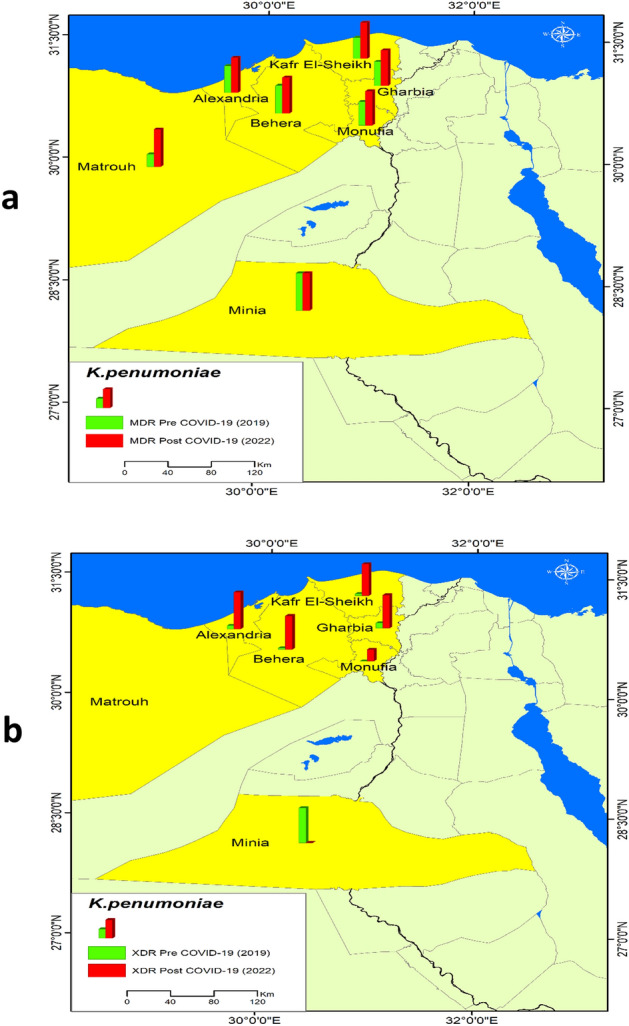
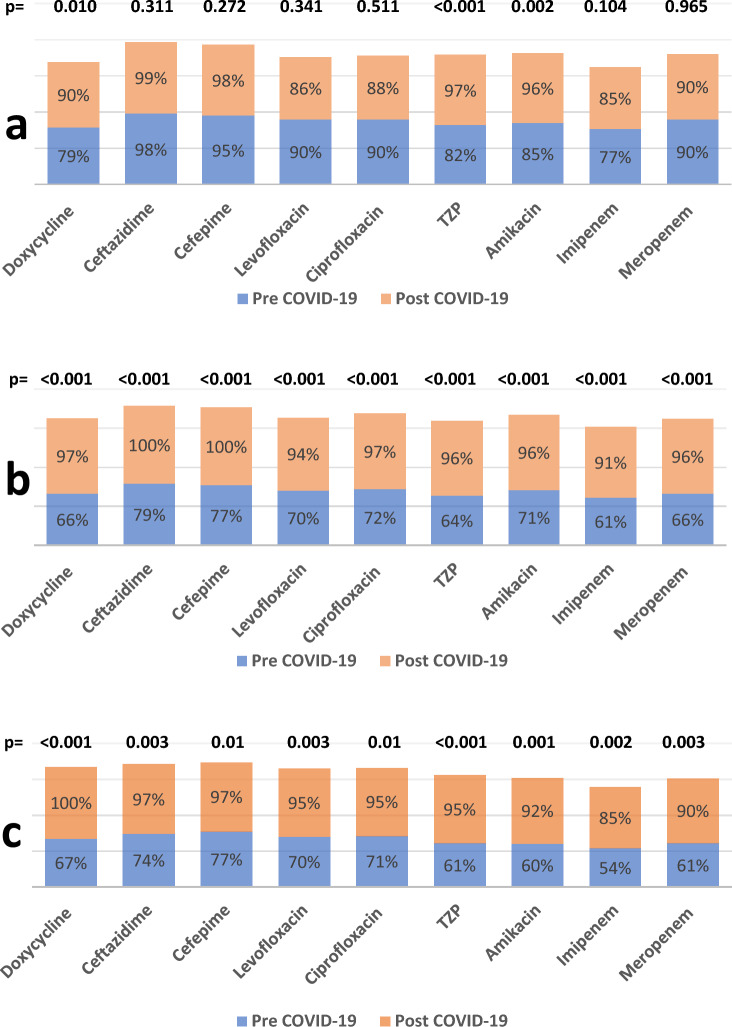
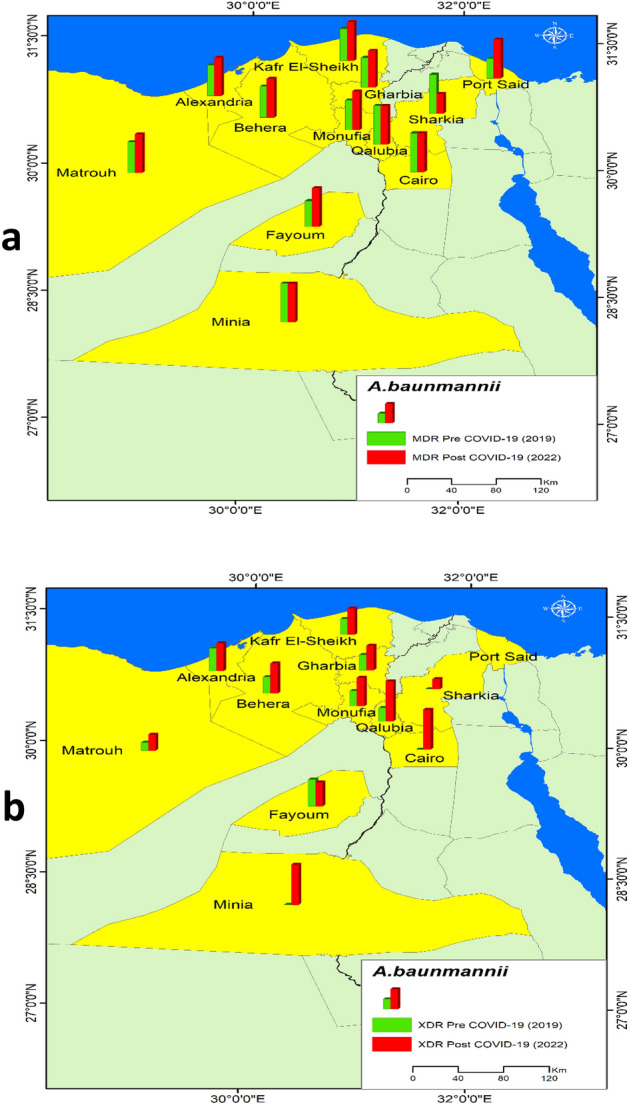
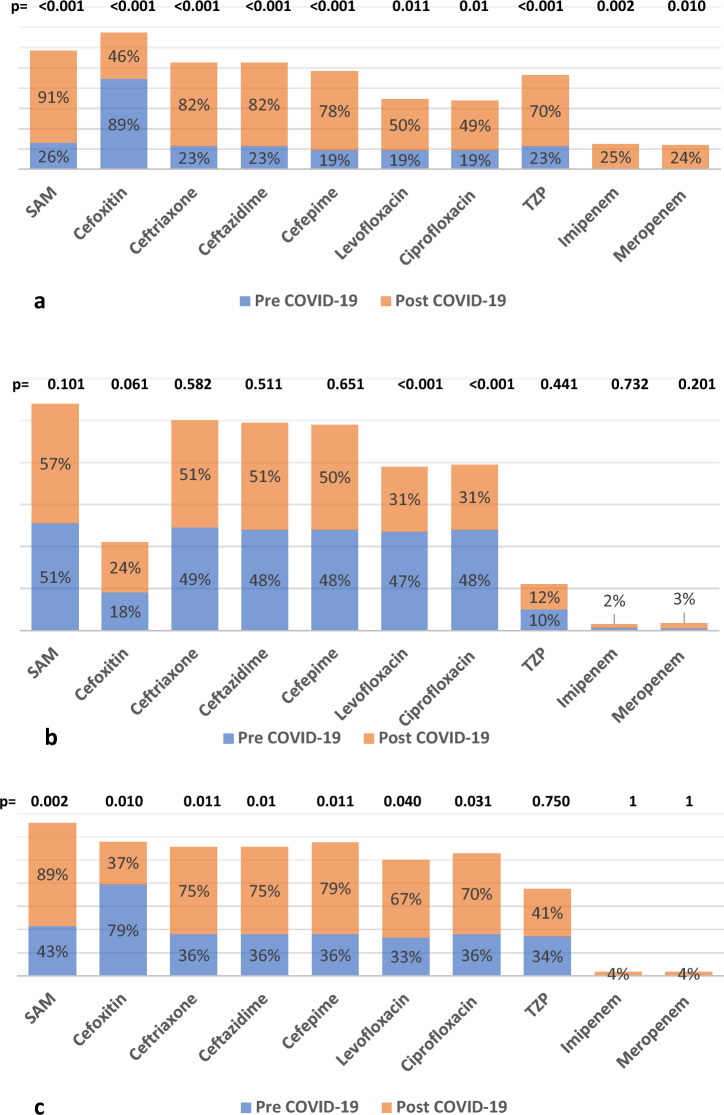
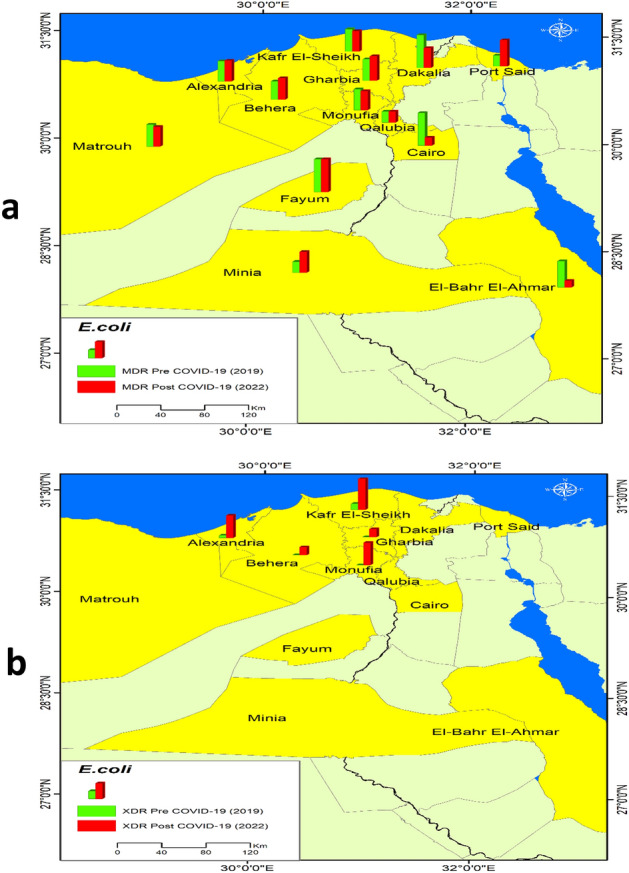
Overuse of antibiotics during coronavirus disease 2019 (COVID-19) in an attempt to reduce COVID-19 mortality in the short term may have contributed to long-term mortality from antimicrobial resistance (AMR). The aim of this study was to evaluate the impact of the COVID-19 pandemic on AMR in Egypt and map the distribution of multidrug-resistant (MDR) and extensive drug-resistant (XDR) across Egypt. Through a multicenter cross-sectional study 2430 culture results were collected in 2019 and 2022 pre and post-COVID-19 pandemic in Egypt, including 400 Klebsiella pneumoniae, 760 Escherichia coli, 650 Acinetobacter baumannii, and 620 Methicillin-resistant staphylococcus aureus (MRSA) culture results. MDR and XDR culture results distribution across Egypt was highlighted through the geographic information system. Mixed effect logistic regression models and sub-group analysis were performed according to the type of specimens to test the impact of COVID-19 on resistance. Adjusted analysis demonstrated K. pneumoniae resistance has increased against quinolones and carbapenems (P < 0.001). Resistance of E. coli has increased significantly against imipenem and meropenem. While E.coli susceptibility has increased to cefoxitin, levofloxacin, and ciprofloxacin. A. baumannii resistance has increased more than double against ceftazidime, cefepime, and piperacillin-tazobactam (P < 0.001). MRSA reserved its susceptibility to vancomycin and linezolid. MDR K. pneumoniae and A. baumannii have increased post-COVID-19 from 67% to 94% and from 79% to 98%, respectively (P < 0.001). XDR K. pneumoniae and A. baumannii have increased from 6% to 46%, and from 47% to 69%, respectively (P < 0.001). COVID-19 has changed the profile of AMR in Egypt so that urgent action is required to mitigate this threat and preserve our capacity to face infections in future decades.
Keywords: Antimicrobial resistance; COVID-19; Egypt; MDR; Spatial distribution; XDR.
© 2024. The Author(s).
Conflict of interest statement
The authors declare no competing interests.
Figures



References
Publication types
MeSH terms
Substances
LinkOut - more resources
Full Text Sources
Medical
