


Redirecting pantoprazole as a metallo-beta-lactamase inhibitor in carbapenem-resistant Klebsiella pneumoniae
- PMID: 38533260
- PMCID: PMC10963397
- DOI: 10.3389/fphar.2024.1366459
Redirecting pantoprazole as a metallo-beta-lactamase inhibitor in carbapenem-resistant Klebsiella pneumoniae
Abstract
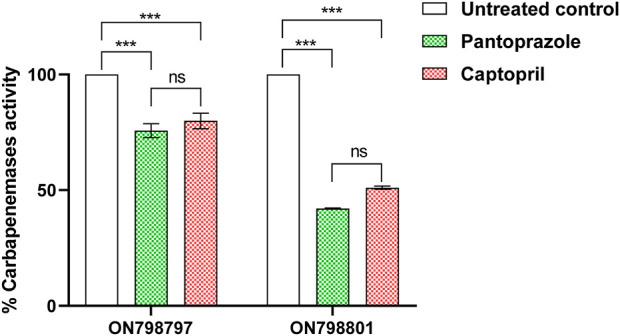
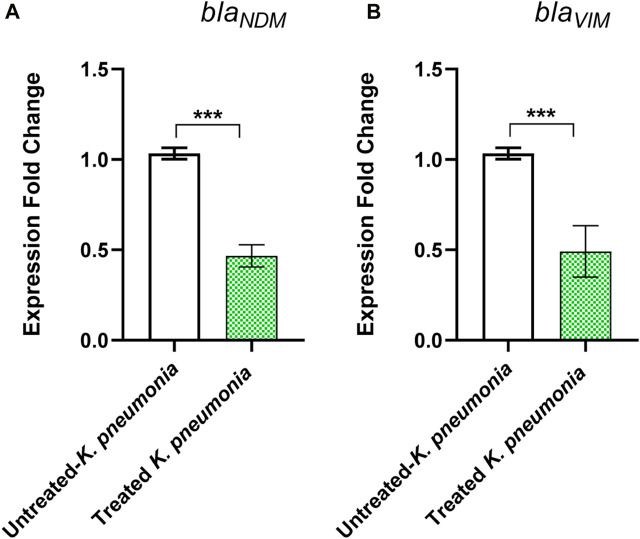
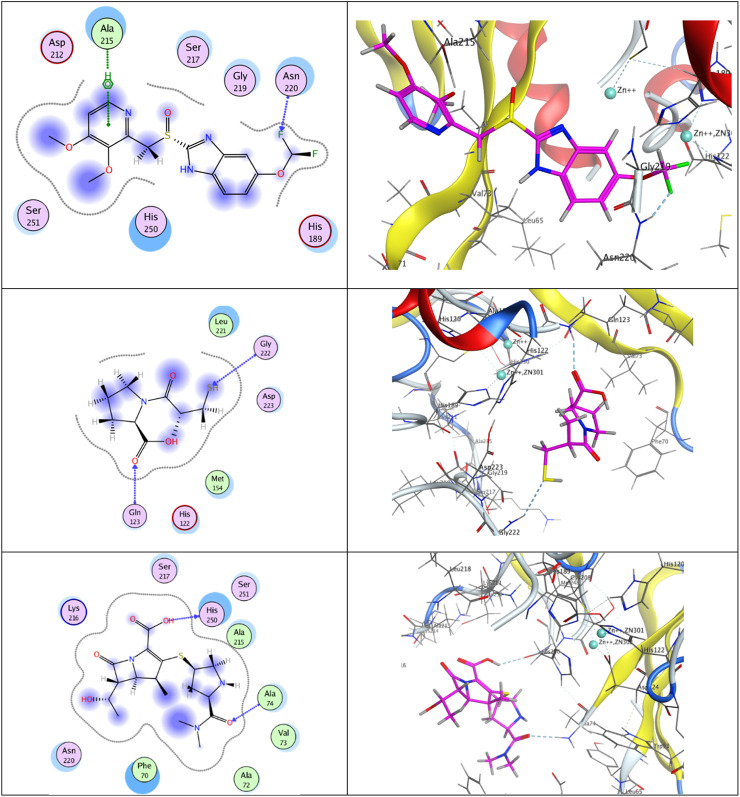
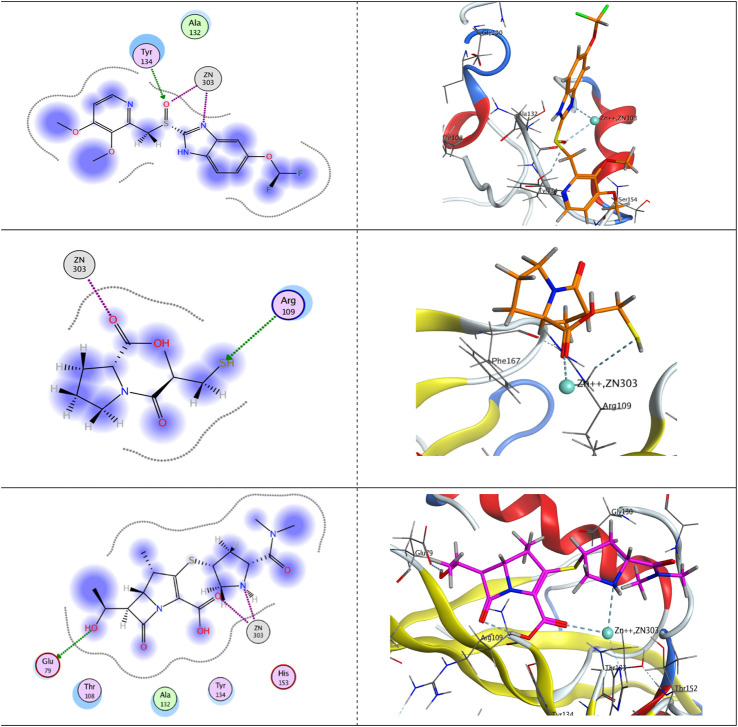
The development of resistance to carbapenems in Klebsiella pneumoniae due to the production of metallo-β-lactamases (MBLs) is a critical public health problem because carbapenems are the last-resort drugs used for treating severe infections of extended-spectrum β-lactamases (ESBLs) producing K. pneumoniae. Restoring the activity of carbapenems by the inhibition of metallo-β-lactamases is a valuable approach to combat carbapenem resistance. In this study, two well-characterized clinical multidrug and carbapenem-resistant K. pneumoniae isolates were used. The sub-inhibitory concentrations of pantoprazole and the well-reported metallo-β-lactamase inhibitor captopril inhibited the hydrolytic activities of metallo-β-lactamases, with pantoprazole having more inhibiting activities. Both drugs, when used in combination with meropenem, exhibited synergistic activities. Pantoprazole could also downregulate the expression of the metallo-β-lactamase genes bla NDM and bla VIM. A docking study revealed that pantoprazole could bind to and chelate zinc ions of New Delhi and Verona integron-encoded MBL (VIM) enzymes with higher affinity than the control drug captopril and with comparable affinity to the natural ligand meropenem, indicating the significant inhibitory activity of pantoprazole against metallo-β-lactamases. In conclusion, pantoprazole can be used in combination with meropenem as a new strategy for treating serious infections caused by metallo-β-lactamases producing K. pneumoniae.
Keywords: Klebsiella pneumoniae; carbapenems; healthcare; metallo-β-lactamase inhibitor; pantoprazole.
Copyright © 2024 Abdulaal, Alhakamy, Asseri, Radwan, Ibrahim, Okbazghi, Abbas, Mansour, Shoun, Hegazy and Abdel-Halim.
Conflict of interest statement
The authors declare that the research was conducted in the absence of any commercial or financial relationships that could be construed as a potential conflict of interest.
Figures
References
-
- Akajagbor D. S., Wilson S. L., Shere-Wolfe K. D., Dakum P., Charurat M. E., Gilliam B. L. (2013). Higher incidence of acute kidney injury with intravenous colistimethate sodium compared with polymyxin B in critically ill patients at a tertiary care medical center. Clin. Infect. Dis. 57, 1300–1303. 10.1093/cid/cit453 - DOI - PubMed
LinkOut - more resources
Full Text Sources
Miscellaneous
