


Alveolar-capillary endocytosis and trafficking in acute lung injury and acute respiratory distress syndrome
- PMID: 38533500
- PMCID: PMC10963603
- DOI: 10.3389/fimmu.2024.1360370
Alveolar-capillary endocytosis and trafficking in acute lung injury and acute respiratory distress syndrome
Abstract
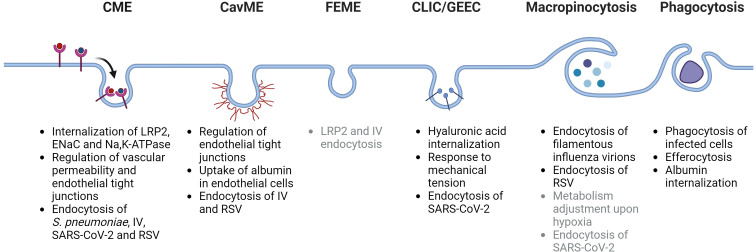
Acute respiratory distress syndrome (ARDS) is associated with high morbidity and mortality but lacks specific therapeutic options. Diverse endocytic processes play a key role in all phases of acute lung injury (ALI), including the initial insult, development of respiratory failure due to alveolar flooding, as a consequence of altered alveolar-capillary barrier function, as well as in the resolution or deleterious remodeling after injury. In particular, clathrin-, caveolae-, endophilin- and glycosylphosphatidyl inositol-anchored protein-mediated endocytosis, as well as, macropinocytosis and phagocytosis have been implicated in the setting of acute lung damage. This manuscript reviews our current understanding of these endocytic pathways and subsequent intracellular trafficking in various phases of ALI, and also aims to identify potential therapeutic targets for patients with ARDS.
Keywords: acute respiratory distress syndrome; caveolae; clathrin-mediated endocytosis; endophilin; glycosylphosphatidyl inositol-anchored protein enriched early endosomal compartment pathway; macropinocytosis; phagocytosis; trafficking.
Copyright © 2024 Kryvenko and Vadász.
Conflict of interest statement
The authors declare that the research was conducted in the absence of any commercial or financial relationships that could be construed as a potential conflict of interest. The authors declared that they were editorial board members of Frontiers, at the time of submission. This had no impact on the peer review process and the final decision.
Figures
References
Publication types
MeSH terms
LinkOut - more resources
Full Text Sources
