


Gellan Gum as a Unique Microbial Polysaccharide: Its Characteristics, Synthesis, and Current Application Trends
- PMID: 38534601
- PMCID: PMC10970089
- DOI: 10.3390/gels10030183
Gellan Gum as a Unique Microbial Polysaccharide: Its Characteristics, Synthesis, and Current Application Trends
Abstract
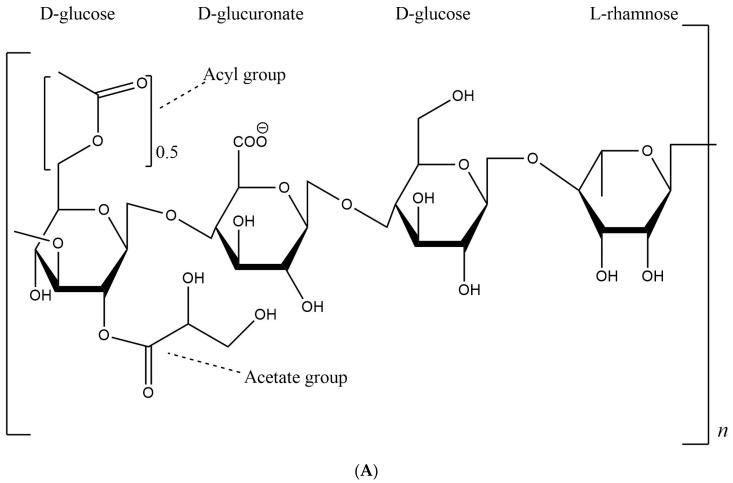
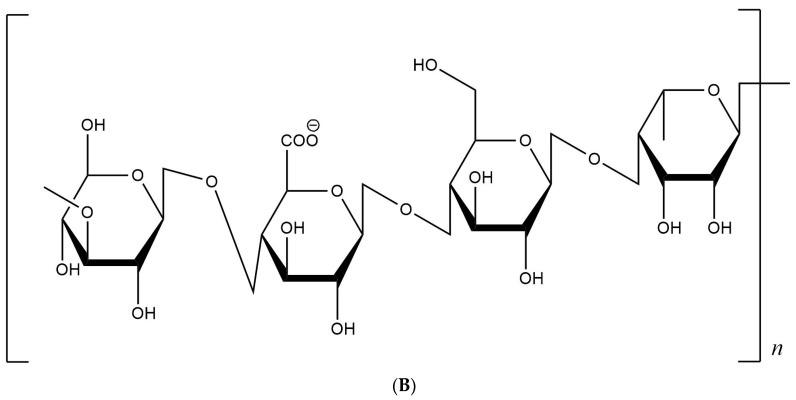
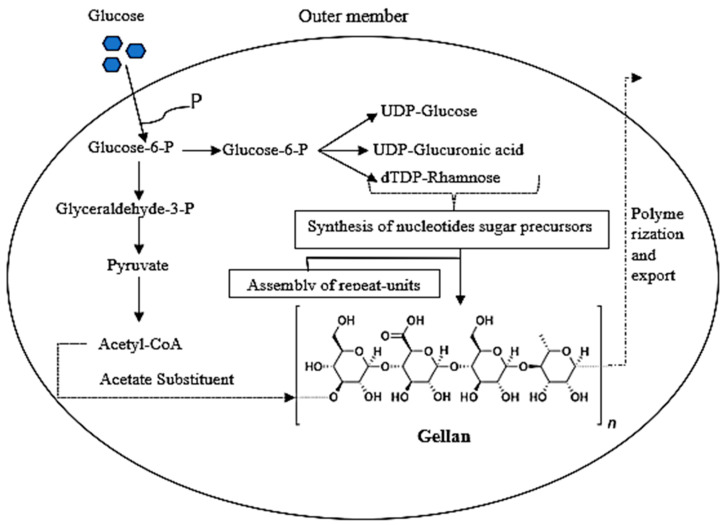
Gellan gum (GG) is a linear, negatively charged exopolysaccharide that is biodegradable and non-toxic. When metallic ions are present, a hard and transparent gel is produced, which remains stable at a low pH. It exhibits high water solubility, can be easily bio-fabricated, demonstrates excellent film/hydrogel formation, is biodegradable, and shows biocompatibility. These characteristics render GG a suitable option for use in food, biomedical, and cosmetic fields. Thus, this review paper offers a concise summary of microbial polysaccharides. Moreover, an in-depth investigation of trends in different facets of GG, such as biosynthesis, chemical composition, and physical and chemical properties, is emphasized. In addition, this paper highlights the process of extracting and purifying GG. Furthermore, an in-depth discussion of the advantages and disadvantages of GG concerning other polysaccharides is presented. Moreover, the utilization of GG across different industries, such as food, medicine, pharmaceuticals, cosmetics, etc., is thoroughly examined and will greatly benefit individuals involved in this field who are seeking fresh opportunities for innovative projects in the future.
Keywords: Sphingomonas; application; gellan; gelrite; hydrogels.
Conflict of interest statement
The authors declare no conflict of interest.
Figures
References
-
- Tanaka F. Theoretical study of molecular association and thermoreversible gelation in polymers. Polym. J. 2002;34:479–509. doi: 10.1295/polymj.34.479. - DOI
Publication types
LinkOut - more resources
Full Text Sources
