


Infant Non-Secretor Histoblood Group Antigen Phenotype Reduces Susceptibility to Both Symptomatic and Asymptomatic Rotavirus Infection
- PMID: 38535566
- PMCID: PMC10974866
- DOI: 10.3390/pathogens13030223
Infant Non-Secretor Histoblood Group Antigen Phenotype Reduces Susceptibility to Both Symptomatic and Asymptomatic Rotavirus Infection
Abstract
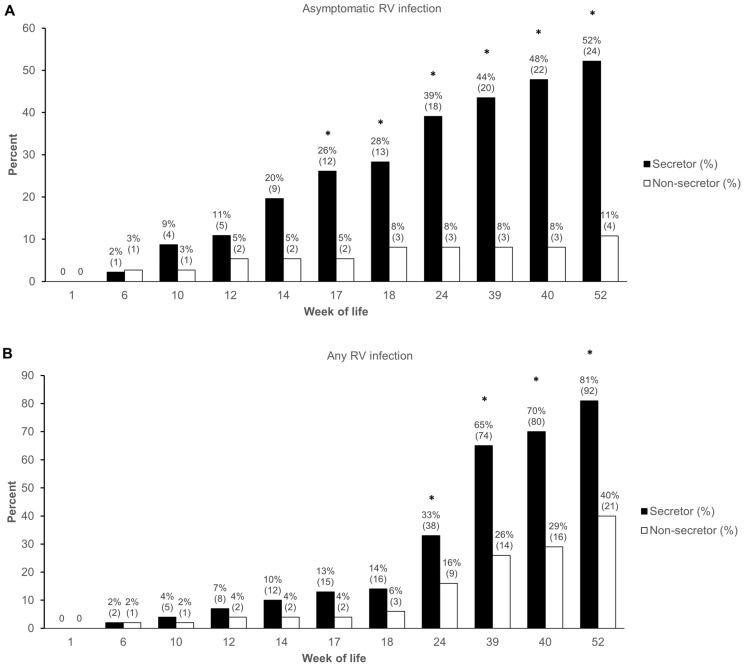
The infant non-secretor histoblood group antigen phenotype is associated with reduced risk of symptomatic rotavirus diarrhea, one of the leading global causes of severe pediatric diarrheal disease and mortality. However, little is known regarding the role of secretor status in asymptomatic rotavirus infections. Therefore, we performed a nested case-control study within a birth cohort study previously conducted in Dhaka, Bangladesh, to determine the association between infant secretor phenotype and the odds of asymptomatic rotavirus infection, in addition to the risk of rotavirus diarrhea, in unvaccinated infants. In the parent cohort, infants were enrolled in the first week of life and followed through the first two years of life with multiple clinic visits and active surveillance for diarrheal illness. Secretor phenotyping was performed on saliva. Eleven surveillance stools collected over the first year of life were tested for rotavirus by real-time RT-PCR, followed by conventional PCR and amplicon sequencing to identify the infecting P-type of positive specimens. Similar to findings for symptomatic diarrhea, infant non-secretors experienced significantly fewer primary episodes of asymptomatic rotavirus infection through the first year of life in a likely rotavirus P-genotype-dependent manner. These data suggest that non-secretors experienced reduced risk from rotavirus due to decreased susceptibility to infection rather than reduced infection severity.
Keywords: FUT2; diarrhea; gastroenteritis; histoblood group antigen; rotavirus; secretor.
Conflict of interest statement
E. Ross Colgate’s current affiliation is The Emmes Company, all authors declare no conflicts of interest.
Figures
References
-
- Troeger C., Khalil I.A., Rao P.C., Cao S., Blacker B.F., Ahmed T., Armah G., Bines J.E., Brewer T.G., Colombara D.V., et al. Rotavirus Vaccination and the Global Burden of Rotavirus Diarrhea Among Children Younger Than 5 Years. JAMA Pediatr. 2018;172:958–965. doi: 10.1001/jamapediatrics.2018.1960. - DOI - PMC - PubMed
-
- Cohen A.L., A Platts-Mills J., Nakamura T., Operario D.J., Antoni S., Mwenda J.M., Weldegebriel G., Rey-Benito G., de Oliveira L.H., Ortiz C., et al. Aetiology and incidence of diarrhoea requiring hospitalisation in children under 5 years of age in 28 low-income and middle-income countries: Findings from the Global Pediatric Diarrhea Surveillance network. BMJ Glob. Health. 2022;7:e009548. doi: 10.1136/bmjgh-2022-009548. - DOI - PMC - PubMed
MeSH terms
Substances
Grants and funding
LinkOut - more resources
Full Text Sources
Medical
