


Breastfeeding Practices for COVID-19-Infected Mothers: A Systematic Review and Meta-Analysis
- PMID: 38535712
- PMCID: PMC10974880
- DOI: 10.3390/nursrep14010040
Breastfeeding Practices for COVID-19-Infected Mothers: A Systematic Review and Meta-Analysis
Abstract
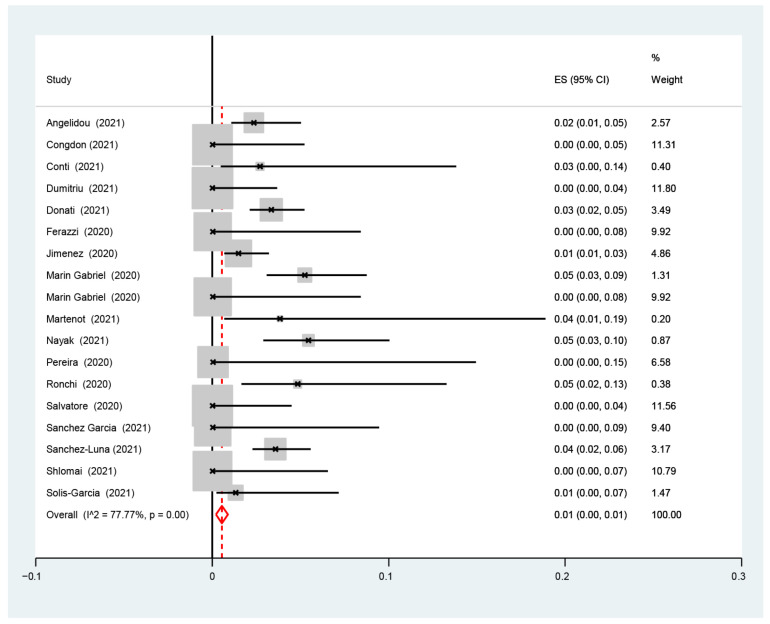
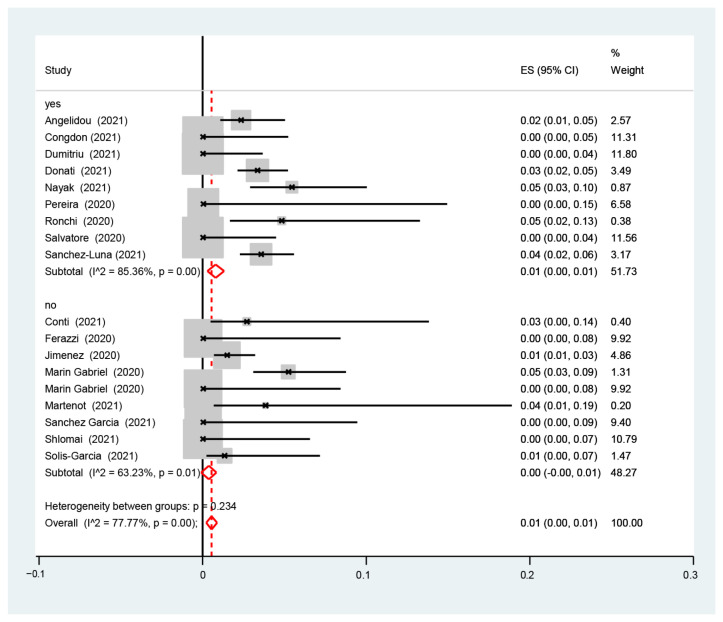
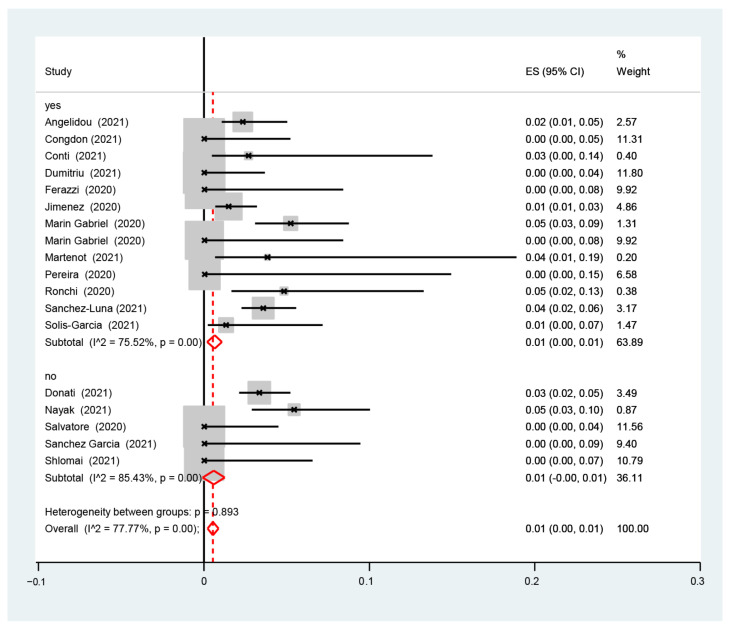
(1) Background: The ongoing COVID-19 pandemic has led to an increasing number of women giving birth while also grappling with SARS-CoV-2. The objective of this review is to examine the possibility of transmission of the virus from mother to infant through breastfeeding, skin-to-skin contact, and rooming-in and to explore methods for managing COVID-19-positive mother-infant dyads. (2) Methods: A comprehensive search strategy was employed that covered pertinent studies from the Cochrane Library, PubMed Central, and Scopus databases. The Matrix Method and PRISMA guidelines were utilized by the researchers, with the search being updated until 20 December 2021, one year after the initial vaccine delivery. The inclusion criteria for the study involved articles published in English, those employing broad search terms, and those comprising full-text reviews. Additionally, the researchers required that the articles be published from December 2019 onwards. To further analyze the data, a meta-analysis was performed to estimate the rate of infant infection from mothers who engaged in breastfeeding, skin-to-skin contact, and rooming-in practices. (3) Results: Eighteen studies were analyzed in this review, with an infected infant rate of 2.8%. The maternal practices used in these studies ranged from direct separation of the infant to direct skin-to-skin contact, rooming-in, and exclusive breastfeeding. One study investigated the factors associated with positive test results in newborns and found that only the maternal social vulnerability index >90 was a significant predictor. The type of delivery, rooming-in, and the mother's symptom status were not associated with positive neonatal outcomes. (4) Conclusions: According to current data, the incidence of perinatal infection with SARS-CoV-2 is relatively low. It is advised that mothers adhere to several supportive care measures, including engaging in breastfeeding, skin-to-skin contact, and rooming-in. These measures ought to be complemented by diligent hand hygiene, the wearing of masks, and the cleansing of breasts solely when necessary.
Keywords: COVID-19; SARS-CoV-2; breastfeeding; coronavirus; maternal practices; rooming-in; skin-to-skin contact.
Conflict of interest statement
The authors declare no conflicts of interest.
Figures


Similar articles
-
Evaluation of Rooming-in Practice for Neonates Born to Mothers With Severe Acute Respiratory Syndrome Coronavirus 2 Infection in Italy.JAMA Pediatr. 2021 Mar 1;175(3):260-266. doi: 10.1001/jamapediatrics.2020.5086. JAMA Pediatr. 2021. PMID: 33284345 Free PMC article.
-
Effects of prenatal exposure to maternal COVID-19 and perinatal care on neonatal outcome: results from the INTERCOVID Multinational Cohort Study.Am J Obstet Gynecol. 2022 Sep;227(3):488.e1-488.e17. doi: 10.1016/j.ajog.2022.04.019. Epub 2022 Apr 19. Am J Obstet Gynecol. 2022. PMID: 35452653 Free PMC article.
-
Breastfeeding supportive practices in European hospitals during the COVID-19 pandemic.J Matern Fetal Neonatal Med. 2022 Dec;35(25):8514-8520. doi: 10.1080/14767058.2021.1986482. Epub 2021 Oct 13. J Matern Fetal Neonatal Med. 2022. PMID: 34645354
-
Recommendations for breastfeeding during Coronavirus Disease 2019 (COVID-19) pandemic.Int Breastfeed J. 2022 Apr 11;17(1):28. doi: 10.1186/s13006-022-00465-w. Int Breastfeed J. 2022. PMID: 35410357 Free PMC article. Review.
-
Maternal Transmission of SARS-CoV-2: Safety of Breastfeeding in Infants Born to Infected Mothers.Front Pediatr. 2021 Dec 9;9:738263. doi: 10.3389/fped.2021.738263. eCollection 2021. Front Pediatr. 2021. PMID: 34956971 Free PMC article. Review.
Cited by
-
Neonatal Feeding Practices and SARS-CoV-2 Transmission in Neonates with Perinatal SARS-CoV-2 Exposure: A Systematic Review and Meta-Analysis.J Clin Med. 2025 Jan 6;14(1):280. doi: 10.3390/jcm14010280. J Clin Med. 2025. PMID: 39797362 Free PMC article. Review.
References
-
- Zayed N.E., Abbas A., Lutfy S.M. Criteria and Potential Predictors of Severity in Patients with COVID-19. Egypt. J. Bronchol. 2022;16:11. doi: 10.1186/s43168-022-00116-y. - DOI
Publication types
LinkOut - more resources
Full Text Sources
Miscellaneous
