Urinary proteomics reveals biological processes related to acute kidney injury in Bothrops atrox envenomings
- PMID: 38536893
- PMCID: PMC11020875
- DOI: 10.1371/journal.pntd.0012072
Urinary proteomics reveals biological processes related to acute kidney injury in Bothrops atrox envenomings
Abstract
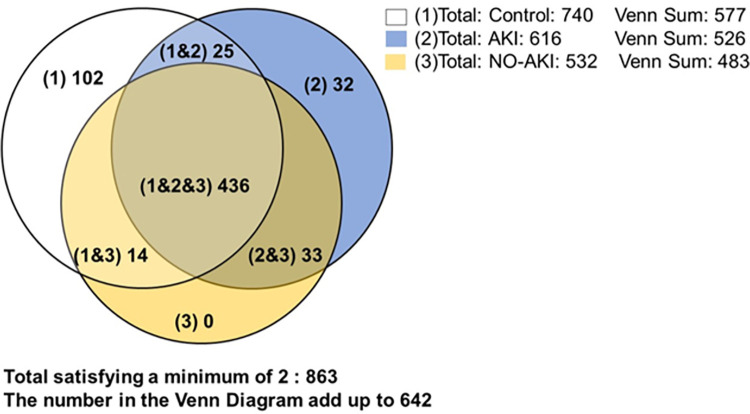
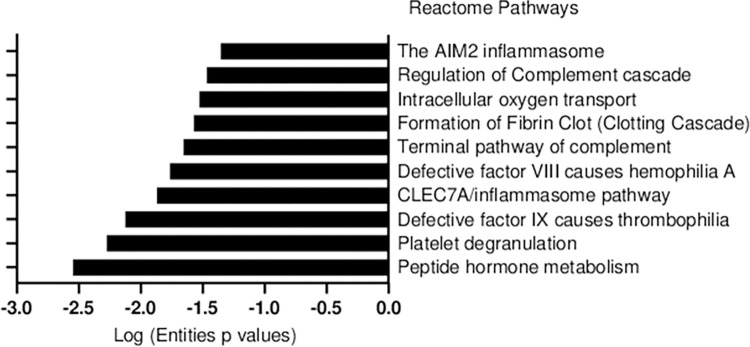
Acute kidney injury (AKI) is a critical systemic complication caused by Bothrops envenoming, a neglected health problem in the Brazilian Amazon. Understanding the underlying mechanisms leading to AKI is crucial for effectively mitigating the burden of this complication. This study aimed to characterize the urinary protein profile of Bothrops atrox snakebite victims who developed AKI. We analyzed three groups of samples collected on admission: healthy subjects (controls, n = 10), snakebite victims who developed AKI (AKI, n = 10), and those who did not evolve to AKI (No-AKI, n = 10). Using liquid-chromatography tandem mass spectrometry, we identified and quantified (label-free) 1190 proteins. A panel of 65 proteins was identified exclusively in the urine of snakebite victims, with 32 exclusives to the AKI condition. Proteins more abundant or exclusive in AKI's urine were associated with acute phase response, endopeptidase inhibition, complement cascade, and inflammation. Notable proteins include serotransferrin, SERPINA-1, alpha-1B-glycoprotein, and NHL repeat-containing protein 3. Furthermore, evaluating previously reported biomarkers candidates for AKI and renal injury, we found retinol-binding protein, beta-2-microglobulin, cystatin-C, and hepcidin to be significant in cases of AKI induced by Bothrops envenoming. This work sheds light on physiological disturbances caused by Bothrops envenoming, highlighting potential biological processes contributing to AKI. Such insights may aid in better understanding and managing this life-threatening complication.
Copyright: © 2024 Brasileiro-Martins et al. This is an open access article distributed under the terms of the Creative Commons Attribution License, which permits unrestricted use, distribution, and reproduction in any medium, provided the original author and source are credited.
Conflict of interest statement
The authors have declared that no competing interests exist.
Figures


References
-
- World Health Organization (WHO). Snakebite envenoming. Neglected tropical diseases. In: World Health Organization (WHO). 2018. p. 1.
-
- Kasturiratne A, Wickremasinghe AR, De Silva N, Gunawardena NK, Pathmeswaran A, Premaratna R, et al. The Global Burden of Snakebite: A Literature Analysis and Modelling Based on Regional Estimates of Envenoming and Deaths. PLoS Med. 2008;5: 1591–1604. doi: 10.1371/journal.pmed.0050218 - DOI - PMC - PubMed
-
- Gutiérrez JM. Envenenamientos por mordeduras de serpientes en América Latina y el Caribe: una visión integral de carácter regional. Boletín de Malariología y Salud Ambienta. 2011;L1: 1–16.
MeSH terms
LinkOut - more resources
Full Text Sources
Research Materials
Miscellaneous