


In Vivo Analysis of Tissue S-Nitrosothiols in Pediatric Sepsis
- PMID: 38539797
- PMCID: PMC10967417
- DOI: 10.3390/antiox13030263
In Vivo Analysis of Tissue S-Nitrosothiols in Pediatric Sepsis
Abstract
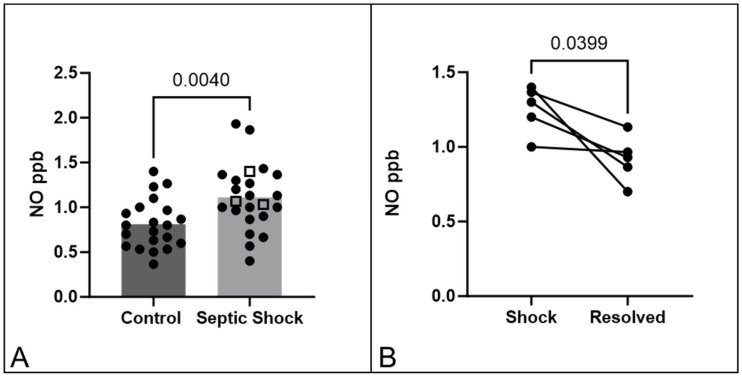
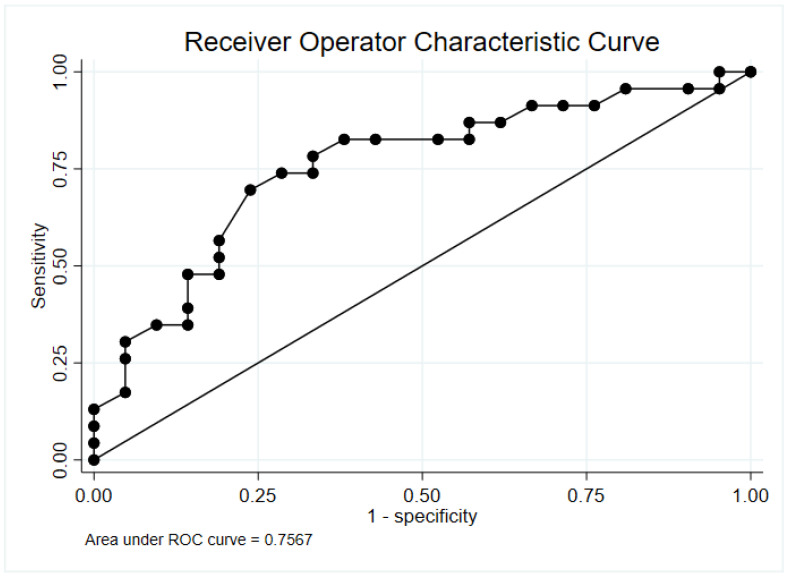
S-nitrosothiols are endogenous, bioactive molecules. S-nitrosothiols are implicated in many diseases, including sepsis. It is currently cumbersome to measure S-nitrosothiols clinically. We have previously developed an instrument to measure tissue S-nitrosothiols non-invasively using ultraviolet light. We have performed a prospective case control study of controls and children with sepsis admitted to the PICU. We hypothesized that tissue S-nitrosothiols would be higher in septic patients than controls. Controls were patients with no cardiopulmonary instability. Cases were patients with septic shock. We measured S-nitrosothiols, both at diagnosis and after resolution of shock. A total of 44 patients were enrolled: 21 controls and 23 with sepsis. At baseline, the controls were younger [median age 5 years (IQR 0, 9) versus 11 years (IQR: 6, 16), p-value = 0.012], had fewer comorbidities [7 (33.3%) vs. 20 (87.0%), p-value < 0.001], and had lower PELOD scores [0 (IQR: 0, 0) vs. 12 (IQR: 11, 21), p-value < 0.001]. S-nitrosothiol levels were higher in sepsis cohort (1.1 ppb vs. 0.8 ppb, p = 0.004). Five patients with sepsis had longitudinal measures and had a downtrend after resolution of shock (1.3 ppb vs. 0.9 ppb, p = 0.04). We dichotomized patients based on S-nitrosothiol levels and found an association with worse clinical outcomes, but further work will be needed to validate these findings.
Keywords: S-nitrosothiols; equipment design; pediatric intensive care unit; pediatrics; sepsis.
Conflict of interest statement
The authors declare no conflict of interest. The funders had no role in the design of the study; in the collection, analyses, or interpretation of data; in the writing of the manuscript; or in the decision to publish the results.
Figures
References
-
- Rudd K.E., Johnson S.C., Agesa K.M., Shackelford K.A., Tsoi D., Kievlan D.R., Colombara D.V., Ikuta K.S., Kissoon N., Finfer S., et al. Global, regional, and national sepsis incidence and mortality, 1990–2017: Analysis for the Global Burden of Disease Study. Lancet. 2020;395:200–211. doi: 10.1016/S0140-6736(19)32989-7. - DOI - PMC - PubMed
-
- Coletta C., Modis K., Olah G., Brunyanszki A., Herzig D.S., Sherwood E.R., Ungvari Z., Szabo C. Endothelial dysfunction is a potential contributor to multiple organ failure and mortality in aged mice subjected to septic shock: Preclinical studies in a murine model of cecal ligation and puncture. Crit. Care. 2014;18:511. doi: 10.1186/s13054-014-0511-3. - DOI - PMC - PubMed
Grants and funding
LinkOut - more resources
Full Text Sources
