


Rift Valley Fever Virus: An Overview of the Current Status of Diagnostics
- PMID: 38540153
- PMCID: PMC10968371
- DOI: 10.3390/biomedicines12030540
Rift Valley Fever Virus: An Overview of the Current Status of Diagnostics
Abstract
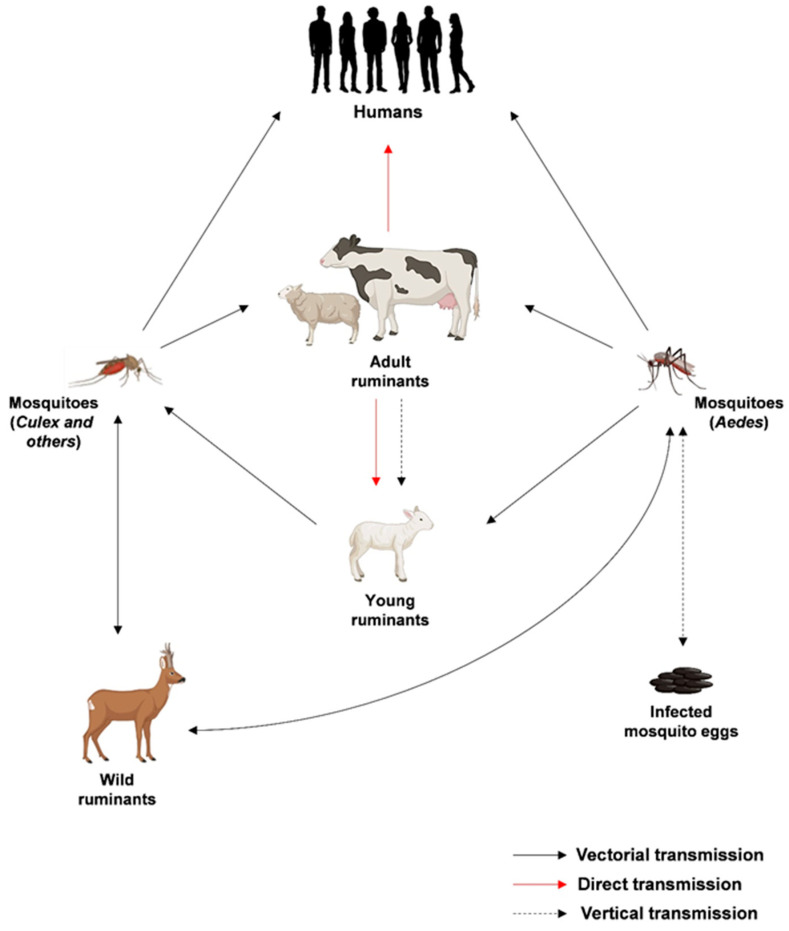
Rift Valley fever is a vector-borne zoonotic disease caused by the Rift Valley fever virus (Phlebovirus genus) listed among the eight pathogens included in the Bluepoint list by the WHO. The transmission is mainly vehicled by Aedes and Culex mosquito species. Symptoms of the disease are varied and non-specific, making clinical diagnosis often challenging, especially in the early stages. Due to the difficulty in distinguishing Rift Valley fever from other viral hemorrhagic fevers, as well as many other diseases that cause fever, an early diagnosis of the infection is important to limit its spread and to provide appropriate care to patients. To date, there is no validated point-of-care diagnostic tool. The virus can only be detected in the blood for a brief period, suggesting that molecular methods alone are not sufficient for case determination. For this, it is preferable to combine both molecular and serological tests. The wide distribution of competent vectors in non-endemic areas, together with global climate change, elicit the spread of RVFV to continents other than Africa, making surveillance activities vital to prevent or to limit the impact of human outbreaks and for a rapid identification of positive cases, making diagnosis a key factor for this achievement.
Keywords: Rift Valley fever virus; early diagnosis; molecular diagnostics; serology.
Conflict of interest statement
The authors declare no conflicts of interest.
Figures

References
-
- Daubney R., Hudson J.R., Garnham P.C. Enzootic Hepatitis or Rift Valley Fever. An Undescribed Virus Disease of Sheep Cattle and Man from East Africa. J. Pathol. Bacteriol. 1931;34:545–579. doi: 10.1002/path.1700340418. - DOI
Publication types
Grants and funding
LinkOut - more resources
Full Text Sources
