


Comparison of the Efficacy of Human Umbilical Cord-Derived and Bone Marrow Aspirate Concentrate Mesenchymal Stem Cells for Cartilage Repair Defects of the Knee via Arthroscopic Implementation on Scaffolds in a Retrospective Study
- PMID: 38540963
- PMCID: PMC10971278
- DOI: 10.3390/jpm14030220
Comparison of the Efficacy of Human Umbilical Cord-Derived and Bone Marrow Aspirate Concentrate Mesenchymal Stem Cells for Cartilage Repair Defects of the Knee via Arthroscopic Implementation on Scaffolds in a Retrospective Study
Abstract
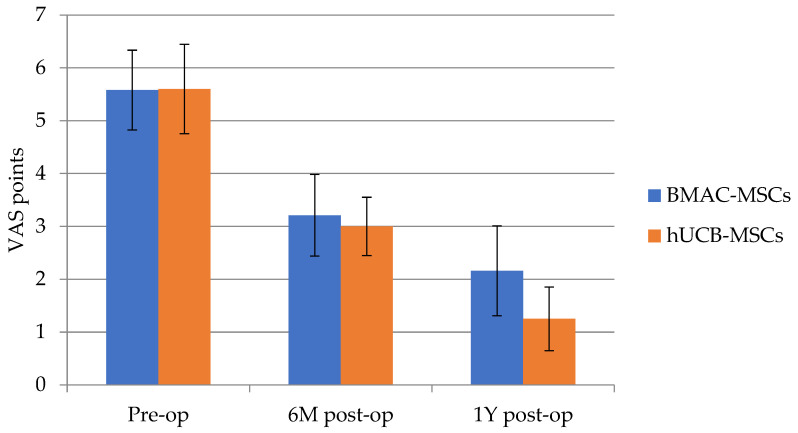
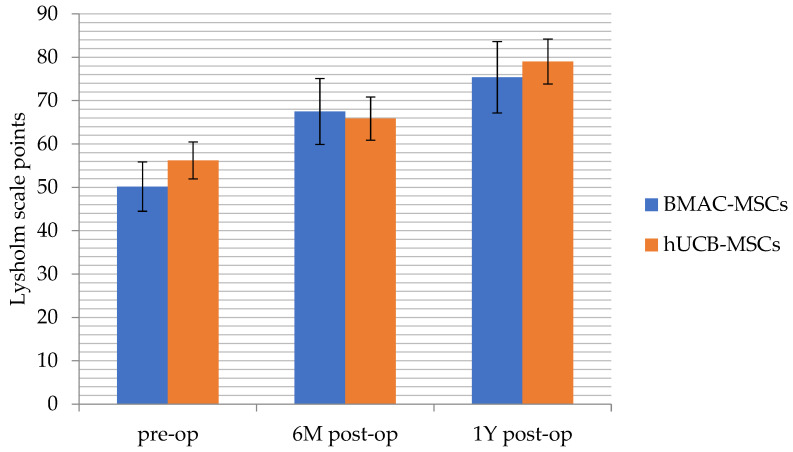
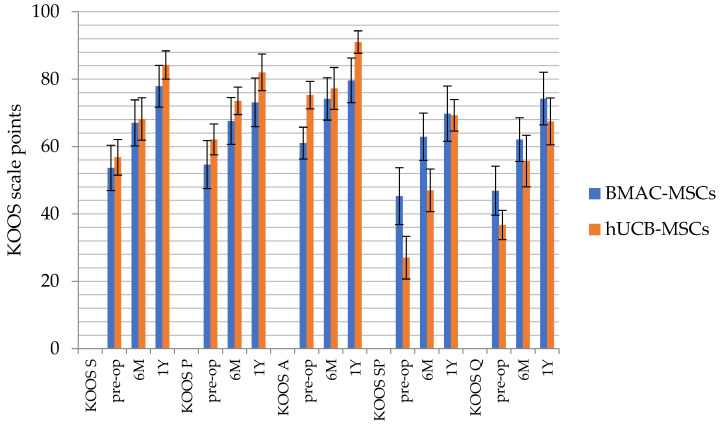
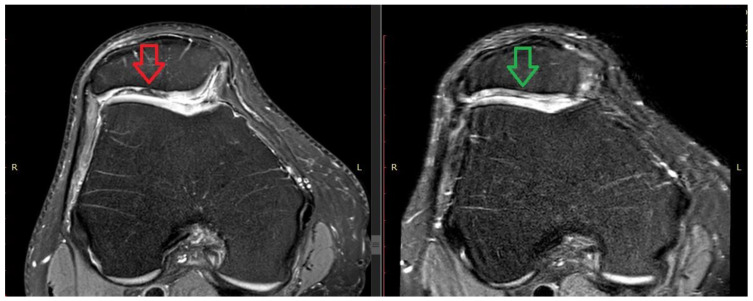
Injuries to the articular cartilage of the human knee joint, commonly resulting from trauma, inflammation, or age- and activity-related wear and tear, have significant implications, primarily leading to osteoarthritis (OA). Conservative treatments for such injuries often yield suboptimal clinical outcomes. Surgical interventions using current methods may not consistently provide satisfactory results, largely due to the formation of low-quality scar tissue lacking the biomechanical properties of hyaline cartilage. In this retrospective study, we compared the results of two promising methods for regenerating cartilage defects in the knee joints using scaffolds soaked with stem cells of different origins: bone marrow aspirate concentrate mesenchymal stem cells (BMAC-MSCs) and human umbilical cord-derived mesenchymal stem cells (hUCB-MSCs). We evaluated 39 patients (39 knees, hUCB-MSCs: 20 knees, BMAC: 19 knees) at the 12-month follow-up using VAS, KOOS, Lysholm scales and radiologically with M-MOCART 2.0 score. The analysis demonstrated substantial overall improvement in both groups, notably reflected in enhanced quality of life for the patients. Interestingly, the final scores in the hUCB-MSCs group were comparable to those in the BMAC-MSCs group, with no statistically significant differences observed, despite variations in preoperative age and lesion size. Notably, the hUCB-MSCs group consisted of significantly older individuals with larger lesion sizes. Both procedures were found to be safe, and improvement was observed in both groups, which holds promise for future clinical investigations.
Keywords: cartilage; knee; mesenchymal stem cells; regenerative medicine.
Conflict of interest statement
The authors declare no conflicts of interest.
Figures
References
-
- Global Burden of Disease Collaborative Network. [(accessed on 1 December 2023)]. Available online: https://ghdx.healthdata.org/organizations/global-burden-disease-collabor....
-
- Perry J., McCarthy H., Bou-Gharios G., van ‘t Hof R., Milner P., Mennan C., Roberts S. Injected human umbilical cord-derived mesenchymal stromal cells do not appear to elicit an inflammatory response in a murine model of osteoarthritis. Osteoarthr. Cartil. Open. 2020;2:100044. doi: 10.1016/j.ocarto.2020.100044. - DOI - PMC - PubMed
LinkOut - more resources
Full Text Sources
