


Effect of Extrusion on Mechanical Property, Corrosion Behavior, and In Vitro Biocompatibility of the As-Cast Mg-Zn-Y-Sr Alloy
- PMID: 38541451
- PMCID: PMC10971812
- DOI: 10.3390/ma17061297
Effect of Extrusion on Mechanical Property, Corrosion Behavior, and In Vitro Biocompatibility of the As-Cast Mg-Zn-Y-Sr Alloy
Abstract
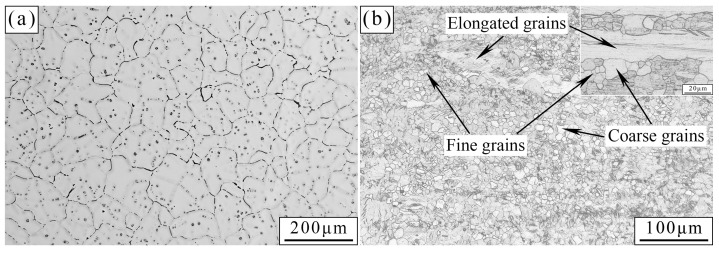
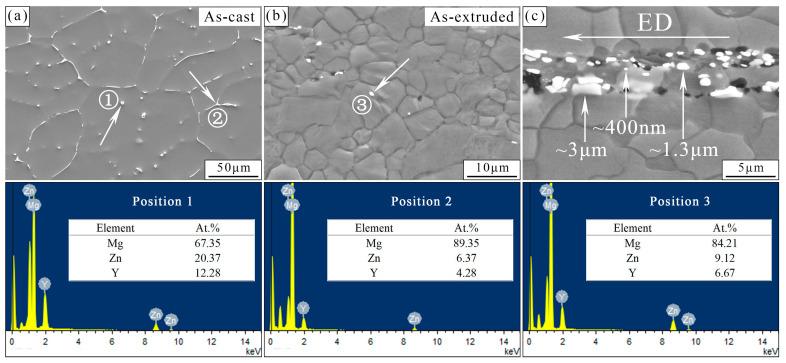
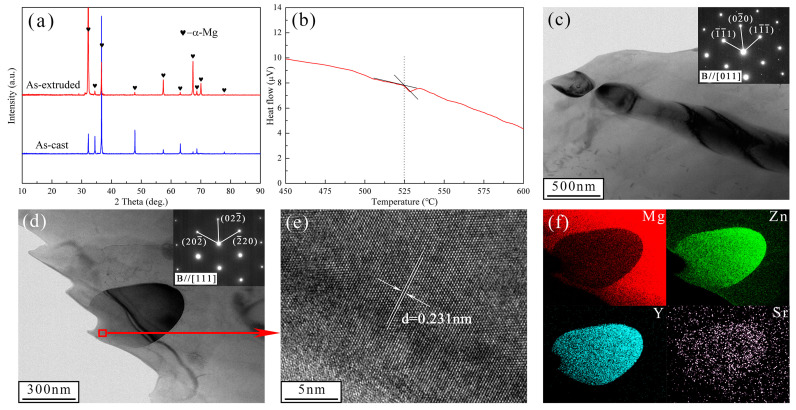
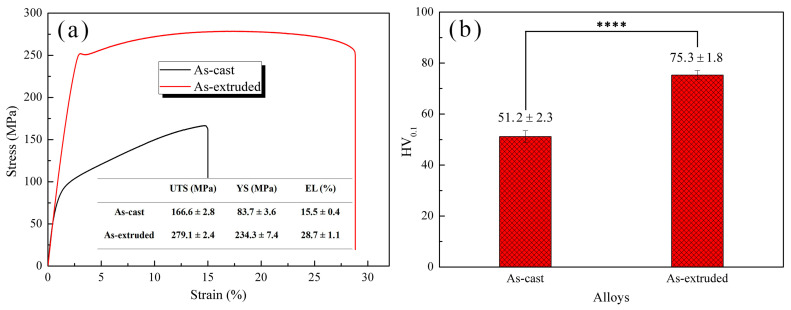
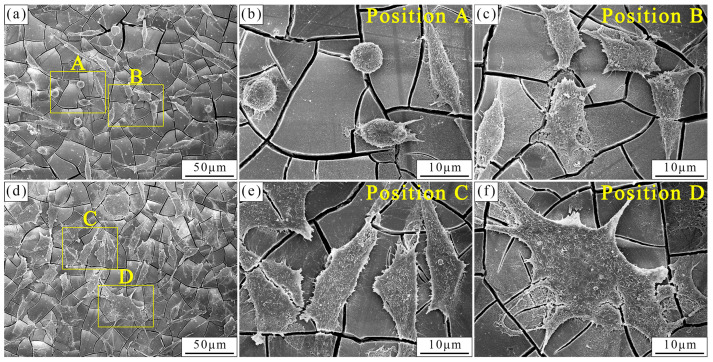
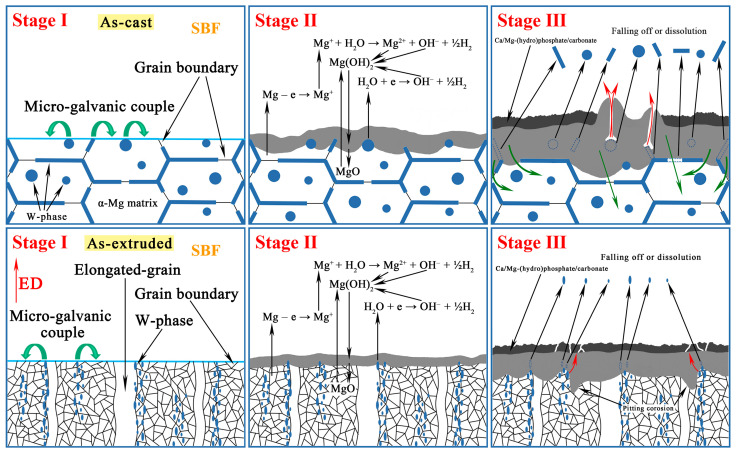
The effect of extrusion on the microstructure, mechanical property, corrosion behavior, and in vitro biocompatibility of as-cast Mg-1.5Zn-1.2Y-0.1Sr (wt.%) alloy was investigated via tensile tests, electrochemical methods, immersion tests, methylthiazolyl diphenyltetrazolium bromide (MTT), and analytical techniques. Results showed that the as-cast and as-extruded Mg-1.5Zn-1.2Y-0.1Sr alloys comprised an α-Mg matrix and Mg3Y2Zn3 phase (W-phase). In the as-cast alloy, the W-phase was mainly distributed at the grain boundaries, with a small amount of W-phase in the grains. After hot extrusion, the W-phase was broken down into small particles that were dispersed in the alloy, and the grains were refined considerably. The as-extruded alloy exhibited appropriate mechanical properties that were attributed to refinement strengthening, dispersion strengthening, dislocation strengthening, and precipitation strengthening. The as-cast and as-extruded alloys exhibited galvanic corrosion between the W-phase and α-Mg matrix as the main corrosion mechanism. The coarse W-phase directly caused the poor corrosion resistance of the as-cast alloy. The as-extruded alloy obtained via hydrogen evolution and mass loss had corrosion rates of less than 0.5 mm/year. MTT, high-content screening (HCS) analysis, and cell adhesion tests revealed that the as-extruded alloy can improve L929 cell viability and has great potential in the field of biomedical biodegradable implant materials.
Keywords: MTT; Mg; extrusion; galvanic corrosion; grain refinement.
Conflict of interest statement
The authors declare no conflicts of interest.
Figures
References
-
- Bairagi D., Mandal S. A comprehensive review on biocompatible Mg-based alloys as temporary orthopaedic implants: Current status, challenges, and future prospects. J. Magn. Alloys. 2022;10:627–669. doi: 10.1016/j.jma.2021.09.005. - DOI
-
- Ali M., Hussein M.A., Al-Aqeeli N. Magnesium-based composites and alloys for medical applications: A review of mechanical and corrosion properties. J. Alloys Compd. 2019;792:1162–1190. doi: 10.1016/j.jallcom.2019.04.080. - DOI
-
- Badkoobeh F., Mostaan H., Rafiei M., Bakhsheshi-Rad H.R., Ramakrishna S., Chen X.B. Additive manufacturing of biodegradable magnesium-based materials: Design strategies, properties, and biomedical applications. J. Magn. Alloys. 2023;11:801–839. doi: 10.1016/j.jma.2022.12.001. - DOI
LinkOut - more resources
Full Text Sources
Research Materials
Miscellaneous
