


Exploring gene biomarkers and targeted drugs for ferroptosis and cuproptosis in osteosarcoma: A bioinformatic approach
- PMID: 38546286
- PMCID: PMC12069744
- DOI: 10.1002/tox.24250
Exploring gene biomarkers and targeted drugs for ferroptosis and cuproptosis in osteosarcoma: A bioinformatic approach
Abstract
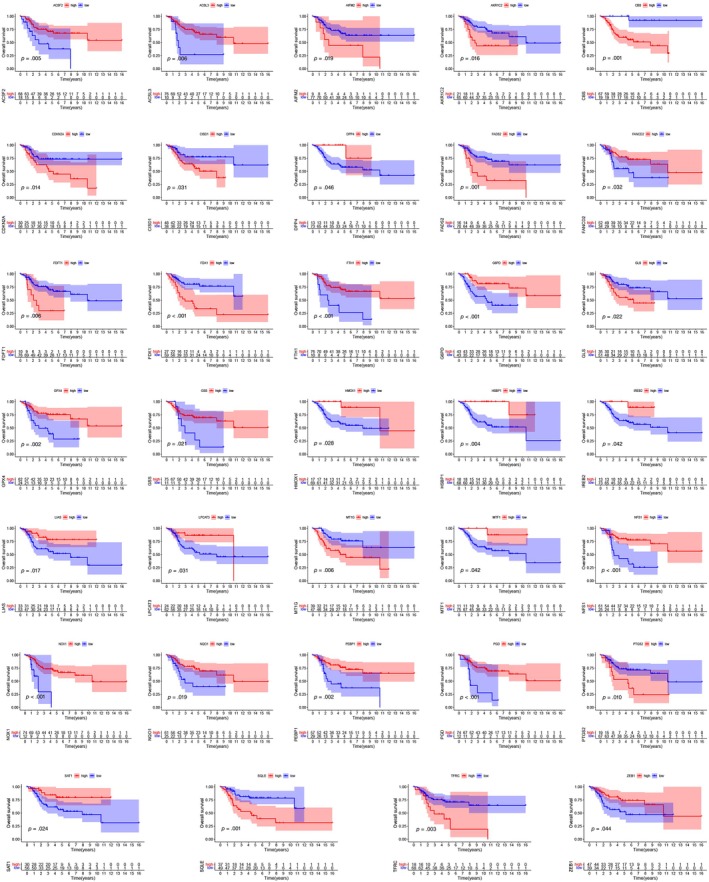
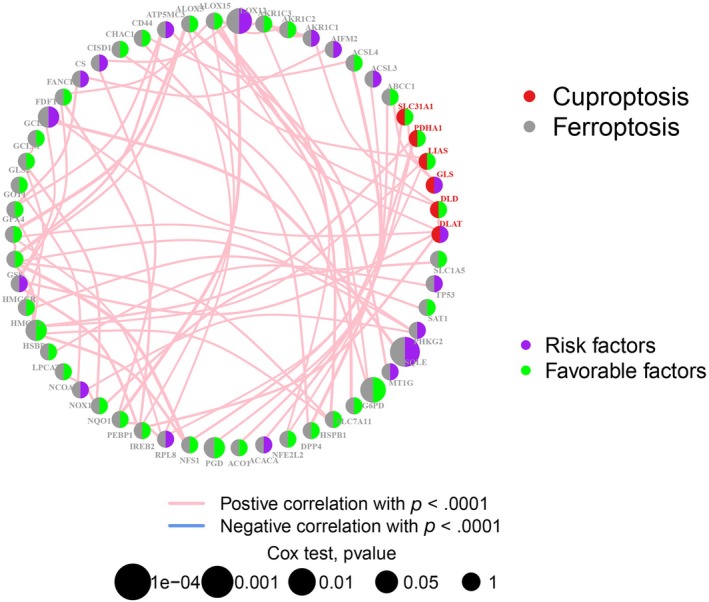
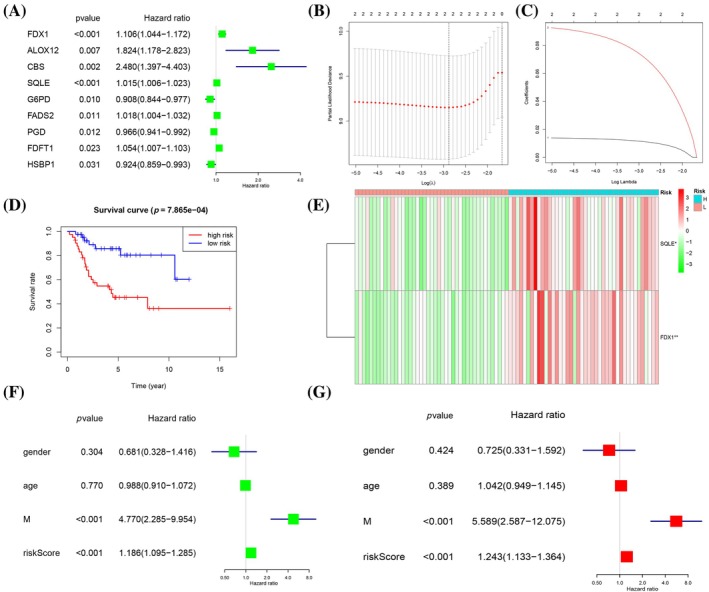
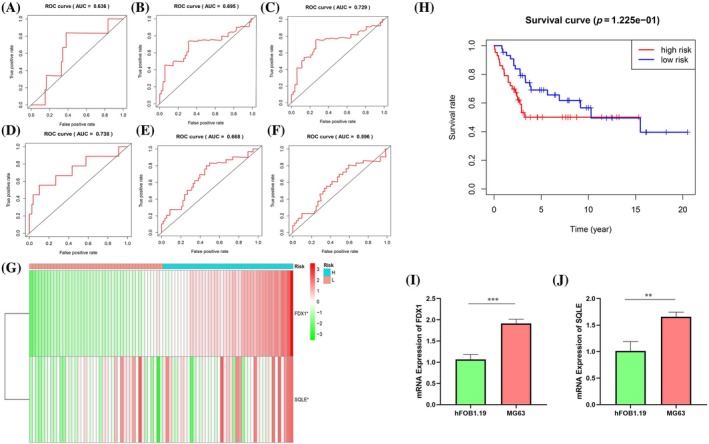
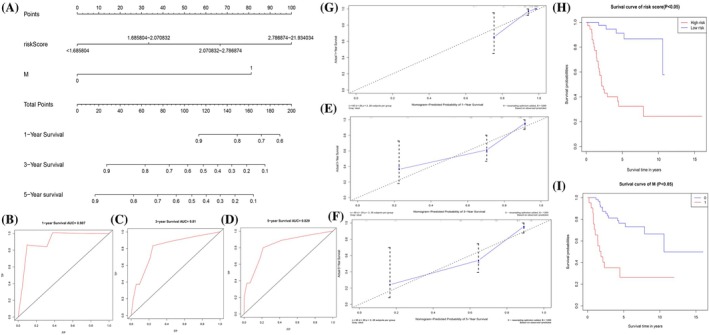
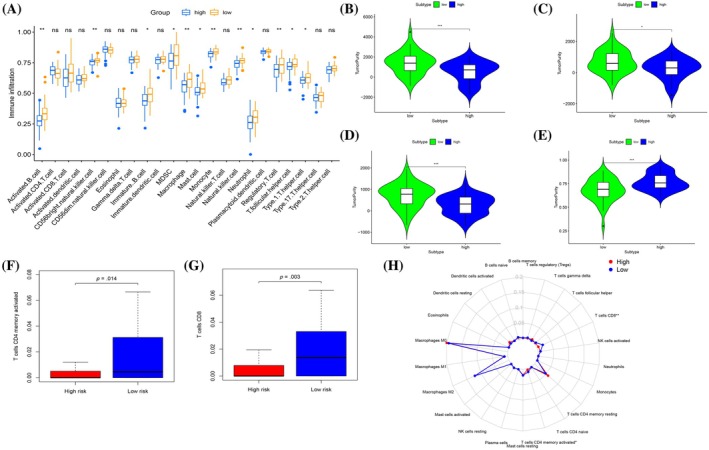
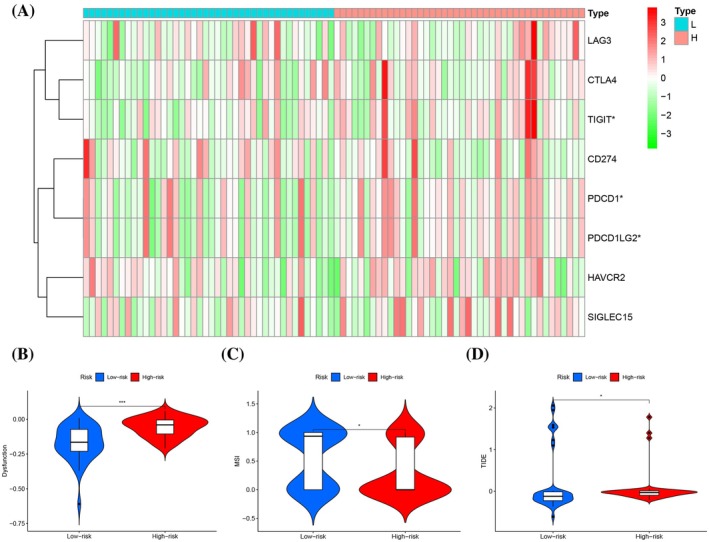
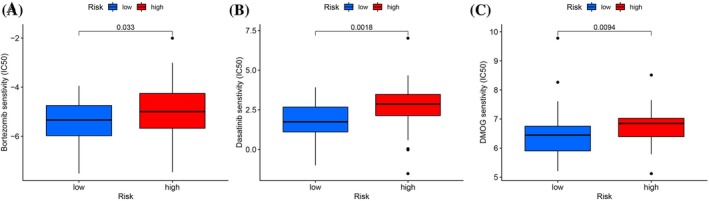
Osteosarcoma predominantly affects adolescents and young adults and is characterized as a malignant bone tumor. In recent decades, substantial advancements have been achieved in both diagnosing and treating osteosarcoma. Resulting in enhanced survival rates. Despite these advancements, the intricate relationship between ferroptosis and cuproptosis genes in osteosarcoma remains inadequately understood. Leveraging TARGET and GEO datasets, we conducted Cox regression analysis to select prognostic genes from a cohort of 71 candidates. Subsequently, a novel prognostic model was engineered using the LASSO algorithm. Kaplan-Meier analysis demonstrated that patients stratified as low risk had a substantially better prognosis compared with their high-risk counterparts. The model's validity was corroborated by the area under the receiver operating characteristic (ROC) curve. Additionally, we ascertained independent prognostic indicators, including clinical presentation, metastatic status, and risk scores, and crafted a clinical scoring system via nomograms. The tumor immune microenvironment was appraised through ESTIMATE, CIBERSORT, and single-sample gene set enrichment analysis. Gene expression within the model was authenticated through PCR validation. The prognostic model, refined by Cox regression and the LASSO algorithm, comprised two risk genes. Kaplan-Meier curves confirmed a significantly improved prognosis for the low-risk group in contrast to those identified as high-risk. For the training set, the ROC area under the curve (AUC) values stood at 0.636, 0.695, and 0.729 for the 1-, 3-, and 5-year checkpoints, respectively. Although validation set AUCs were 0.738, 0.668, and 0.596, respectively. Immune microenvironmental analysis indicated potential immune deficiencies in high-risk patients. Additionally, sensitivity to three small molecule drugs was investigated in the high-risk cohort, informing potential immunotherapeutic strategies for osteosarcoma. PCR analysis showed increased mRNA levels of the genes FDX1 and SQLE in osteosarcoma tissues. This study elucidates the interaction of ferroptosis and cuproptosis genes in osteosarcoma and paves the way for more targeted immunotherapy.
Keywords: cuproptosis; ferroptosis; osteosarcoma; prognostic marker.
© 2024 The Authors. Environmental Toxicology published by Wiley Periodicals LLC.
Conflict of interest statement
The authors declare that they have no competing interests.
Figures
References
-
- Chen C, Xie L, Ren T, Huang Y, Xu J, Guo W. Immunotherapy for osteosarcoma: fundamental mechanism, rationale, and recent breakthroughs. Cancer Lett. 2021;500:1‐10. - PubMed
-
- Wen RJ, Dong X, Zhuang HW, et al. Baicalin induces ferroptosis in osteosarcomas through a novel Nrf2/xCT/GPX4 regulatory axis. Phytomedicine. 2023;116:154881. - PubMed
-
- Cen D, Brayton D, Shahandeh B, Meyskens FL Jr, Farmer PJ. Disulfiram facilitates intracellular Cu uptake and induces apoptosis in human melanoma cells. J Med Chem. 2004;47(27):6914‐6920. - PubMed
MeSH terms
Substances
LinkOut - more resources
Full Text Sources
Medical
