


Definitions of hospital-acquired pneumonia in trauma research: a systematic review
- PMID: 38546856
- PMCID: PMC11599634
- DOI: 10.1007/s00068-024-02509-8
Definitions of hospital-acquired pneumonia in trauma research: a systematic review
Abstract
Purpose: What are reported definitions of HAP in trauma patient research?
Methods: A systematic review was performed using the PubMed/MEDLINE database. We included all English, Dutch, and German original research papers in adult trauma patients reporting diagnostic criteria for hospital-acquired pneumonia diagnosis. The risk of bias was assessed using the MINORS criteria.
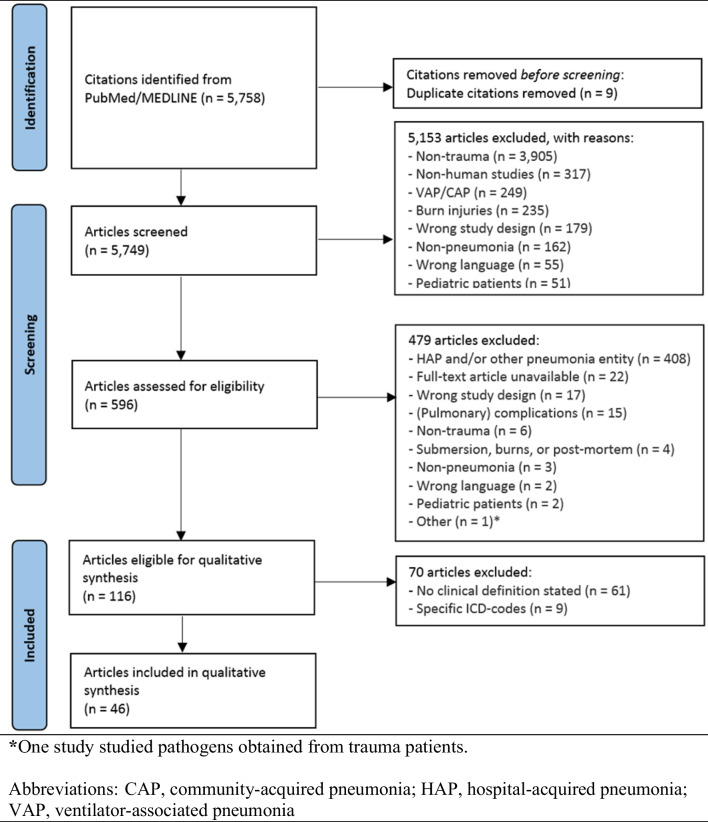
Results: Forty-six out of 5749 non-duplicate studies were included. Forty-seven unique criteria were reported and divided into five categories: clinical, laboratory, microbiological, radiologic, and miscellaneous. Eighteen studies used 33 unique guideline criteria; 28 studies used 36 unique non-guideline criteria.
Conclusion: Clinical criteria for diagnosing HAP-both guideline and non-guideline-are widespread with no clear consensus, leading to restrictions in adequately comparing the available literature on HAP in trauma patients. Studies should at least report how a diagnosis was made, but preferably, they would use pre-defined guideline criteria for pneumonia diagnosis in a research setting. Ideally, one internationally accepted set of criteria is used to diagnose hospital-acquired pneumonia.
Level of evidence: Level III.
Keywords: Clinical definition; Diagnosis; Diagnostic criteria; Guideline criteria; Hospital-acquired pneumonia; Trauma patient research.
© 2024. The Author(s).
Conflict of interest statement
Declarations. Conflict of interest: The authors declare no competing interests.
Figures
References
-
- Esnault P, Nguyen C, Bordes J, D’Aranda E, Montcriol A, Contargyris C, et al. Early-onset ventilator-associated pneumonia in patients with severe traumatic brain injury: incidence, risk factors, and consequences in cerebral oxygenation and outcome. Neurocrit Care. 2017;27(2):187–98. 10.1007/s12028-017-0397-4. - PubMed
-
- Andermahr J, Greb A, Hensler T, Helling HJ, Bouillon B, Sauerland S, et al. Pneumonia in multiple injured patients: a prospective controlled trial on early prediction using clinical and immunological parameters. Inflamm Res. 2002;51(5):265–72. - PubMed
Publication types
MeSH terms
LinkOut - more resources
Full Text Sources
Research Materials
