


T cell activation markers CD38 and HLA-DR indicative of non-seroconversion in anti-CD20-treated patients with multiple sclerosis following SARS-CoV-2 mRNA vaccination
- PMID: 38548324
- PMCID: PMC11347213
- DOI: 10.1136/jnnp-2023-332224
T cell activation markers CD38 and HLA-DR indicative of non-seroconversion in anti-CD20-treated patients with multiple sclerosis following SARS-CoV-2 mRNA vaccination
Abstract
Background: Messenger RNA (mRNA) vaccines provide robust protection against SARS-CoV-2 in healthy individuals. However, immunity after vaccination of patients with multiple sclerosis (MS) treated with ocrelizumab (OCR), a B cell-depleting anti-CD20 monoclonal antibody, is not yet fully understood.
Methods: In this study, deep immune profiling techniques were employed to investigate the immune response induced by SARS-CoV-2 mRNA vaccines in untreated patients with MS (n=21), OCR-treated patients with MS (n=57) and healthy individuals (n=30).
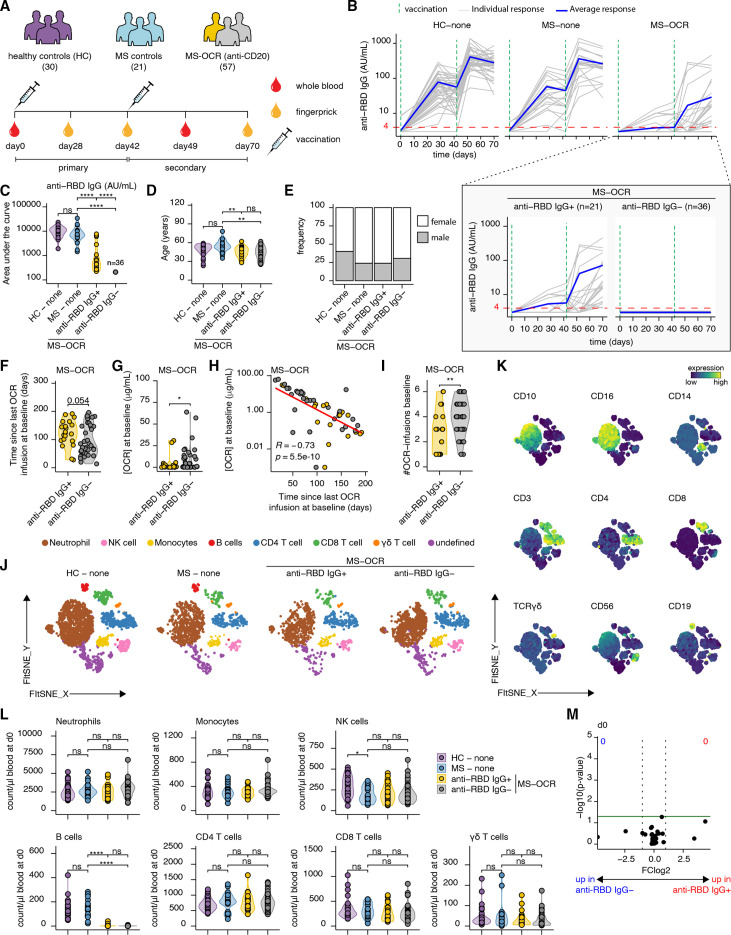
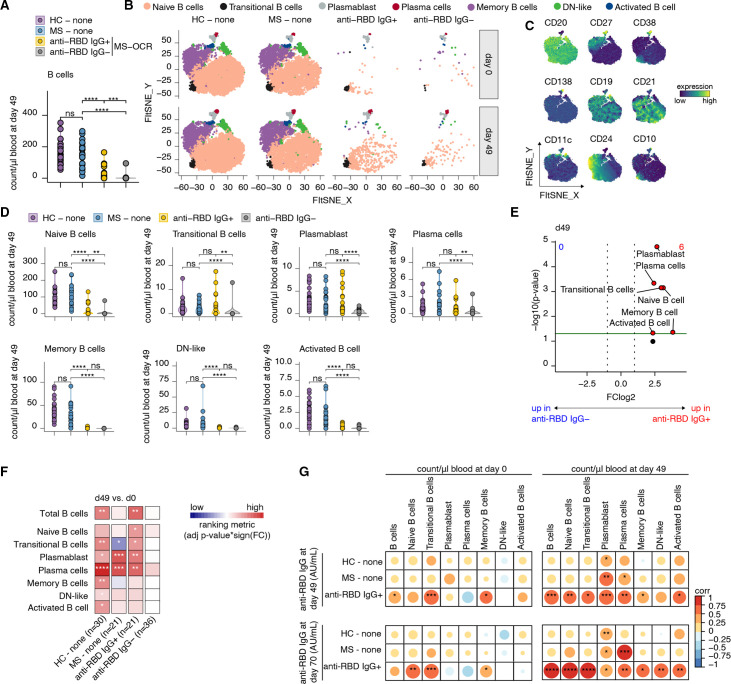
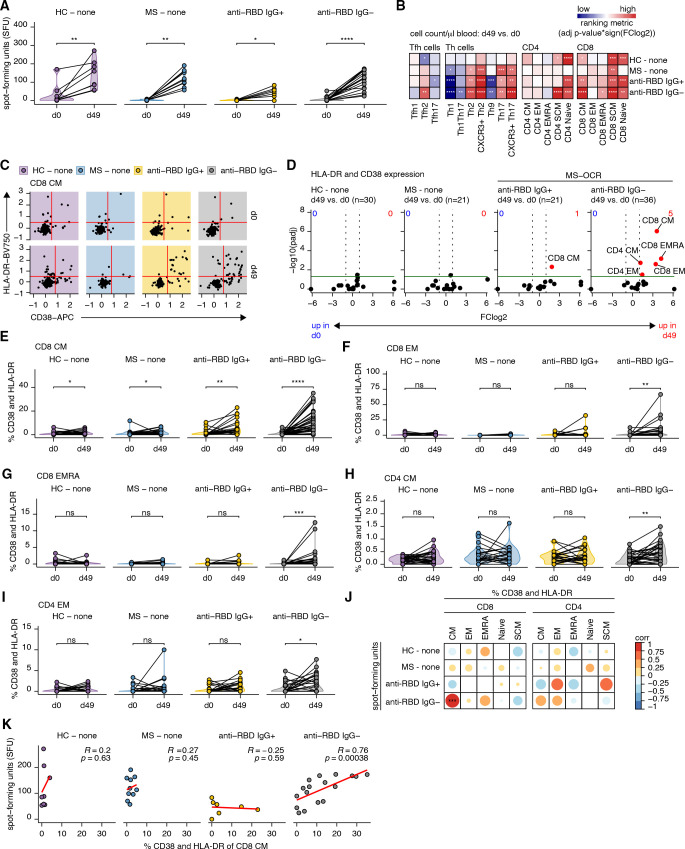
Results: Among OCR-treated patients with MS, 63% did not produce detectable levels of antibodies (non-seroconverted), and those who did have lower spike receptor-binding domain-specific IgG responses compared with healthy individuals and untreated patients with MS. Before vaccination, no discernible immunological differences were observed between non-seroconverted and seroconverted OCR-treated patients with MS. However, non-seroconverted patients received overall more OCR infusions, had shorter intervals since their last OCR infusion and displayed higher OCR serum concentrations at the time of their initial vaccination. Following two vaccinations, non-seroconverted patients displayed smaller B cell compartments but instead exhibited more robust activation of general CD4+ and CD8+ T cell compartments, as indicated by upregulation of CD38 and HLA-DR surface expression, when compared with seroconverted patients.
Conclusion: These findings highlight the importance of optimising treatment regimens when scheduling SARS-CoV-2 vaccination for OCR-treated patients with MS to maximise their humoral and cellular immune responses. This study provides valuable insights for optimising vaccination strategies in OCR-treated patients with MS, including the identification of CD38 and HLA-DR as potential markers to explore vaccine efficacy in non-seroconverting OCR-treated patients with MS.
Keywords: COVID-19; MULTIPLE SCLEROSIS.
© Author(s) (or their employer(s)) 2024. Re-use permitted under CC BY. Published by BMJ.
Conflict of interest statement
Competing interests: JK received research grants for multicentre investigator-initiated trials (DOT-MS trial, ClinicalTrials.gov Identifier: NCT04260711 (ZonMw) and BLOOMS trial (ZonMw and Treatmeds), ClinicalTrials.gov Identifier: NCT05296161); received consulting fees from F Hoffmann-La Roche, Biogen, Teva, Merck, Novartis and Sanofi/Genzyme (all payments to institution); reports speaker relationships with F Hoffmann-La Roche, Biogen, Immunic, Teva, Merck, Novartis and Sanofi/Genzyme (all payments to institution); and adjudication committee of MS clinical trial of Immunic (payments to institution only).
Figures
References
MeSH terms
Substances
LinkOut - more resources
Full Text Sources
Medical
Research Materials
Miscellaneous
