


Patterns and treatment outcomes of primary bone tumors in children treated at tertiary referral hospital, Ethiopia
- PMID: 38549062
- PMCID: PMC10976724
- DOI: 10.1186/s12885-024-12169-x
Patterns and treatment outcomes of primary bone tumors in children treated at tertiary referral hospital, Ethiopia
Abstract
Background: Bone tumors account for approximately 6% of all cancers in children. Malignant bone tumors, commonly occurring in children and adolescents, are associated with high mortality and morbidity. The overall survival of children with primary malignant bone tumors is affected by the stage of disease, time of diagnosis, and treatment response. Despite advanced treatment modalities with chemotherapy, surgery, and radiotherapy, bone tumor is the third leading cause of death in children with malignancy. Patients with metastatic disease at diagnosis have poor outcomes compared to localized disease at presentation. The 5-year Overall Survival and event-free survival in children with primary malignant bone tumors were 85.2% and 69.2%. The study aimed to assess the clinicopathological profile and treatment outcomes of children with primary malignant bone tumors in our setup.
Materials and methods: A hospital-based cross-sectional study was conducted on 95 children who met the inclusion criteria through structured questionnaire. The collected data were analyzed using a statistical package for social sciences (SPSS) version 25. P-value < 0.05 was considered to be statistically significant. Kaplan Meier survival estimate was used for overall and event-free survival analysis.
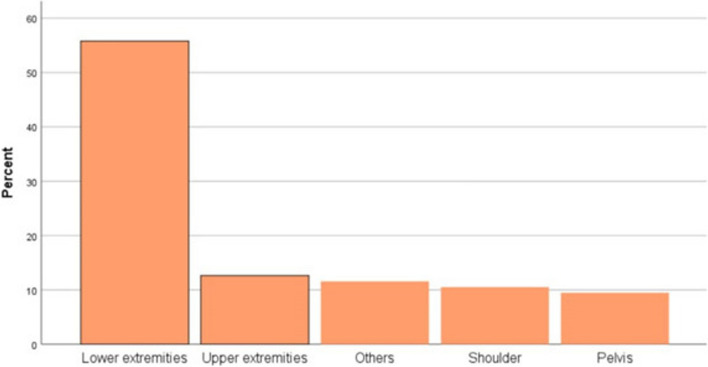
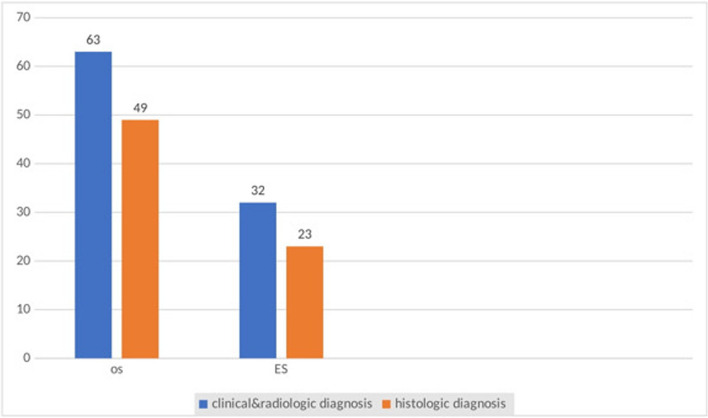
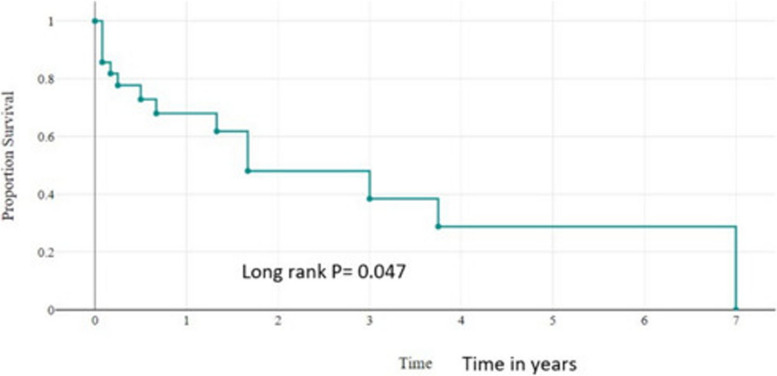
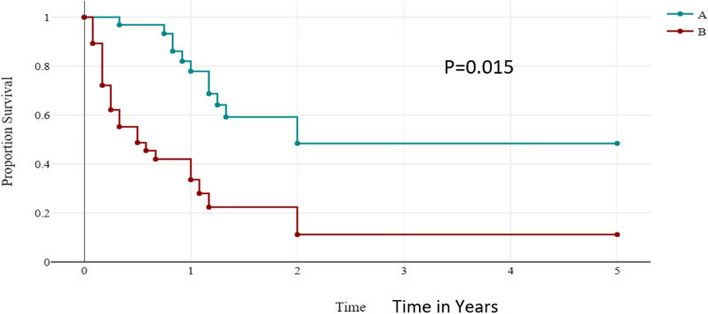
Results: A total of ninety-five patients met the study inclusion criteria and the median age at diagnosis with primary malignant bone tumors was 10 years, with an interquartile range of 8-12 years. The duration of the illness from the onset of symptoms to the oncologic treatment center ranges from three weeks to 2 years with a mean duration of five months. Swelling was the commonest presenting symptom accounting for 95.8% (n = 91). Lower extremity was the commonest primary site of involvement accounting for 55.8% (n = 53) of children with primary malignant bone tumors. Osteosarcoma was the commonest malignant bone tumor constituted 66.3% (n = 63), followed by Ewing sarcoma at 33.7% (n = 32). About 41.2% (n = 39) of children had metastatic disease at presentation and the lung was the commonest site of distant metastasis. The Kaplan Meier survival estimate analysis showed the 1-year and 5-year overall survival probabilities for all pediatric primary malignant bone tumor patients were 65% (95% CI: 0.3-0.56) and 38% (95% CI:0.19-0.47) respectively. The 1-year and 5-year event-free survival probabilities were 55% (95% CI: 0.32-0.73) and 33% (95% CI: 0.10-0.59). The stage of the disease at presentation had a significant association with the outcome (p = 0.023).
Conclusion: Our study showed the mean duration of the illness from the onset of symptoms to the oncologic treatment center was 5 months ranging from 3 weeks to 2 years. More than one-third of the presented with metastatic disease at presentation. The 1-year and 5-year overall survival (OS) probabilities of children with primary malignant bone tumors were low in our setup compared to other studies.
Keywords: Event-free survival; Kaplan Meier; Overall survival; Primary bone tumors.
© 2024. The Author(s).
Conflict of interest statement
The authors declare no competing interests.
Figures

References
-
- Bamanikar S, Pagaro P, Kaur P, et al. Histopathological study of primary bone tumors and tumor-like lesions in a medical teaching hospital. JKIMSU. 2015;4:46.
-
- Kokode DN, Wilkinson A. A clinicopathological study of lesions of bone. Int J Clin Diagn Pathol. 2018;1(1):17–22. https://www.patholjournal.com/articles/30/2-1-8-587.pdf.
-
- Malawer MM, Sternheim A. Operative techniques in orthopedic surgical oncology. In: Philadelphia. 2012. p. 418. https://shop.lww.com/Operative-Techniques-in-Orthopaedic-Surgical-Oncolo....
-
- Fletcher CDM, Bridge JA, Hogendoorn PCW, Mertens F. WHO classification of tumors of tumors of soft tissue and bone. 2013. https://publications.iarc.fr/Book-And-Report-Series/Who-Classification-O....
MeSH terms
LinkOut - more resources
Full Text Sources
Medical
Miscellaneous
