


Wolbachia supergroup A in Enoplognatha latimana (Araneae: Theridiidae) in Poland as an example of possible horizontal transfer of bacteria
- PMID: 38553514
- PMCID: PMC10980700
- DOI: 10.1038/s41598-024-57701-y
Wolbachia supergroup A in Enoplognatha latimana (Araneae: Theridiidae) in Poland as an example of possible horizontal transfer of bacteria
Abstract
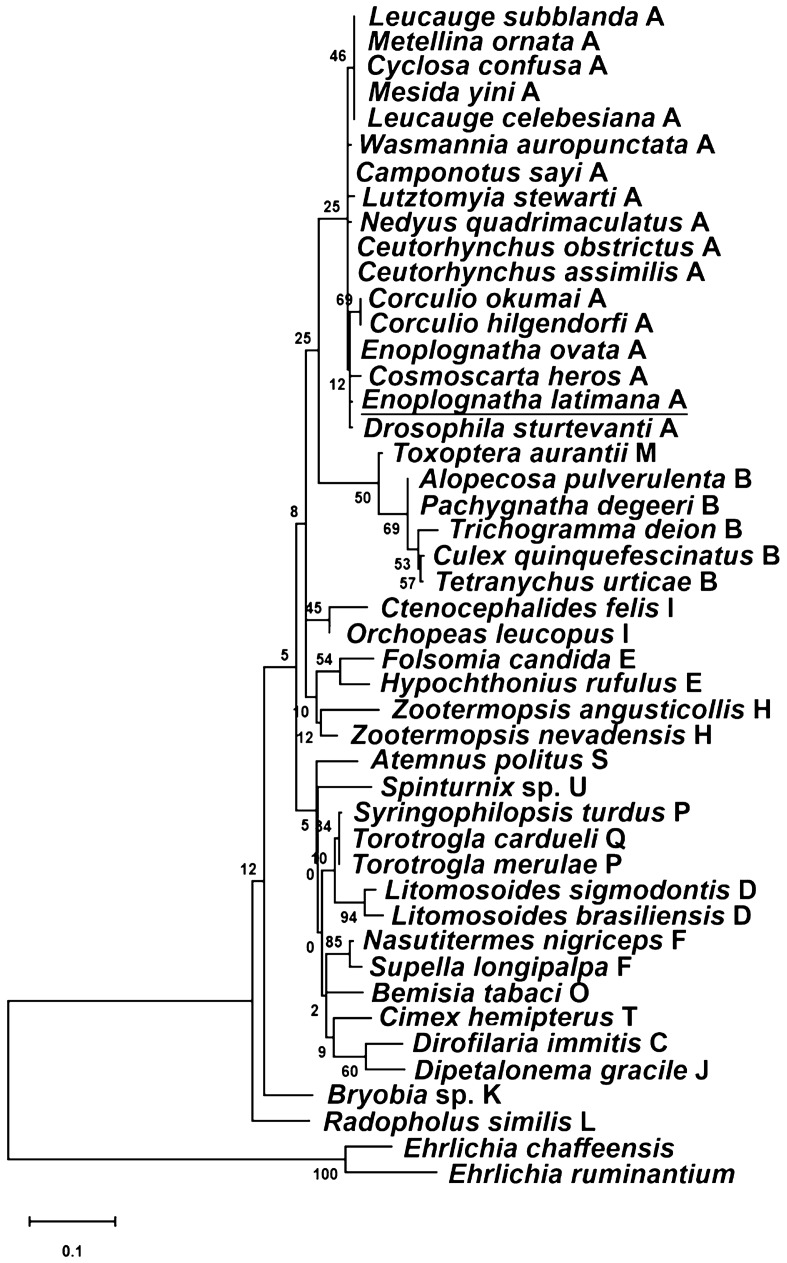
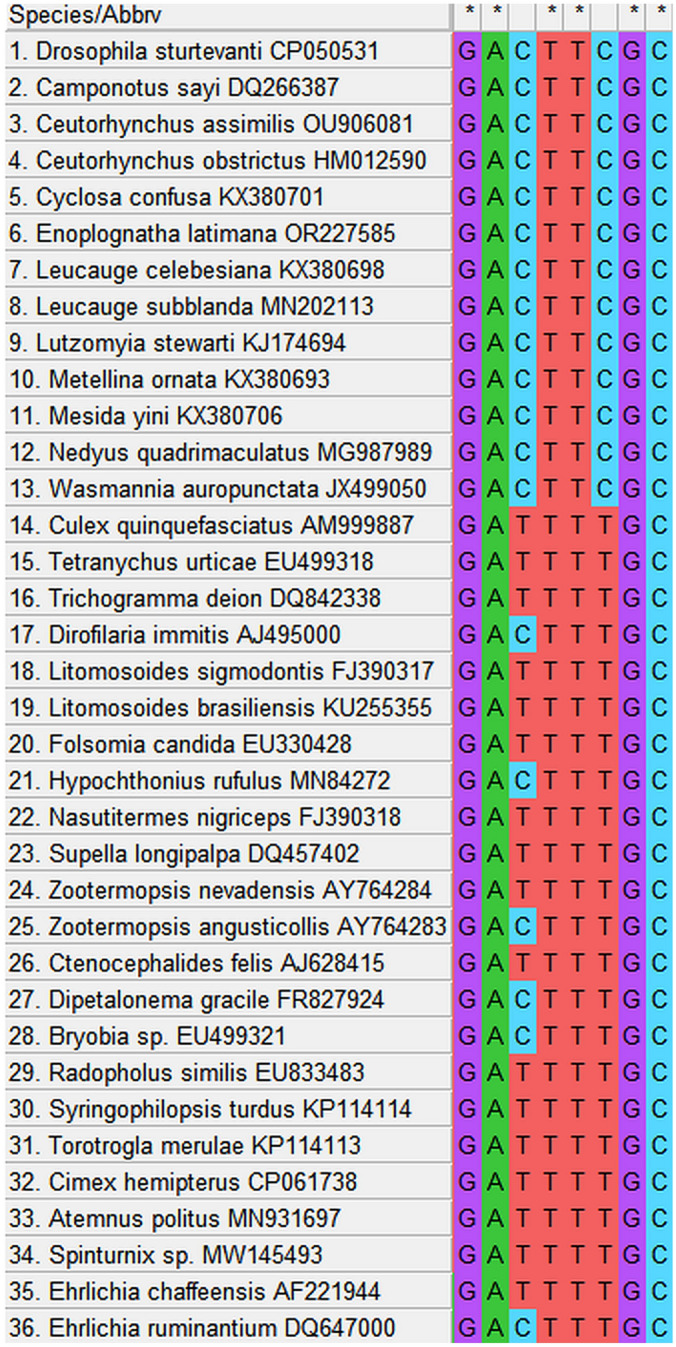
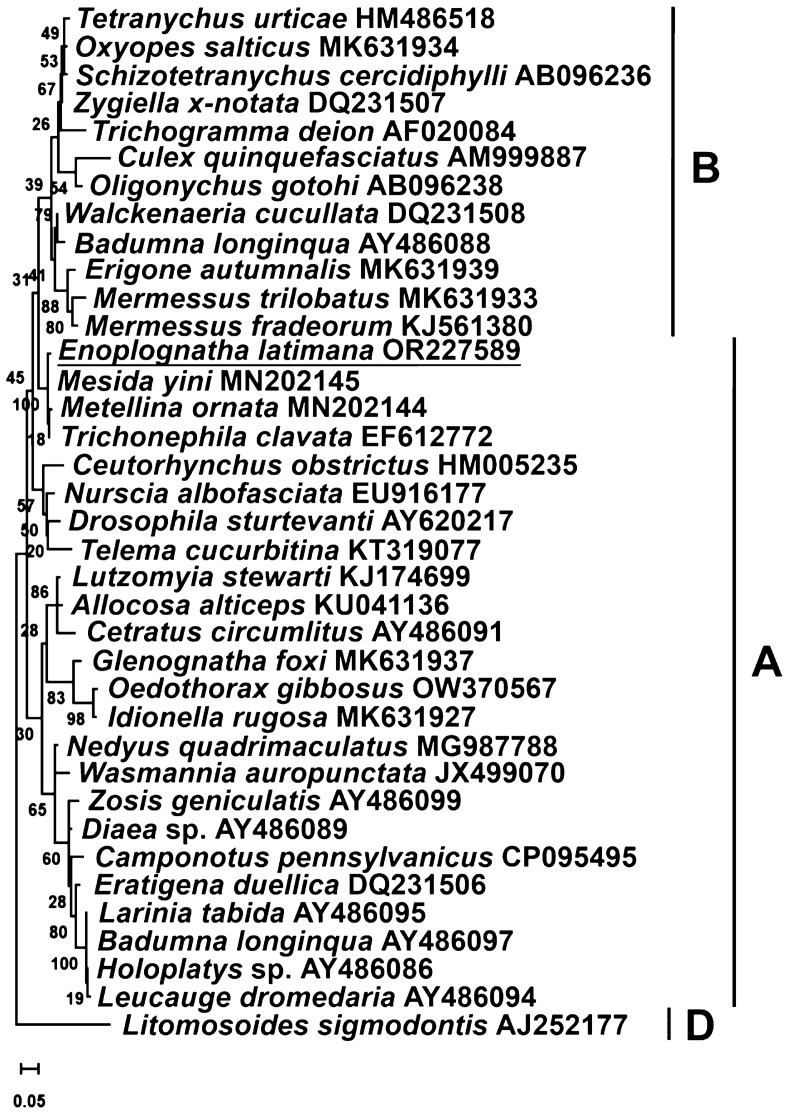
Wolbachia (phylum Pseudomonadota, class Alfaproteobacteria, order Rickettsiales, family Ehrlichiaceae) is a maternally inherited bacterial symbiont infecting more than half of arthropod species worldwide and constituting an important force in the evolution, biology, and ecology of invertebrate hosts. Our study contributes to the limited knowledge regarding the presence of intracellular symbiotic bacteria in spiders. Specifically, we investigated the occurrence of Wolbachia infection in the spider species Enoplognatha latimana Hippa and Oksala, 1982 (Araneae: Theridiidae) using a sample collected in north-western Poland. To the best of our knowledge, this is the first report of Wolbachia infection in E. latimana. A phylogeny based on the sequence analysis of multiple genes, including 16S rRNA, coxA, fbpA, ftsZ, gatB, gltA, groEL, hcpA, and wsp revealed that Wolbachia from the spider represented supergroup A and was related to bacterial endosymbionts discovered in other spider hosts, as well as insects of the orders Diptera and Hymenoptera. A sequence unique for Wolbachia supergroup A was detected for the ftsZ gene. The sequences of Wolbachia housekeeping genes have been deposited in publicly available databases and are an important source of molecular data for comparative studies. The etiology of Wolbachia infection in E. latimana is discussed.
© 2024. The Author(s).
Conflict of interest statement
The authors declare no competing interests.
Figures

References
MeSH terms
Substances
LinkOut - more resources
Full Text Sources
Research Materials
