


Network analysis of depression and anxiety symptoms and their associations with life satisfaction among Chinese hypertensive older adults: a cross-sectional study
- PMID: 38562253
- PMCID: PMC10983850
- DOI: 10.3389/fpubh.2024.1370359
Network analysis of depression and anxiety symptoms and their associations with life satisfaction among Chinese hypertensive older adults: a cross-sectional study
Abstract
Background: Hypertension is one of the most prevalent chronic diseases among the older adult population in China and older adults with hypertension are more susceptible to mental health problems. This study aimed to explore the network structure of depression and anxiety, and their association with life satisfaction (LS) in older adults with hypertension.
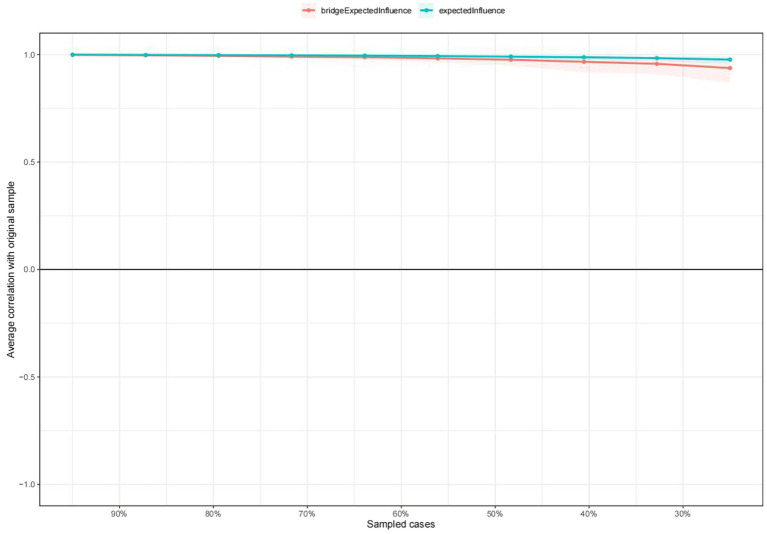
Methods: A total of 4,993 hypertensive individuals aged 60 and above were selected from the Chinese Longitudinal Healthy Longevity Survey (CLHLS 2017-2018). The design of the CLHLS study was approved by the Campus Institutional Review Board of Duke University (Pro00062871) and the Biomedical Ethics Committee of Peking University (IRB00001052-13,074). The Center for Epidemiologic Studies Depression Scale-10 (CESD-10) and the Generalized Anxiety Disorder Scale-7 (GAD-7) were used to assess depressive and anxiety symptoms. Central and bridge symptoms were identified via "Expected Influence" and "Bridge Expected Influence", respectively. Network stability was assessed using the case-dropping bootstrap technique.
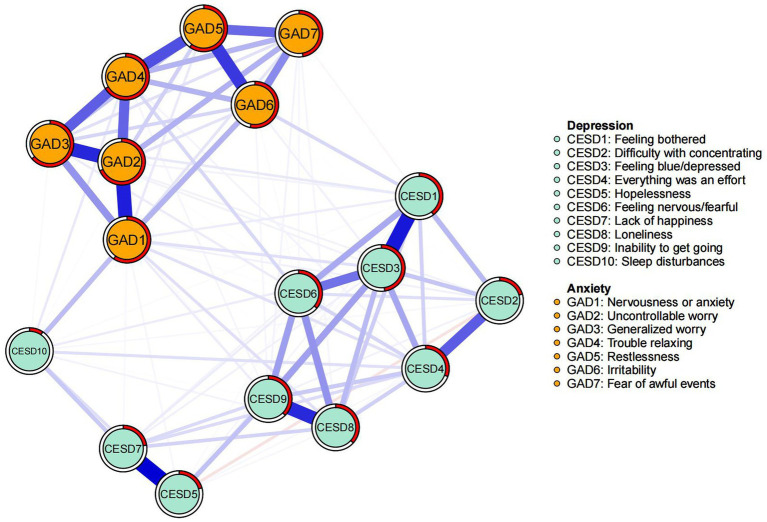
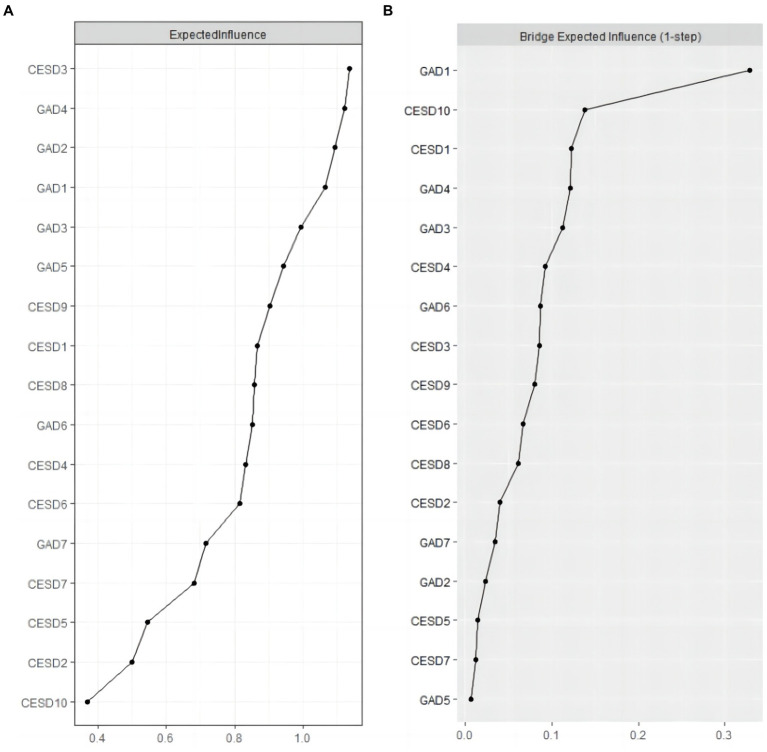
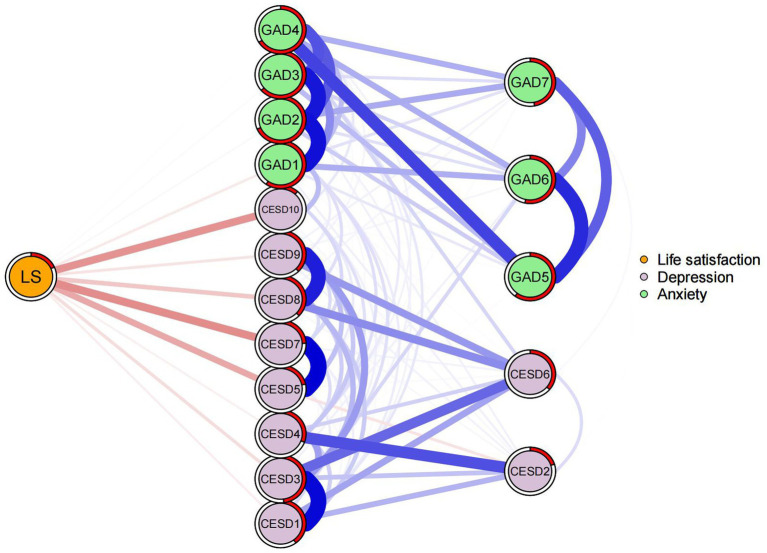
Results: Network analysis identified CESD3 (Feeling blue/depressed), GAD4 (Trouble relaxing), and GAD2 (Uncontrollable worry) as the most influential central symptoms in the network of depression and anxiety. Concurrently, GAD1 (Nervousness or anxiety), CESD10 (Sleep disturbances), and CESD1 (Feeling bothered) stand as critical bridge symptoms between depression and anxiety disorders. Moreover, CESD7 (Lack of happiness) exhibited the strongest negative correlation with LS in Chinese hypertensive older adults.
Conclusion: This exploratory study represents the first investigation to examine the mutual relationship between depressive and anxiety symptoms among Chinese hypertensive older adults. Interventions addressing targeting bridge symptoms have the potential to alleviate depressive and anxiety symptoms. Furthermore, improving happiness, hope, and sleep quality in this population may mitigate the adverse effects of depression and anxiety on LS.
Keywords: anxiety; depression; hypertensive older adults; life satisfaction; network analysis.
Copyright © 2024 Ma, Zhao, Liu and Wei.
Conflict of interest statement
The authors declare that the research was conducted in the absence of any commercial or financial relationships that could be construed as a potential conflict of interest.
Figures
References
-
- Pan S. China's demographic imbalance and its adjustment strategies--analysis based on the seventh national population census data. Tax Econ. (2022) 5:1–10.
-
- Lin WQ, Yuan LX, Sun MY, Wang C, Liang EM, Li YH, et al. . Prevalence and patterns of multimorbidity in chronic diseases in Guangzhou, China: a data mining study in the residents’ health records system among 31 708 community-dwelling elderly people. BMJ Open. (2022) 12:e056135. doi: 10.1136/bmjopen-2021-056135, PMID: - DOI - PMC - PubMed
Publication types
MeSH terms
LinkOut - more resources
Full Text Sources
Medical
