


Non-technical skills needed by medical disaster responders- a scoping review
- PMID: 38566146
- PMCID: PMC10988843
- DOI: 10.1186/s13049-024-01197-y
Non-technical skills needed by medical disaster responders- a scoping review
Abstract
Background: There is no universal agreement on what competence in disaster medicine is, nor what competences and personal attributes add value for disaster responders. Some studies suggest that disaster responders need not only technical skills but also non-technical skills. Consensus of which non-technical skills are needed and how training for these can be provided is lacking, and little is known about how to apply knowledge of non-technical skills in the recruitment of disaster responders. Therefore, this scoping review aimed to identify the non-technical skills required for the disaster medicine response.
Method: A scooping review using the Arksey & O´Malley framework was performed. Structured searches in the databases PuBMed, CINAHL Full Plus, Web of Science, PsycInfo and Scopus was conducted. Thereafter, data were structured and analyzed.
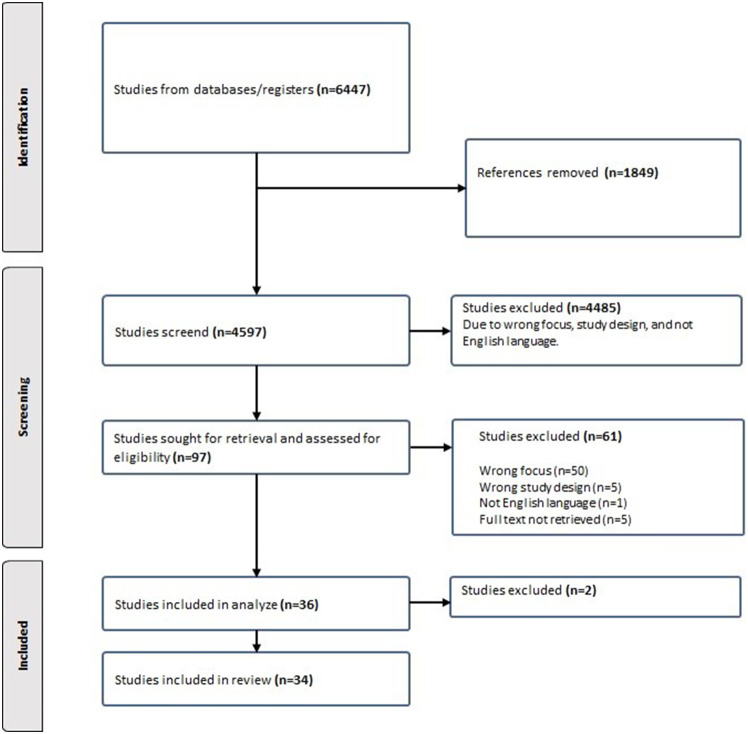
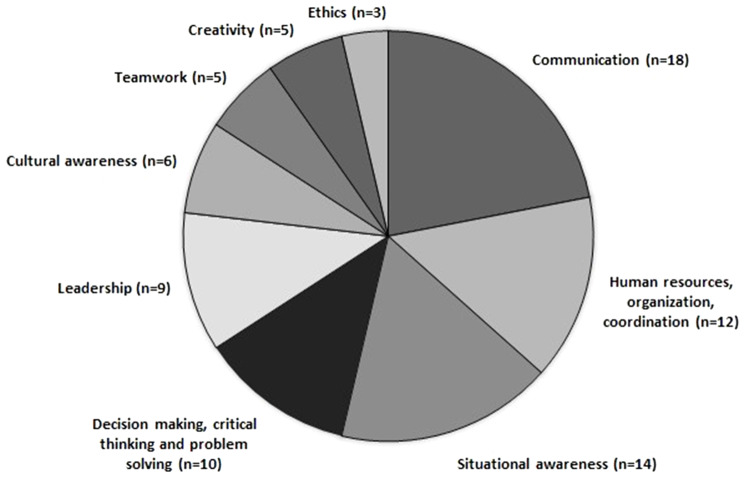
Results: From an initial search result of 6447 articles, 34 articles were included in the study. These covered both quantitative and qualitative studies and different contexts, including real events and training. The most often studied real event were responses following earthquakes. Four non-technical skills stood out as most frequently mentioned: communication skills; situational awareness; knowledge of human resources and organization and coordination skills; decision-making, critical-thinking and problem-solving skills. The review also showed a significant lack of uniform use of terms like skills or competence in the reviewed articles.
Conclusion: Non-technical skills are skills that disaster responders need. Which non-technical skills are most needed, how to train and measure non-technical skills, and how to implement non-technical skills in disaster medicine need further studies.
Keywords: Competence; Disaster; Disaster responders; Non-technical skills.
© 2024. The Author(s).
Conflict of interest statement
The authors declare that they have no competing interests.
Figures
References
-
- The International Federation of Red Cross and Red Crescent Societies. What is a disaster? [Internet] Cited 2023 Oct 09. [Available from: https://www.ifrc.org/our-work/disasters-climate-and-crises/what-disaster.
-
- The International Disaster Database. [Internet] Cited 2023 Sept 25 [Available from: https://www.emdat.be/publications.
-
- Vitello S, Greatorex J, Shaw S. What is competence? A shared interpretation of competence to support teaching, learning and assessment. Cambridge, UK: Cambridge University Press & Assessment; 2021.
-
- Prineas SMK, Mirko C, Guicciardi S. Non-technical skills in Healthcare. In: Donaldson LRW, Sheridan S, Tartaglia R, editors. Textbook of Patient Safety and Clinical Risk Management. Cham, Switzerland: Springer; 2020.
Publication types
MeSH terms
LinkOut - more resources
Full Text Sources
Medical
