


A combination of suprachoroidal injection of triamcinolone using a custom-made needle and intravitreal Ziv-aflibercept every eight weeks to manage naïve/denovo central DME: a single-center retrospective case series
- PMID: 38566193
- PMCID: PMC10986050
- DOI: 10.1186/s40942-024-00550-8
A combination of suprachoroidal injection of triamcinolone using a custom-made needle and intravitreal Ziv-aflibercept every eight weeks to manage naïve/denovo central DME: a single-center retrospective case series
Abstract
Background: Previous studies have shown promising effects of combining intravitreal bevacizumab and suprachoroidal injection of triamcinolone acetonide in treating DME. However, further research is needed.
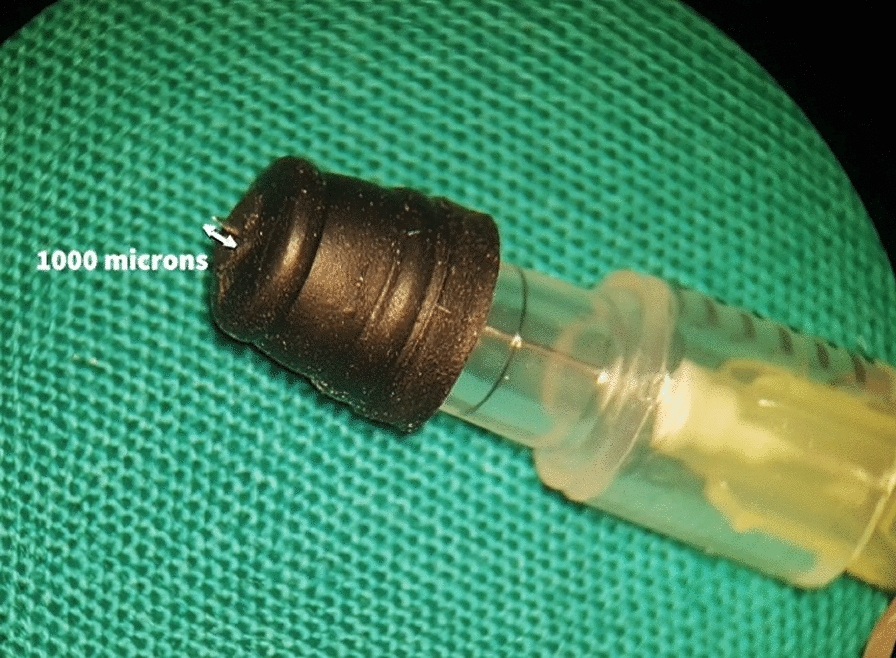
Objective: To assess the efficacy and safety of combining both intravitreal Ziv-aflibercept and suprachoroidal injection of triamcinolone acetonide using a custom-made needle in naïve and de novo central diabetic macular edema (DME) patients every eight weeks for 24 weeks.
Methods: Central macular thickness was measured via spectral domain-optical coherence tomography, and best-corrected visual acuity was measured via a Snellen chart at baseline and at 4, 8, 12, 16, and 24 weeks postinjection. Additionally, cataract progression, intraocular pressure (IOP), and ocular safety were analyzed.
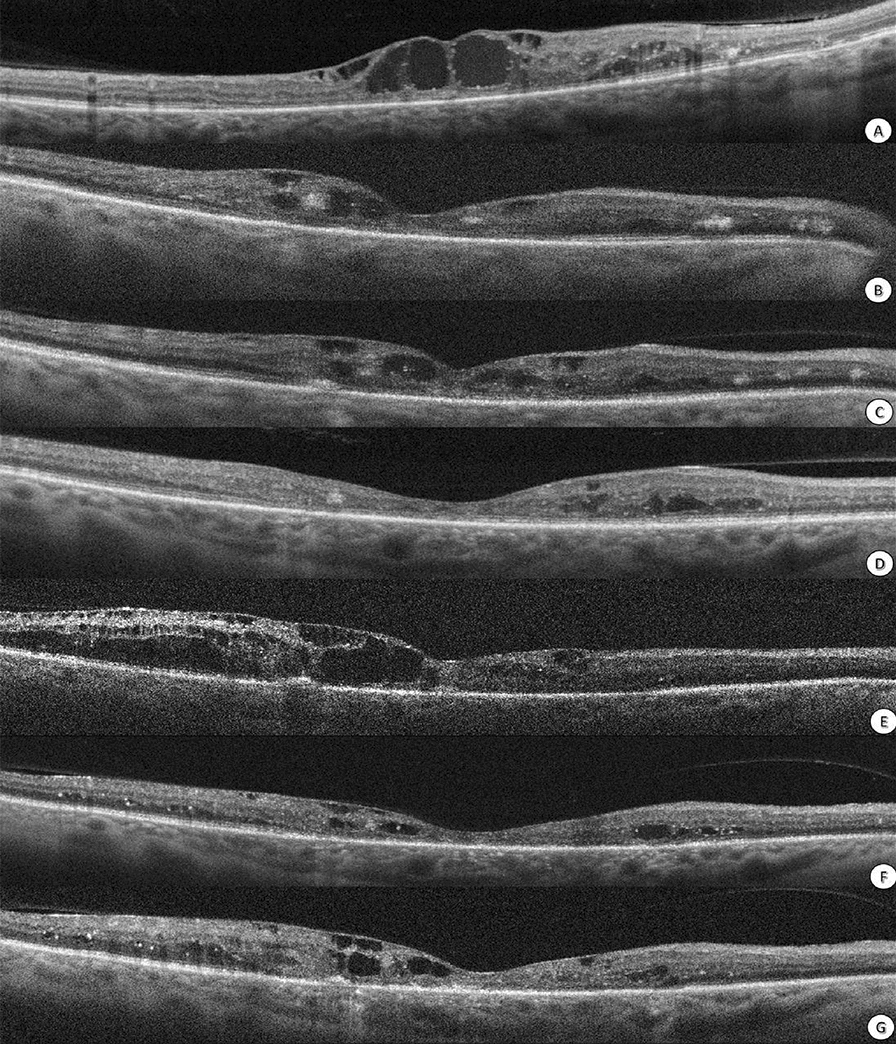
Results: A total of 10 eyes of 6 patients were treated with suprachoroidal injections of triamcinolone acteonid combined with an intravitreal injection of Ziv-aflibercept. Vision improved from 0.69 log minimum angle of resolution (MAR) at baseline to 0.39 log MAR after treatment. Central macular thickness significantly decreased from 462.3 ± 166 μm at baseline to 362.7 ± 77.6 μm at 24 weeks postinjection.
Conclusion: Suprachoroidal injection of triamcinolone using a custom-made needle with the intravitreal agent Ziv-aflibercept to treat de novo/naïve central DME has favorable outcomes and adequate safety results. Moreover, this study demonstrated the benefit of adapting the previous treatment combination for extending the interval between anti-VEGF treatments from 4 to 8 weeks, which could prevent further expenses, especially in low-income countries.However, large multicenter randomized clinical trials with longer follow-up periods are needed to assess this treatment route, especially in low-income and resourced countries.
Keywords: Custom-made needle; DME; Suprachoroidal; Triamcinolone; Ziv-aflibercept.
© 2024. The Author(s).
Conflict of interest statement
The authors declare that they have no competing interests.
Figures
References
-
- Marashi A. Three-month outcome of Ziv-aflibercept for diabetic macular edema. Adv Ophthalmol Vis Syst. 2016 doi: 10.15406/aovs.2016.04.00114. - DOI
LinkOut - more resources
Full Text Sources
