


The impact of differential transposition activities of autonomous and nonautonomous hAT transposable elements on genome architecture and gene expression in Caenorhabditis inopinata
- PMID: 38577765
- PMCID: PMC11492494
- DOI: 10.1093/genetics/iyae052
The impact of differential transposition activities of autonomous and nonautonomous hAT transposable elements on genome architecture and gene expression in Caenorhabditis inopinata
Abstract
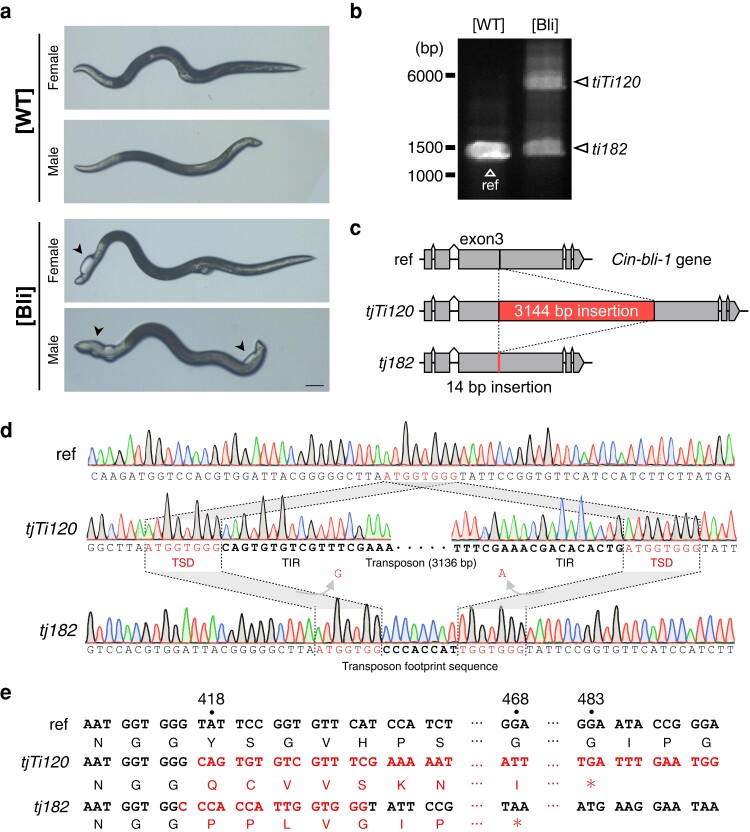
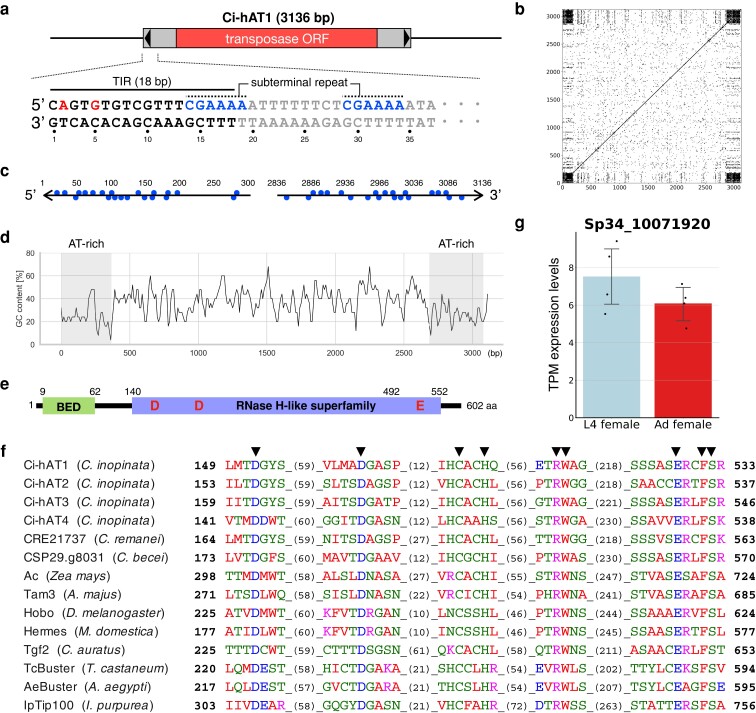
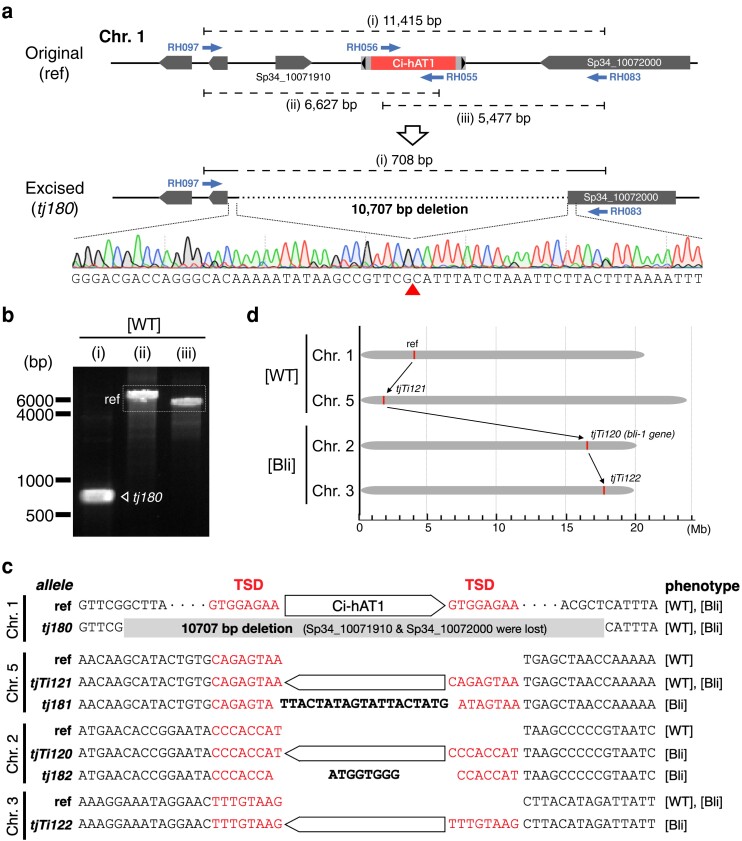
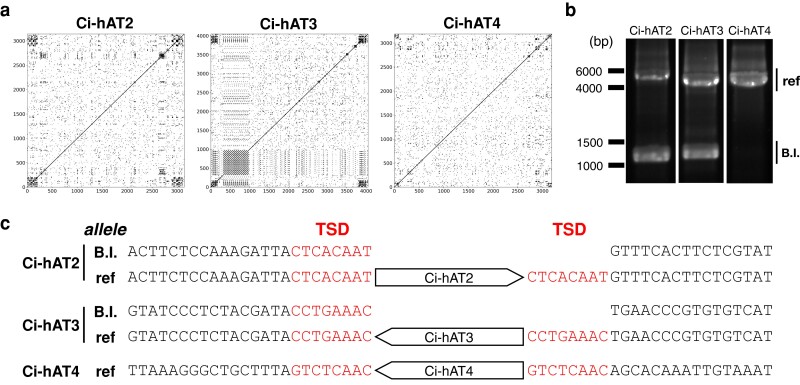
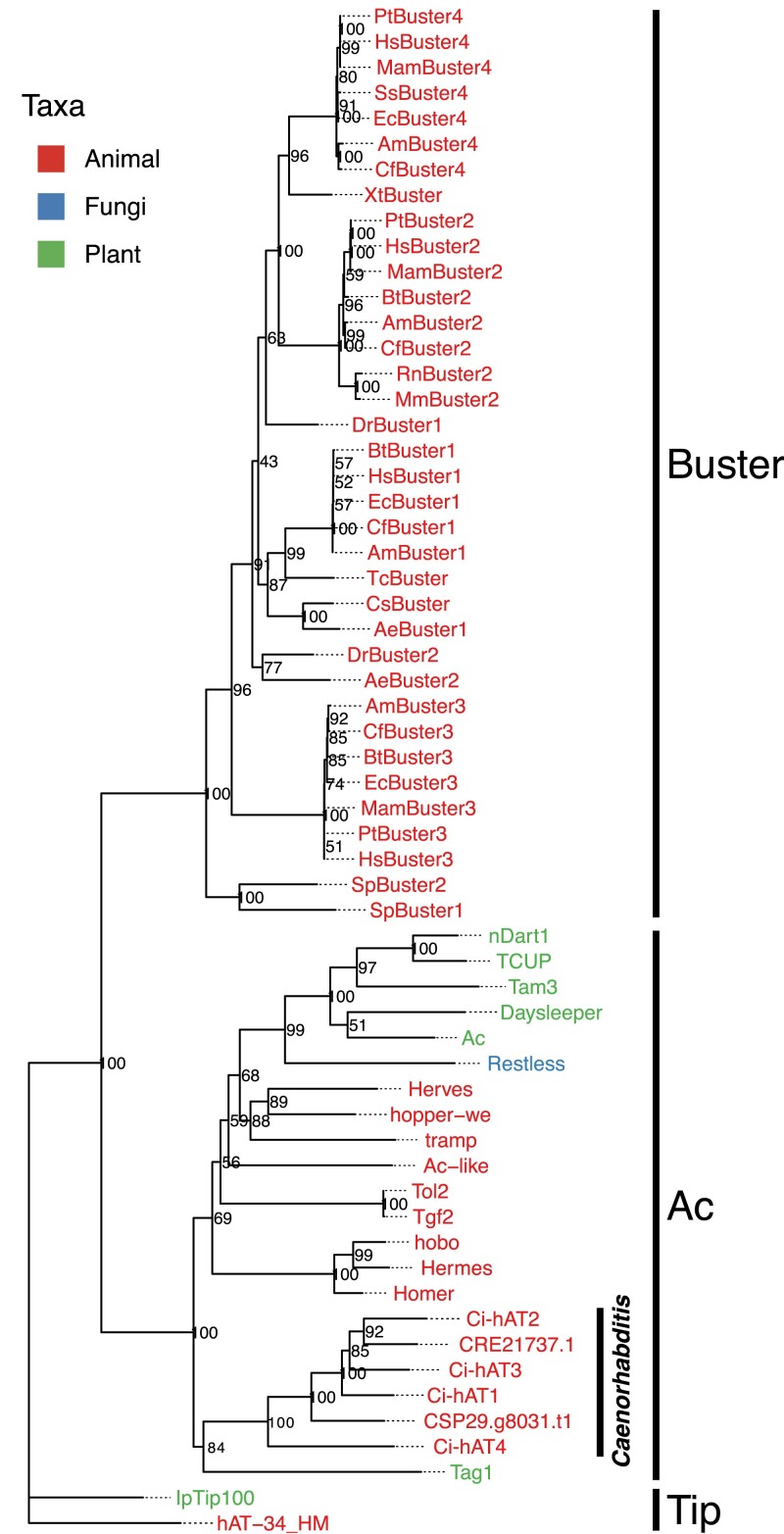
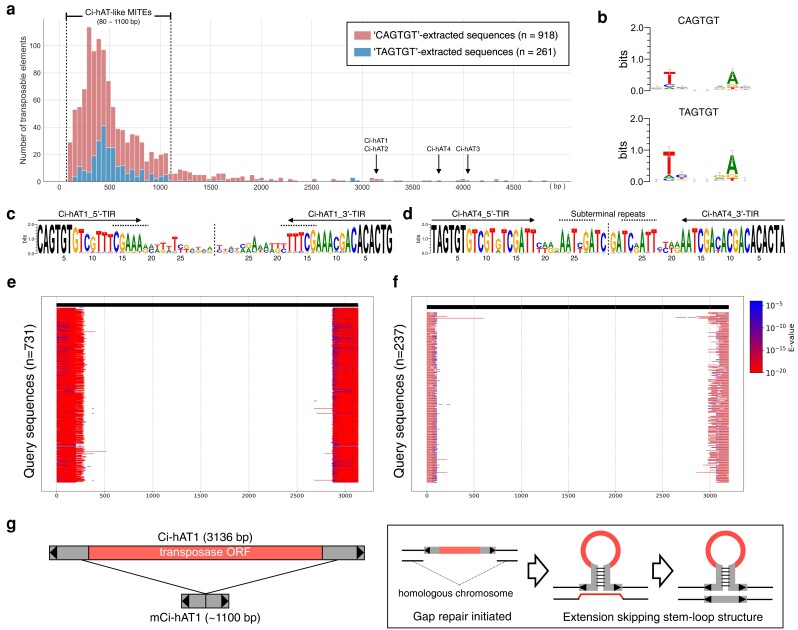
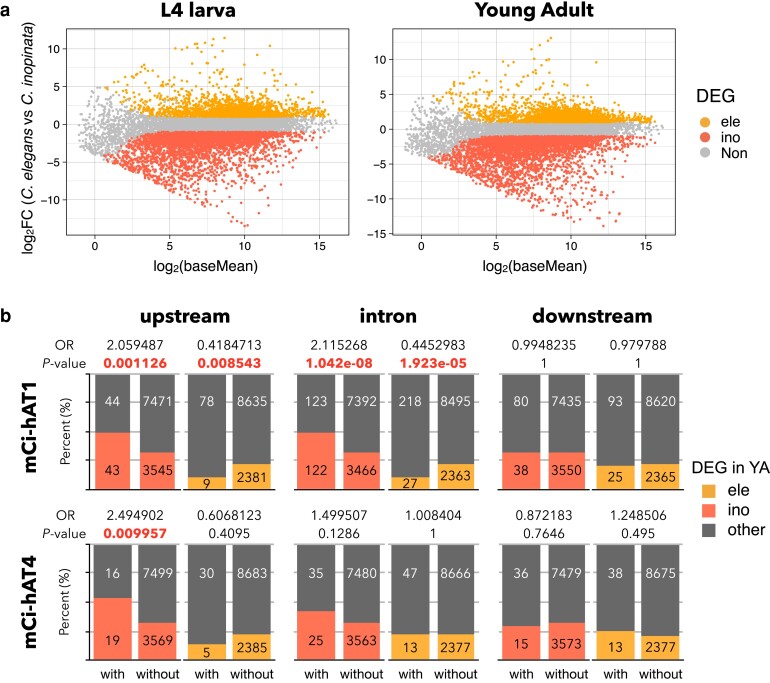
Transposable elements are DNA sequences capable of moving within genomes and significantly influence genomic evolution. The nematode Caenorhabditis inopinata exhibits a much higher transposable element copy number than its sister species, Caenorhabditis elegans. In this study, we identified a novel autonomous transposable element belonging to the hAT superfamily from a spontaneous transposable element-insertion mutant in C. inopinata and named this transposon Ci-hAT1. Further bioinformatic analyses uncovered 3 additional autonomous hAT elements-Ci-hAT2, Ci-hAT3, and Ci-hAT4-along with over 1,000 copies of 2 nonautonomous miniature inverted-repeat transposable elements, mCi-hAT1 and mCi-hAT4, likely derived from Ci-hAT1 and Ci-hAT4 through internal deletion. We tracked at least 3 sequential transpositions of Ci-hAT1 over several years. However, the transposition rates of the other 3 autonomous hAT elements were lower, suggesting varying activity levels. Notably, the distribution patterns of the 2 miniature inverted-repeat transposable element families differed significantly: mCi-hAT1 was primarily located in the chromosome arms, a pattern observed in the transposable elements of other Caenorhabditis species, whereas mCi-hAT4 was more evenly distributed across chromosomes. Additionally, interspecific transcriptome analysis indicated that C. inopinata genes with upstream or intronic these miniature inverted-repeat transposable element insertions tend to be more highly expressed than their orthologous genes in C. elegans. These findings highlight the significant role of de-silenced transposable elements in driving the evolution of genomes and transcriptomes, leading to species-specific genetic diversity.
Keywords: Caenorhabditis inopinata; hAT superfamily; gene expression; genome evolution; transposable element.
© The Author(s) 2024. Published by Oxford University Press on behalf of The Genetics Society of America. All rights reserved. For commercial re-use, please contact reprints@oup.com for reprints and translation rights for reprints. All other permissions can be obtained through our RightsLink service via the Permissions link on the article page on our site—for further information please contact journals.permissions@oup.com.
Conflict of interest statement
Conflicts of interest. The author(s) declare no conflicts of interest.
Figures

References
Publication types
MeSH terms
Substances
Grants and funding
LinkOut - more resources
Full Text Sources
