


Artificial intelligence in diagnosing upper limb musculoskeletal disorders: a systematic review and meta-analysis of diagnostic tests
- PMID: 38579757
- PMCID: PMC11044087
- DOI: 10.1530/EOR-23-0174
Artificial intelligence in diagnosing upper limb musculoskeletal disorders: a systematic review and meta-analysis of diagnostic tests
Abstract
Purpose: The integration of artificial intelligence (AI) in radiology has revolutionized diagnostics, optimizing precision and decision-making. Specifically in musculoskeletal imaging, AI tools can improve accuracy for upper extremity pathologies. This study aimed to assess the diagnostic performance of AI models in detecting musculoskeletal pathologies of the upper extremity using different imaging modalities.
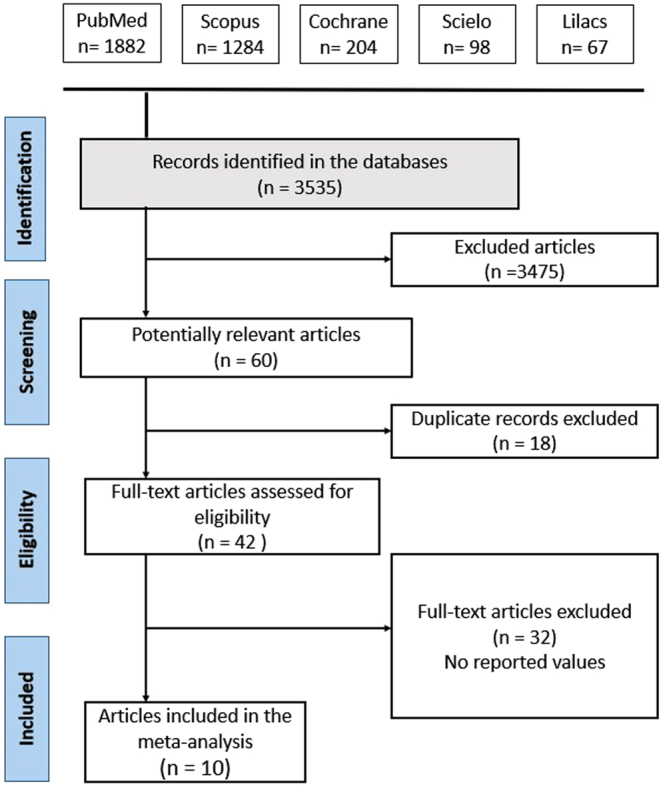
Methods: A meta-analysis was conducted, involving searches on MEDLINE/PubMed, SCOPUS, Cochrane Library, Lilacs, and SciELO. The quality of the studies was assessed using the QUADAS-2 tool. Diagnostic accuracy measures including sensitivity, specificity, diagnostic odds ratio (DOR), positive and negative likelihood ratios (PLR, NLR), area under the curve (AUC), and summary receiver operating characteristic were pooled using a random-effects model. Heterogeneity and subgroup analyses were also included. All statistical analyses and plots were performed using the R software package.
Results: Thirteen models from ten articles were analyzed. The sensitivity and specificity of the AI models to detect musculoskeletal conditions in the upper extremity were 0.926 (95% CI: 0.900; 0.945) and 0.908 (95% CI: 0.810; 0.958). The PLR, NLR, lnDOR, and the AUC estimates were found to be 19.18 (95% CI: 8.90; 29.34), 0.11 (95% CI: 0.18; 0.46), 4.62 (95% CI: 4.02; 5.22) with a (P < 0.001), and 95%, respectively.
Conclusion: The AI models exhibited strong univariate and bivariate performance in detecting both positive and negative cases within the analyzed dataset of musculoskeletal pathologies in the upper extremity.
Keywords: artificial intelligence; diagnostic; musculoskeletal; orthopedics; radiology; upper limb.
Conflict of interest statement
The authors declare that there is no conflict of interest that could be perceived as prejudicing the impartiality of the study reported.
Figures


References
-
- Bohr A & Memarzadeh K. The rise of artificial intelligence in healthcare applications. Artificial Intelligence in Healthcare 202025–60. (10.1016/B978-0-12-818438-7.00002-2) - DOI
-
- Jian J Xia W Zhang R Zhao X Zhang J Wu X Li Y Qiang J & Gao X. Multiple instance convolutional neural network with modality-based attention and contextual multi-instance learning pooling layer for effective differentiation between borderline and malignant epithelial ovarian tumors. Artificial Intelligence in Medicine 2021121. (10.1016/j.artmed.2021.102194) - DOI - PubMed
-
- Lisacek-Kiosoglous AB Powling AS Fontalis A Gabr A Mazomenos E & Haddad FS. Artificial intelligence in orthopaedic surgery exploring its applications, limitations, and future direction introduction: artificial intelligence, time for clear nomenclature. Bone and Joint Research 202312447–454. (10.1302/2046-3758.127.BJR-2023-0111.R1) - DOI - PMC - PubMed
LinkOut - more resources
Full Text Sources
