


Probiotics for inflammatory bowel disease: Is there sufficient evidence?
- PMID: 38585636
- PMCID: PMC10998680
- DOI: 10.1515/biol-2022-0821
Probiotics for inflammatory bowel disease: Is there sufficient evidence?
Abstract
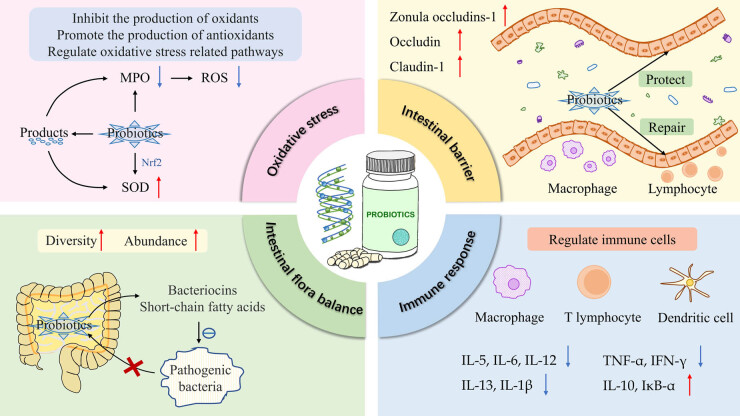
Inflammatory bowel disease (IBD) refers to chronic inflammatory disorders of the gut. Ulcerative colitis (UC) and Crohn's disease (CD) are two subtypes of IBD. Evidence suggests that the intestinal microbiota plays a role in the pathogenesis of IBD, so probiotics have garnered a lot of interest as a potential treatment or prevention for IBD. However, clinical evidence of the efficacy of probiotics is still debatable. We performed a literature review. An advanced search considered clinical studies on probiotic for IBD from inception to 2023 in PubMed, Embase, Cochrane Library, and Web of Science. In the treatment of UC with probiotics, only Escherichia coli Nissle 1917 for maintenance treatment of UC in remission, and Bifidobacterium and VSL#3 for induction of remission in patients with mild to moderately active UC have shown strong evidence. Currently, there are no definitive conclusions regarding the effectiveness of probiotics in CD. The mechanism of probiotic treatment for IBD may be related to reducing oxidative stress, repairing the intestinal barrier, regulating intestinal flora balance, and modulating intestinal immune response. Differences in the benefits of probiotics between CD and UC may be attributable to the different lesion extent and immune-mediated pathophysiology. More robust randomized clinical trials are required to validate the efficacy and safety of diverse probiotic strains in IBD.
Keywords: Crohn’s disease; gut health; inflammatory bowel disease; intestinal microbiome; probiotics; ulcerative colitis.
© 2024 the author(s), published by De Gruyter.
Conflict of interest statement
Conflict of interest: Authors state no conflict of interest.
Figures
References
-
- Niewiadomski O, Studd C, Wilson J, Williams J, Hair C, Knight R, et al. Influence of food and lifestyle on the risk of developing inflammatory bowel disease. Intern Med J. 2016;46(6):669–76. - PubMed
Publication types
LinkOut - more resources
Full Text Sources