


In vitro activities and mechanisms of action of anti-cancer molecules from African medicinal plants: a systematic review
- PMID: 38590420
- PMCID: PMC10998760
- DOI: 10.62347/AUHB5811
In vitro activities and mechanisms of action of anti-cancer molecules from African medicinal plants: a systematic review
Abstract
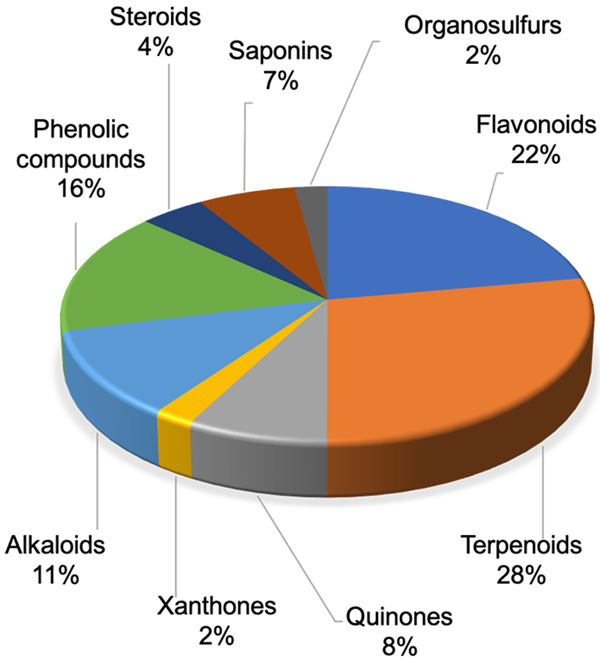
Cancer is one of the leading causes of death worldwide. In recent years, African countries have been faced with a rapid increase in morbidity and mortality due to this pathology. Management is often complicated by the high treatment costs, side effects and the increasing occurrence of resistance to treatments. The identification of new active ingredients extracted from endemic medicinal plants is definitively an interesting approach for the implementation of new therapeutic strategies: their extraction is often lower cost; their identification is based on an ethnobotanical history and a tradipratic approach; their use by low-income populations is simpler; this can help in the development of new synthetic molecules that are more active, more effective and with fewer side effects. The objective of this review is to document the molecules derived from African medicinal plants whose in vitro anti-cancer activities and the mechanisms of molecular actions have been identified. From the scientific databases Science Direct, PubMed and Google Scholar, we searched for publications on compounds isolated from African medicinal plants and having activity on cancer cells in culture. The data were analyzed in particular with regard to the cytotoxicity of the compounds and their mode of action. A total of 90 compounds of these African medicinal plants were selected. They come from nine chemical groups: alkaloids, flavonoids, polyphenols, quinones, saponins, steroids, terpenoids, xanthones and organic sulfides. These compounds have been associated with several cellular effects: i) Cytotoxicity, including caspase activation, alteration of mitochondrial membrane potential, and/or induction of reactive oxygen species (ROS); ii) Anti-angiogenesis; iii) Anti-metastatic properties. This review points out that the cited African plants are rich in active ingredients with anticancer properties. It also stresses that screening of these anti-tumor active ingredients should be continued at the continental scale. Altogether, this work provides a rational basis for the selection of phytochemical compounds for use in clinical trials.
Keywords: Africa; cancer; molecular mechanisms; phytochemicals; plants.
AJCR Copyright © 2024.
Conflict of interest statement
None.
Figures
References
-
- Sung H, Ferlay J, Siegel RL, Laversanne M, Soerjomataram I, Jemal A, Bray F. Global cancer statistics 2020: GLOBOCAN estimates of incidence and mortality worldwide for 36 cancers in 185 countries. CA Cancer J Clin. 2021;71:209–249. - PubMed
-
- Nwodo JN, Ibezim A, Simoben CV, Ntie-Kang F. Exploring cancer therapeutics with natural products from African medicinal plants, part II: alkaloids, terpenoids and flavonoids. Anticancer Agents Med Chem. 2016;16:108–127. - PubMed
-
- Wang JJ, Lei KF, Han F. Tumor microenvironment: recent advances in various cancer treatments. Eur Rev Med Pharmacol Sci. 2018;22:3855–3864. - PubMed
Publication types
LinkOut - more resources
Full Text Sources