Observational Study
. 2024 Sep 1;108(9):1994-2004.
doi: 10.1097/TP.0000000000005007. Epub 2024 Aug 20.

Elevation of Donor-derived Cell-free DNA Before Biopsy-proven Rejection in Kidney Transplant

Collaborators, Affiliations
Observational Study

Elevation of Donor-derived Cell-free DNA Before Biopsy-proven Rejection in Kidney Transplant

Jonathan S Bromberg et al. Transplantation. .

Abstract

Background: Standard-of-care biomarkers for renal allograft rejection are lagging indicators, signaling existing organ injury. This precludes early intervention, when immunological cascades leading to rejection are most susceptible. Donor-derived cell-free DNA (dd-cfDNA) shows promise as an early indicator of rejection, allowing earlier and possibly more effective treatment. This analysis was designed to assess this promise using real-world dd-cfDNA testing evidence.

Methods: This retrospective analysis of the prospective, observational ProActive registry study (NCT04091984) assessed dd-cfDNA and serum creatinine levels before biopsy in 424 patients with ≥1 dd-cfDNA test (n = 1013) in the 6 mo before biopsy.

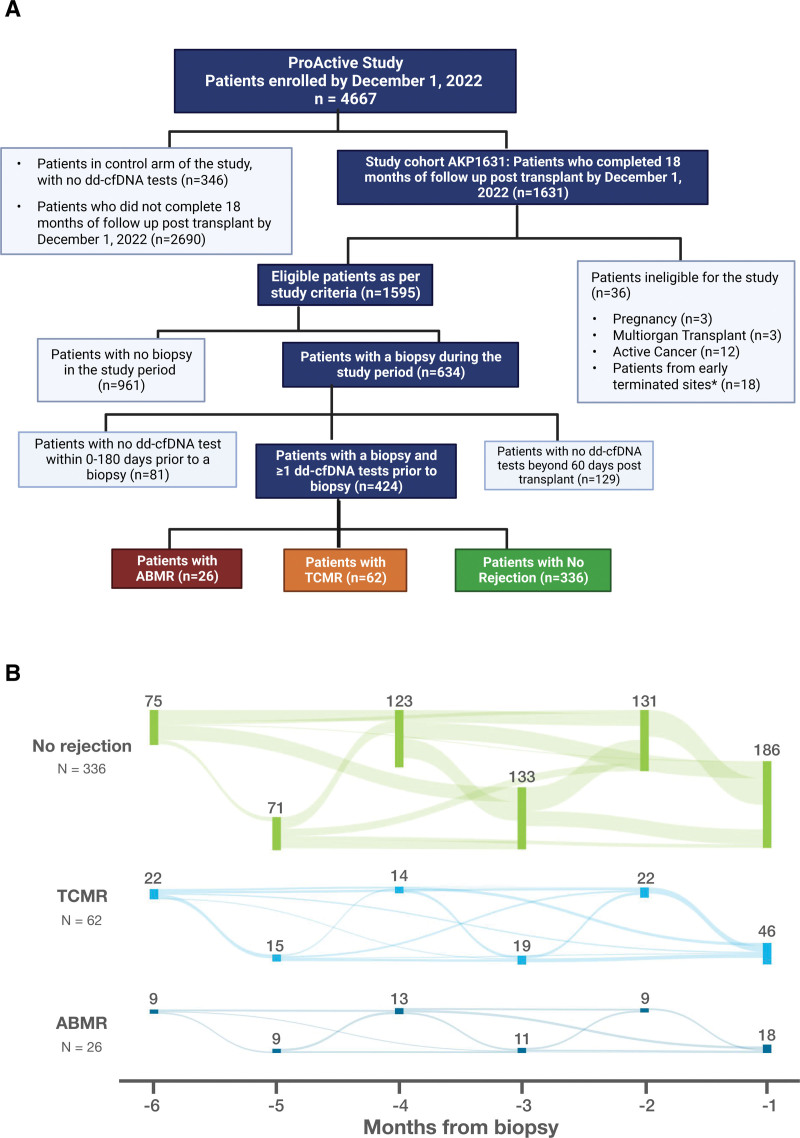
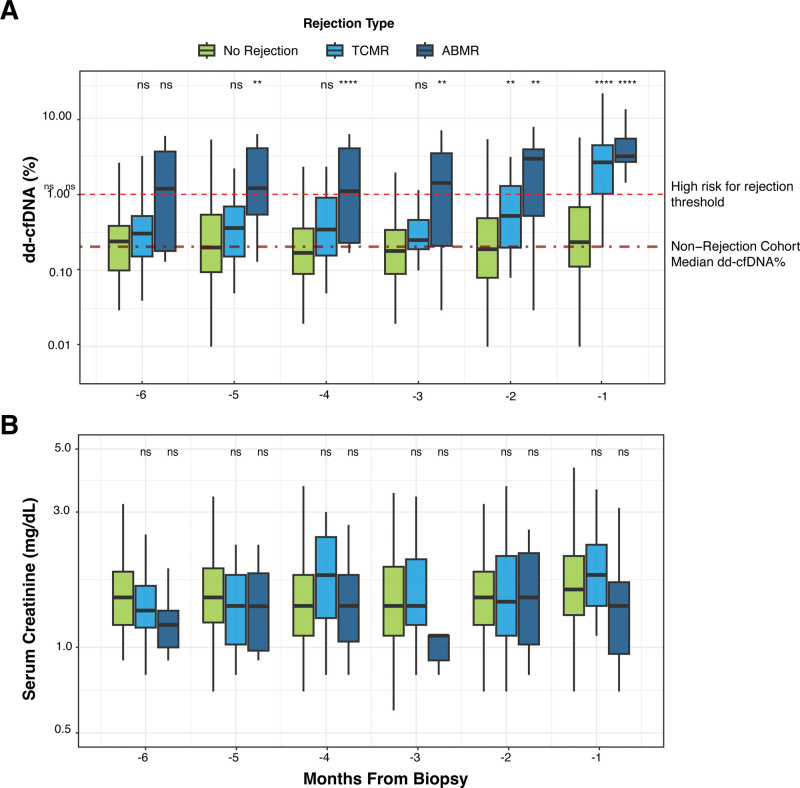
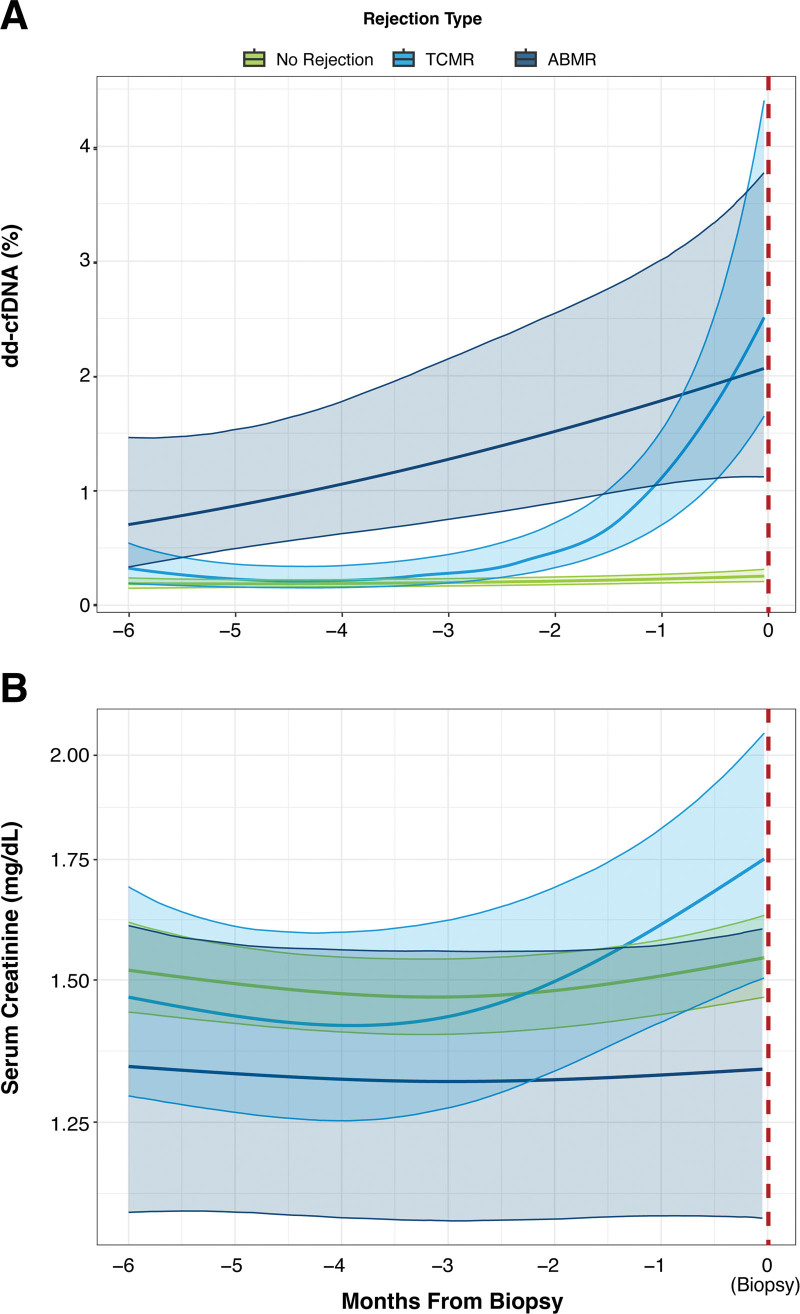
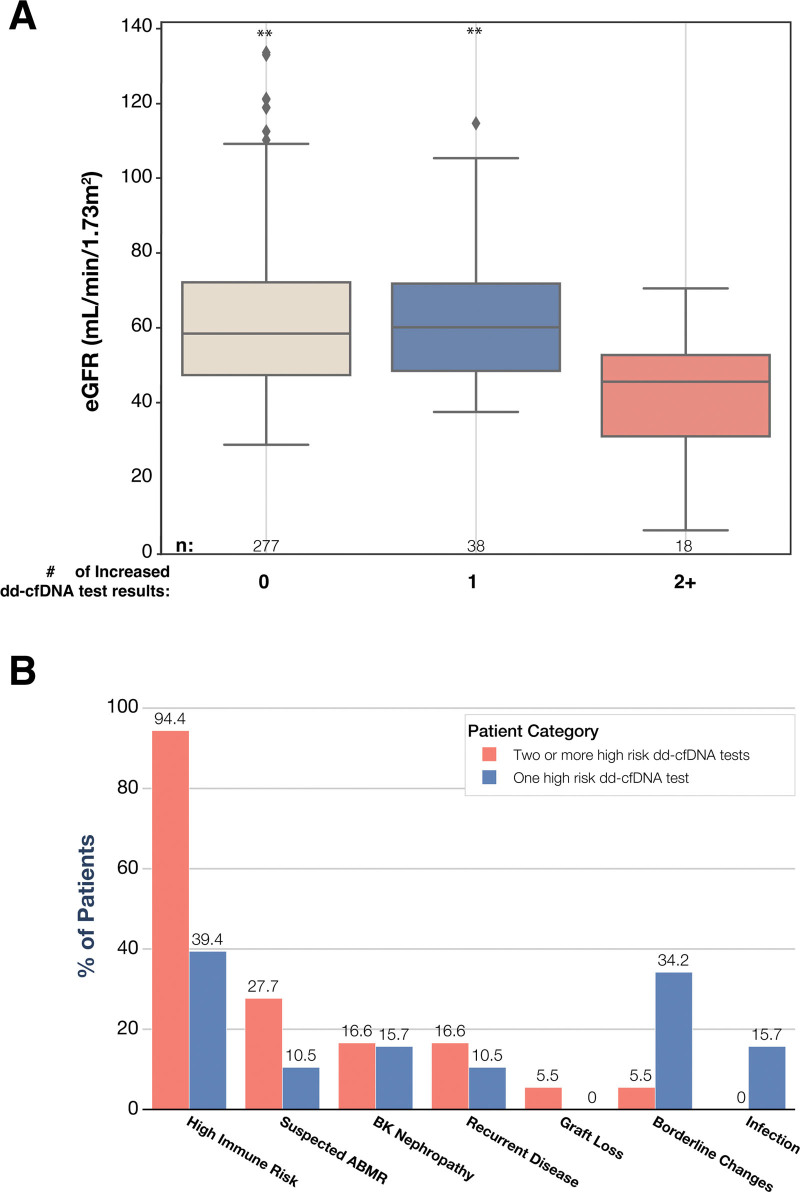
Results: Of 4667 enrolled patients, 1631 patients had ≥18 mo of follow-up data, of which 424 had a biopsy and were included in this analysis. Twenty-six biopsies showed antibody-mediated rejection (ABMR), 62 showed T cell-mediated rejection, and 336 showed nonrejection; each from a unique patient. dd-cfDNA fractions were significantly elevated 5 mo before ABMR biopsies, and 2 mo before T cell-mediated rejection biopsies, compared with nonrejection biopsies. In contrast, serum creatinine did not discriminate between rejection and nonrejection in advance, or concurrent with biopsy. Among patients with nonrejection biopsies, estimated glomerular filtration rate was significantly lower in cases with ≥2 increased dd-cfDNA results (≥1%), compared with those with 0 or 1 increased dd-cfDNA result.

Conclusions: These data indicate that dd-cfDNA is an early indicator of biopsy-proven rejection, especially ABMR, suggesting a greater role for dd-cfDNA in surveillance to identify patients at high risk of ongoing or future rejection, thus requiring closer monitoring, biopsy, or other management changes.


Figures

FIGURE 1.
FIGURE 1.
Analysis cohort patient flow diagrams. A, Overview and patient flow of the ProActive study and analysis cohorts (n = 424). B, Visit months are annotated on the x-axis, and each node, corresponding to the month, represents the number of patients in each category with a visit in that stipulated period. The weighted networks connecting different nodes represent the flow of patients visits from 6 to 1 mo before the index biopsy. ABMR, antibody-mediated rejection; dd-cfDNA, donor-derived cell-free DNA; TCMR, T cell–mediated rejection.
FIGURE 2.
FIGURE 2.
dd-cfDNA and serum creatinine levels before BPAR. Box plots with median and interquartile range of dd-cfDNA% (A) and serum creatinine (B), shown for each biopsy diagnosis group (nonrejection, TCMR, ABMR) stratified by number of months before biopsy. A, The 2 horizontal red lines, from top to bottom, correspond to 1.0% dd-cfDNA (CLIA-validated threshold indicating high risk for rejection), and 0.23% dd-cfDNA (the median dd-cfDNA value for all samples in the nonrejection cohort). Wilcoxon rank-sum test with FDR correction for multiple testing: ****P < 1e-04, ***P < 0.001, **P < 0.01, *P < 0.05, and ns: P > 0.05. ABMR, antibody-mediated rejection; CLIA, Clinical Laboratory Improvement Amendments; dd-cfDNA, donor-derived cell-free DNA; TCMR, T cell–mediated rejection.
FIGURE 3.
FIGURE 3.
dd-cfDNA and serum creatinine trends before biopsy. Estimated population means for (A) dd-cfDNA levels and (B) serum creatinine stratified by biopsy result (no rejection, TCMR, or ABMR). Thick lines represent the regression fit, and shaded regions indicate 95% confidence intervals. ABMR, antibody-mediated rejection; dd-cfDNA, donor-derived cell-free DNA; TCMR, T cell–mediated rejection.
FIGURE 4.
FIGURE 4.
Key histological and laboratory findings among patients with nonrejection biopsy and increased dd-cfDNA results. A, Box plots show the median eGFR and interquartile range among 333 patients with a nonrejection biopsy, stratified by the number of dd-cfDNA tests with an increased result (≥1%): 0 (n = 277), 1 (n = 38), or 2 or more (n = 18). Wilcoxon rank-sum test with FDR correction for multiple testing was used to compare eGFR among patients with 0 and 1 increased dd-cfDNA test result (P = 0.0006) or patients with 2 increased dd-cfDNA test results (P = 0.00018), ***P < 0.001. B, Key histological and laboratory findings among patients with 1 (n = 38) and ≥2 (n = 18) increased (≥1%) dd-cfDNA results. High immune risk category includes patients with at least one of the following: de novo DSA, retransplant, C4d positivity; recurrent disease category includes IgA nephropathy and lupus glomerulonephritis; infection category includes pyelonephritis, urinary tract infection, parvovirus, CMV and EBV. Suspected ABMR was noted as such on the histology report by the pathologist. ABMR, antibody-mediated rejection; dd-cfDNA, donor-derived cell-free DNA; EBV, Epstein-Barr virus; eGFR, estimated glomerular filtration rate; FDR, false discovery rate; TCMR, T cell–mediated rejection.

References

    1. Rodrigo E, Chedid MF, Segundo DS, et al. . Acute rejection following kidney transplantation: state-of-the-art and future perspectives. Curr Pharm Des. 2020;26:3468–3496. - PubMed

    1. Lai X, Zheng X, Mathew JM, et al. . Tackling chronic kidney transplant rejection: challenges and promises. Front Immunol. 2021;12:661643. - PMC - PubMed
    1. Oellerich M, Budde K, Osmanodja B, et al. . Donor-derived cell-free DNA as a diagnostic tool in transplantation. Front Genet. 2022;13:1031894. - PMC - PubMed
    1. Loupy A, Haas M, Roufosse C, et al. . The Banff 2019 Kidney Meeting Report (I): updates on and clarification of criteria for T cell- and antibody-mediated rejection. Am J Transplant. 2020;20:2318–2331. - PMC - PubMed
    1. Chong AS. Mechanisms of organ transplant injury mediated by B cells and antibodies: implications for antibody-mediated rejection. Am J Transplant. 2020;20(Suppl 4):23–32. - PMC - PubMed

Publication types

MeSH terms

Associated data