


Glioblastoma modeling with 3D organoids: progress and challenges
- PMID: 38596241
- PMCID: PMC10913843
- DOI: 10.1093/oons/kvad008
Glioblastoma modeling with 3D organoids: progress and challenges
Abstract
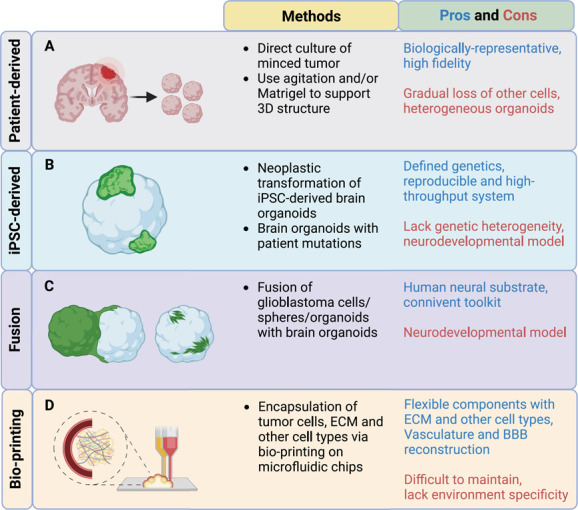
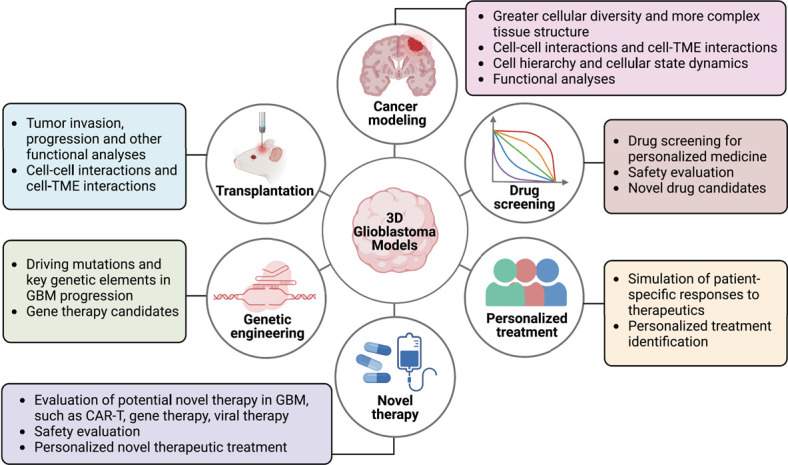
Glioblastoma (GBM) is the most aggressive adult primary brain tumor with nearly universal treatment resistance and recurrence. The mainstay of therapy remains maximal safe surgical resection followed by concurrent radiation therapy and temozolomide chemotherapy. Despite intensive investigation, alternative treatment options, such as immunotherapy or targeted molecular therapy, have yielded limited success to achieve long-term remission. This difficulty is partly due to the lack of pre-clinical models that fully recapitulate the intratumoral and intertumoral heterogeneity of GBM and the complex tumor microenvironment. Recently, GBM 3D organoids originating from resected patient tumors, genetic manipulation of induced pluripotent stem cell (iPSC)-derived brain organoids and bio-printing or fusion with non-malignant tissues have emerged as novel culture systems to portray the biology of GBM. Here, we highlight several methodologies for generating GBM organoids and discuss insights gained using such organoid models compared to classic modeling approaches using cell lines and xenografts. We also outline limitations of current GBM 3D organoids, most notably the difficulty retaining the tumor microenvironment, and discuss current efforts for improvements. Finally, we propose potential applications of organoid models for a deeper mechanistic understanding of GBM and therapeutic development.
Keywords: 3-dimensional; brain tumor; glioblastoma; modeling; organoids.
© The Author(s) 2023. Published by Oxford University Press.
Conflict of interest statement
All authors have no conflict of interests to declare.
Figures
References
-
- Stupp R, Mason WP, van den Bent MJet al. Radiotherapy plus concomitant and adjuvant temozolomide for glioblastoma. N Engl J Med 2005;352:987–96 - PubMed
-
- Stupp R, Hegi ME, Mason WPet al. Effects of radiotherapy with concomitant and adjuvant temozolomide versus radiotherapy alone on survival in glioblastoma in a randomised phase III study: 5-year analysis of the EORTC-NCIC trial. Lancet Oncol 2009;10:459–66 - PubMed
Publication types
LinkOut - more resources
Full Text Sources