


RPL35 downregulated by mechanical overloading promotes chondrocyte senescence and osteoarthritis development via Hedgehog-Gli1 signaling
- PMID: 38596341
- PMCID: PMC11001632
- DOI: 10.1016/j.jot.2024.01.003
RPL35 downregulated by mechanical overloading promotes chondrocyte senescence and osteoarthritis development via Hedgehog-Gli1 signaling
Abstract
Objectives: To investigate the potential role of Ribosomal protein L35 (RPL35) in regulating chondrocyte catabolic metabolism and to examine whether osteoarthritis (OA) progression can be delayed by overexpressing RPL35 in a mouse compression loading model.
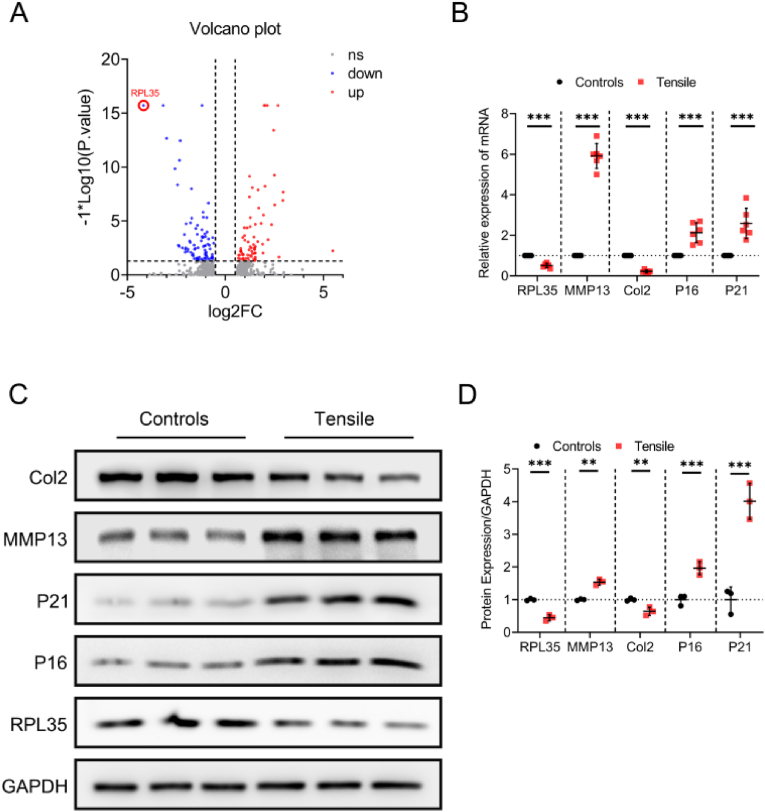
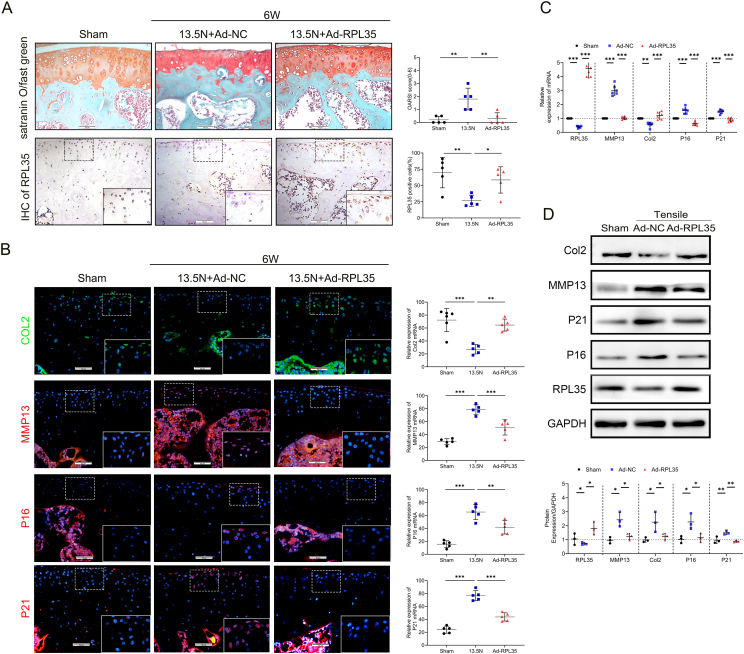
Methods: RNA sequencing analysis was performed on chondrocytes treated with or without 20 % elongation strain loading for 24 h. Experimental OA in mice was induced by destabilization of the medial meniscus and compression loading. Mice were randomly assigned to a sham group, an intra-articular adenovirus-mediated overexpression of the negative group, and an intra-articular adenovirus-mediated overexpression of the RPL35 operated group. The Osteoarthritis Research Society International score was used to evaluate cartilage degeneration. Immunostaining and western blot analyses were conducted to detect relative protein levels. Primary mouse chondrocytes were treated with 20 % elongation strain loading for 24 h to investigate the role of RPL35 in modulating chondrocyte catabolic metabolism and regulating cellular senescence in chondrocytes.
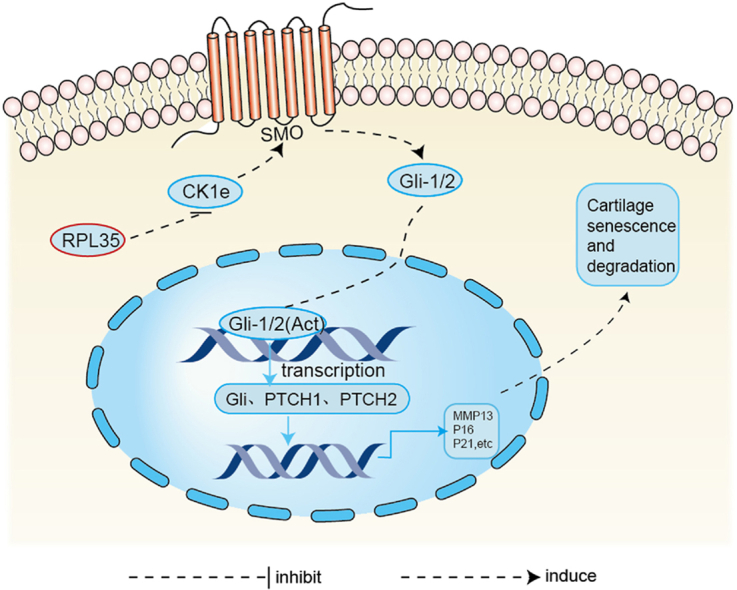
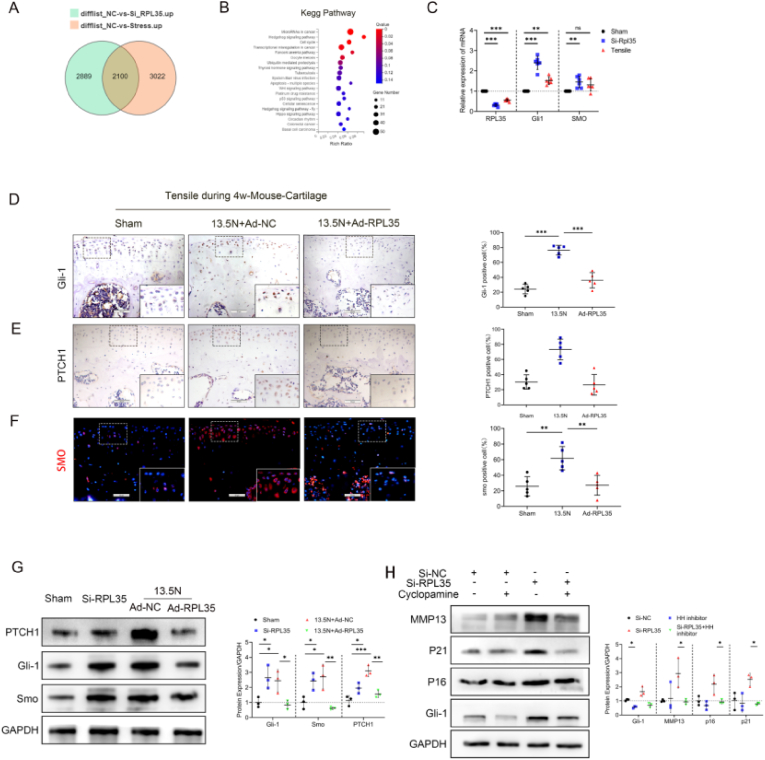
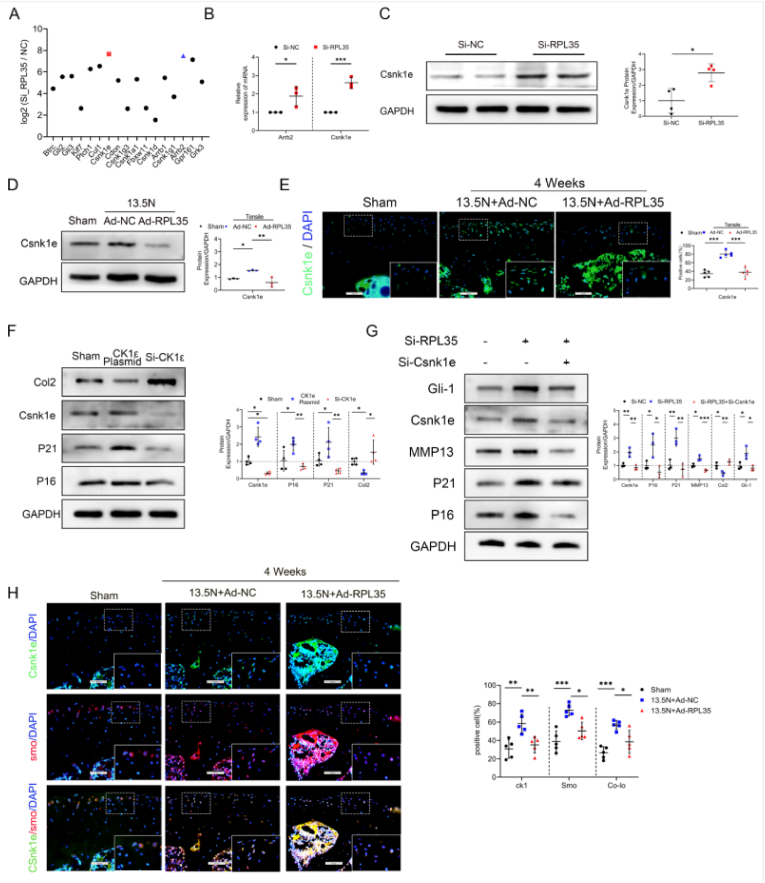
Results: The protein expression of RPL35 in mouse chondrocytes was significantly reduced when excessive mechanical loading was applied, while elevated protein levels of RPL35 protected articular chondrocytes from degeneration. In addition, the RPL35 knockdown alone induced chondrocyte senescence, decreased the expression of anabolic markers, and increased the expression of catabolic markers in vitro in part through the hedgehog (Hh) pathway.
Conclusions: These findings demonstrated a functional pathway important for OA development and identified intra-articular injection of RPL35 as a potential therapy for OA prevention and treatment.
The translational potential of this article: It is necessary to develop new targeted drugs for OA due to the limitations of conventional pharmacotherapy. Our study explores and demonstrates the protective effect of RPL35 against excessive mechanical stress in OA models in vivo and in vitro in animals. These findings might provide novel insights into OA pathogenesis and show its translational potential for OA therapy.
Keywords: Chondrocyte; Hedgehog pathway; Osteoarthritis; Ribosomal protein L35; Senescence.
© 2024 The Authors.
Conflict of interest statement
The authors declare no conflict of interest.
Figures

References
-
- Wang N., Zhang X., Rothrauff B.B., Fritch M.R., Chang A., He Y., et al. Novel role of estrogen receptor-alpha on regulating chondrocyte phenotype and response to mechanical loading. Osteoarthritis Cartilage. 2022;30(2):302–314. - PubMed
-
- Zhang H., Lin C., Zeng C., Wang Z., Wang H., Lu J., et al. Synovial macrophage M1 polarisation exacerbates experimental osteoarthritis partially through R-spondin-2. Ann Rheum Dis. 2018;77(10):1524–1534. - PubMed
-
- Martel-Pelletier J., Barr A.J., Cicuttini F.M., Conaghan P.G., Cooper C., Goldring M.B., et al. Osteoarthritis. Nat Rev Dis Prim. 2016;2 - PubMed
LinkOut - more resources
Full Text Sources
Research Materials
