


Wolbachia-carrying Aedes mosquitoes for preventing dengue infection
- PMID: 38597256
- PMCID: PMC11005084
- DOI: 10.1002/14651858.CD015636.pub2
Wolbachia-carrying Aedes mosquitoes for preventing dengue infection
Abstract
Background: Dengue is a global health problem of high significance, with 3.9 billion people at risk of infection. The geographic expansion of dengue virus (DENV) infection has resulted in increased frequency and severity of the disease, and the number of deaths has increased in recent years. Wolbachia,an intracellular bacterial endosymbiont, has been under investigation for several years as a novel dengue-control strategy. Some dengue vectors (Aedes mosquitoes) can be transinfected with specific strains of Wolbachia, which decreases their fitness (ability to survive and mate) and their ability to reproduce, inhibiting the replication of dengue. Both laboratory and field studies have demonstrated the potential effect of Wolbachia deployments on reducing dengue transmission, and modelling studies have suggested that this may be a self-sustaining strategy for dengue prevention, although long-term effects are yet to be elucidated.
Objectives: To assess the efficacy of Wolbachia-carrying Aedes speciesdeployments (specifically wMel-, wMelPop-, and wAlbB- strains of Wolbachia) for preventing dengue virus infection.
Search methods: We searched CENTRAL, MEDLINE, Embase, four other databases, and two trial registries up to 24 January 2024.
Selection criteria: Randomized controlled trials (RCTs), including cluster-randomized controlled trials (cRCTs), conducted in dengue endemic or epidemic-prone settings were eligible. We sought studies that investigated the impact of Wolbachia-carrying Aedes deployments on epidemiological or entomological dengue-related outcomes, utilizing either the population replacement or population suppression strategy.
Data collection and analysis: Two review authors independently selected eligible studies, extracted data, and assessed the risk of bias using the Cochrane RoB 2 tool. We used odds ratios (OR) with the corresponding 95% confidence intervals (CI) as the effect measure for dichotomous outcomes. For count/rate outcomes, we planned to use the rate ratio with 95% CI as the effect measure. We used adjusted measures of effect for cRCTs. We assessed the certainty of evidence using GRADE.
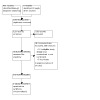
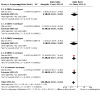
Main results: One completed cRCT met our inclusion criteria, and we identified two further ongoing cRCTs. The included trial was conducted in an urban setting in Yogyakarta, Indonesia. It utilized a nested test-negative study design, whereby all participants aged three to 45 years who presented at healthcare centres with a fever were enrolled in the study provided they had resided in the study area for the previous 10 nights. The trial showed that wMel-Wolbachia infected Ae aegypti deployments probably reduce the odds of contracting virologically confirmed dengue by 77% (OR 0.23, 95% CI 0.15 to 0.35; 1 trial, 6306 participants; moderate-certainty evidence). The cluster-level prevalence of wMel Wolbachia-carrying mosquitoes remained high over two years in the intervention arm of the trial, reported as 95.8% (interquartile range 91.5 to 97.8) across 27 months in clusters receiving wMel-Wolbachia Ae aegypti deployments, but there were no reliable comparative data for this outcome. Other primary outcomes were the incidence of virologically confirmed dengue, the prevalence of dengue ribonucleic acid in the mosquito population, and mosquito density, but there were no data for these outcomes. Additionally, there were no data on adverse events.
Authors' conclusions: The included trial demonstrates the potential significant impact of wMel-Wolbachia-carrying Ae aegypti mosquitoes on preventing dengue infection in an endemic setting, and supports evidence reported in non-randomized and uncontrolled studies. Further trials across a greater diversity of settings are required to confirm whether these findings apply to other locations and country settings, and greater reporting of acceptability and cost are important.
Copyright © 2024 The Authors. Cochrane Database of Systematic Reviews published by John Wiley & Sons, Ltd. on behalf of The Cochrane Collaboration.
Conflict of interest statement
TF is a Cochrane Infectious Diseases Group (CIDG) Research Associate, and was not involved in the editorial process. She has no known conflicts of interest to declare.
YS works as a systematic reviewer for Cochrane Response, an evidence services unit operated by Cochrane, and was not involved in the editorial process. She has no known conflicts of interest to declare.
IAR has been an employee of the Cochrane Central Executive Team (Cochrane Response/Evidence, Production & Methods Directorate) since 2021, and was not involved in the editorial process. She has no known conflicts of interest to declare.
WR has no known conflicts of interest to declare.
MC is a CIDG Editor, and was not involved in the editorial process. She has no known conflicts of interest to declare.
DD has no known conflicts of interest to declare.
GV works as senior systematic reviewer for Cochrane Response, an evidence services unit operated by Cochrane, and was not involved in the editorial process. She has no known conflicts of interest to declare.
YS, IAR, and GV were contracted by the World Health Organization (WHO) to conduct a systematic review on
Figures
Update of
References
References to studies included in this review
Utarini 2021 {published data only}
-
- Anders KL, Indriani C, Ahmad RA, Tantowijoyo W, Arguni E, Andari B, et al. The AWED trial (Applying Wolbachia to Eliminate Dengue) to assess the efficacy of Wolbachia-infected mosquito deployments to reduce dengue incidence in Yogyakarta, Indonesia: study protocol for a cluster-randomized controlled trial. BMC Trials 2018;19(1):302. - PMC - PubMed
References to studies excluded from this review
Gesto 2021 {published data only}
Lozano 2022 {published data only}
Lwin 2022 {published data only}
Mains 2016 {published data only}
Nazni 2019 {published data only}
NCT03631719 {published data only}
-
- NCT03631719. Impact of Wolbachia deployment on arboviral disease incidence in Medellin and Bello, Colombia [World Mosquito Program – Colombia (WMP-COLOMBIA): the impact of city-wide deployment of Wolbachia-infected mosquitoes on arboviral disease incidence in Medellin and Bello, Colombia]. clinicaltrials.gov/study/NCT03631719 (first received 15 August 2018).
Nguyen 2015 {published data only}
Ribeiro dos Santos 2022 {published data only}
References to ongoing studies
Collins 2022 {published data only}
-
- NCT04514107. A cluster-randomized trial to EValuate the Efficacy of Wolbachia-InfecTed Aedes aegypti mosquitoes in reducing the incidence of arboviral infection in Brazil (EVITA Dengue). clinicaltrials.gov/study/NCT04514107 (first received 14 August 2020).
Ong 2022 {published data only}
-
- NCT05505682. Impact of Project Wolbachia – Singapore on dengue incidence [Assessing the efficacy of male Wolbachia-infected mosquito deployments to reduce dengue incidence in Singapore: a cluster randomized controlled trial]. clinicaltrials.gov/study/NCT05505682 (first received 18 August 2022). - PMC - PubMed
Additional references
Alexander 2011
-
- Alexander N, Balmaseda A, Coelho IC, Dimaano E, Hien TT, Hung NT, et al. Multicentre prospective study on dengue classification in four South-east Asian and three Latin American countries. Tropical Medicine & International Health 2011;16(8):936-48. - PubMed
Bhatt 2013
Bian 2010
Bian 2013
Blagrove 2013
Bourtzis 2014
-
- Bourtzis K, Dobson S, Xi Z, Rasgon J, Calvitti M, Moreira L, et al. Harnessing mosquito–Wolbachia symbiosis for vector and disease control. Acta Tropica 2014;132:S150-63. - PubMed
Brownstein 2003
-
- Brownstein JS, Hett E, O'Neill SL. The potential of virulent Wolbachia to modulate disease transmission by insects. Journal of Invertebrate Pathology 2003;84:24-9. - PubMed
Cavany 2022
-
- Cavany S. AWED trial modelling. github.com/scavany/awed_trial_modeling/ (accessed 12 January 2024).
Cavany 2023
CDC 2021
-
- Centers for Disease Control and Prevention. Dengue: symptoms and treatment (updated September 2021). www.cdc.gov/dengue/symptoms/index.html (accessed 25 August 2022).
CDC 2022
-
- Centers for Disease Control and Prevention. Mosquitoes with Wolbachia for reducing numbers of Aedes aegypti mosquitoes (updated July 2022). www.cdc.gov/mosquitoes/mosquito-control/community/emerging-methods/wolba... (accessed 17 January 2023).
CDC 2023
-
- Centers for Disease Control and Prevention. Dengue around the world. www.cdc.gov/dengue/areaswithrisk/around-the-world.html (accessed 26 March 2024).
Cochrane Response 2021
-
- Henschke N, Villanueva G, Arévalo Rodriguez I, Cogo E, Hamel C, Petkovic J, et al. Systematic review on wMel Wolbachia-carrying mosquitoes for the biocontrol of dengue virus infection. Cochrane Response 2021.
Dorigatti 2018
Hadinegoro 2015
-
- Hadinegoro SR, Arredondo-García JL, Capeding MR, Deseda C, Chotpitayasunondh T, Dietze R, et al. Efficacy and long-term safety of a dengue vaccine in regions of endemic disease. New England Journal of Medicine 2015;373(13):1195-206. - PubMed
Higgins 2022
-
- Higgins JP, Thomas J, Chandler J, Cumpston M, Li T, Page MJ, Welch VA, editor(s). Cochrane Handbook for Systematic Reviews of Interventions Version 6.3 (updated February 2022). Cochrane, 2022. Available from training.cochrane.org/handbook/archive/v6.3.
Hilgenboecker 2008
Hughes 2014
Jansen 2010
-
- Jansen CC, Beebe NW. The dengue vector Aedes aegypti: what comes next. Microbes and Infection 2010;12(4):272-9. - PubMed
Johnson 2015
Knerer 2020
McMeniman 2009
-
- McMeniman CJ, Lane RV, Cass BN, Fong AW, Sidhu M, Wang YF, et al. Stable introduction of a life-shortening Wolbachia infection into the mosquito Aedes aegypti. Science 2009;323(5910):141-4. - PubMed
Min 1997
Monath 2002
-
- Monath TP, McCarthy K, Bedford P, Johnson CT, Nichols R, Yoksan S, et al. Clinical proof of principle for ChimeriVax: recombinant live, attenuated vaccines against flavivirus infections. Vaccine 2002;15(20):7-8. - PubMed
Moreira 2009
-
- Moreira LA, Iturbe-Ormaetxe I, Jeffery JA, Lu G, Pyke AT, Hedges LM, et al. A Wolbachia symbiont in Aedes aegypti limits infection with dengue, chikungunya, and Plasmodium. Cell 2009;139(7):1268-78. - PubMed
Moyes 2017
NEA 2022
-
- National Environment Agency. Wolbachia-Aedes mosquito suppression strategy (updated November 2022). www.nea.gov.sg/corporate-functions/resources/research/wolbachia-aedes-mo... (accessed 17 January 2023).
Nordin 2022
-
- Nordin NR, Arsad FS, Mahmud MH, Kamaruddin PS, Amir SM, Bahari NI, et al. Wolbachia in dengue control: a systematic review. Open Access Macedonian Journal of Medical Sciences 2022;10(F):501-12.
O'Neill 2018
Pinto 2021
-
- Pinto S, Riback T, Sylvestre G, Costa G, Peixoto J Dias F, et al. Effectiveness of Wolbachia-infected mosquito deployments in reducing the incidence of dengue and other Aedes-borne diseases in Niterói, Brazil: a quasi-experimental study. PLOS Neglected Tropical Diseases 2021;15(7):e0009556. - PMC - PubMed
Rainey 2014
-
- Rainey S, Shah P, Kohl A, Dietrich I. Understanding the Wolbachia-mediated inhibition of arboviruses in mosquitoes: progress and challenges. Journal of General Virology 2014;95(3):517-30. - PubMed
Rasgon 2003
-
- Rasgon JL, Styer LM, Scott TW. Wolbachia-induced mortality as a mechanism to modulate pathogen transmission by vector arthropods. Journal of Medical Entomology 2003;40:125-32. - PubMed
Reich 2013
RevMan 2023 [Computer program]
-
- Review Manager (RevMan). Version 5.6.0. The Cochrane Collaboration, 2023. Available at revman.cochrane.org.
Ritchie 2021
-
- Ritchie SA, Devine GJ, Vazquez-Prokopec GM, Lenhart AE, Manrique-Saide P, Scott TW. Insecticide-based approaches for dengue vector control. In: Koenraadt CJ, Spitzen J, Takken W, editors(s). Innovative Strategies for Vector Control. Wageningen (the Netherlands): Wageningen Academic Publishers, 2021:59-89.
Ross 2022
Ryan 2019
Soh 2021
Sterne 2019
-
- Sterne JA, Savović J, Page MJ, Elbers RG, Blencowe NS, Boutron I, et al. RoB 2: a revised tool for assessing risk of bias in randomized trials. BMJ 2019;366:l4898. - PubMed
Walker 2011
-
- Walker T, Johnson PH, Moreira LA, Iturbe-Ormaetxe I, Frentiu FD, McMeniman CJ, et al. The wMel Wolbachia strain blocks dengue and invades caged Aedes aegypti populations. Nature 2011;476(7361):450-3. - PubMed
Wellcome 2022
-
- Wellcome. Trials of Wolbachia-carrying mosquitoes scaled up in South America. wellcome.org/news/trials-wolbachia-carrying-mosquitoes-scaled-south-america (accessed 17 January 2023).
Werren 1997
-
- Werren J, O'Neill S. The evolution of heritable symbionts. In: O'Neill SL, Hoffmann AA, Werren JH, editors(s). Influential Passengers. Oxford (UK): Oxford University Press, 1997.
WHO 2009
-
- World Health Organization. Dengue: guidelines for diagnosis, treatment, prevention and control. apps.who.int/iris/handle/10665/44188 (accessed 1 September 2022).
WHO 2012
-
- World Health Organization. Global strategy for dengue prevention and control 2012–2020. apps.who.int/iris/bitstream/handle/10665/75303/9789241504034_eng.pdf (accessed 1 September 2022).
WHO 2018
-
- World Health Organization. Vaccine and immunization: dengue. who.int/news-room/questions-and-answers/item/dengue-vaccines (accessed 15 July 2022).
WHO 2022a
-
- World Health Organization. Dengue and severe dengue. who.int/news-room/fact-sheets/detail/dengue-and-severe-dengue (accessed 1 September 2022).
WHO 2022b
-
- World Health Organization. Global Vector Control Response Panel. who.int/news/item/11-04-2022-genuine-intersectoral-collaboration-is-need... (accessed 13 July 2022).
Wilder‐Smith 2019
-
- Wilder-Smith A, Flasche S, Smith PG. Vaccine-attributable severe dengue in the Philippines. Lancet Correspondence 2019;394(10215):2151-2. - PubMed
Yang 2021
-
- Yang X, Quam MB, Zhang T, Sang S. Global burden for dengue and the evolving pattern in the past 30 years. Journal of Travel Medicine 2021;28(8):146. - PubMed
Yen 1971
-
- Yen J, Barr R. New hypothesis of the cause of cytoplasmic incompatibility in Culex pipiens. Nature 1971;232:657-58. - PubMed
References to other published versions of this review
Publication types
MeSH terms
LinkOut - more resources
Full Text Sources
Medical
Miscellaneous
