


Risk of infection with arboviruses in a healthy population in Pakistan based on seroprevalence
- PMID: 38599520
- PMCID: PMC11279719
- DOI: 10.1016/j.virs.2024.04.001
Risk of infection with arboviruses in a healthy population in Pakistan based on seroprevalence
Abstract
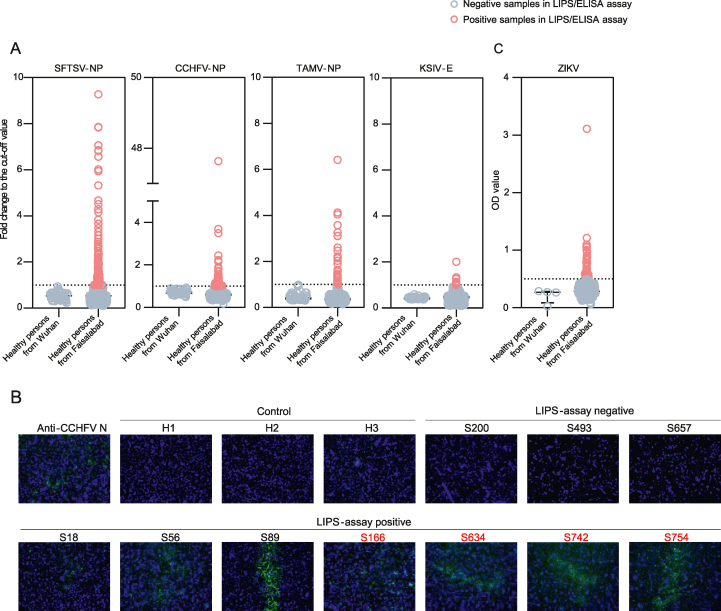
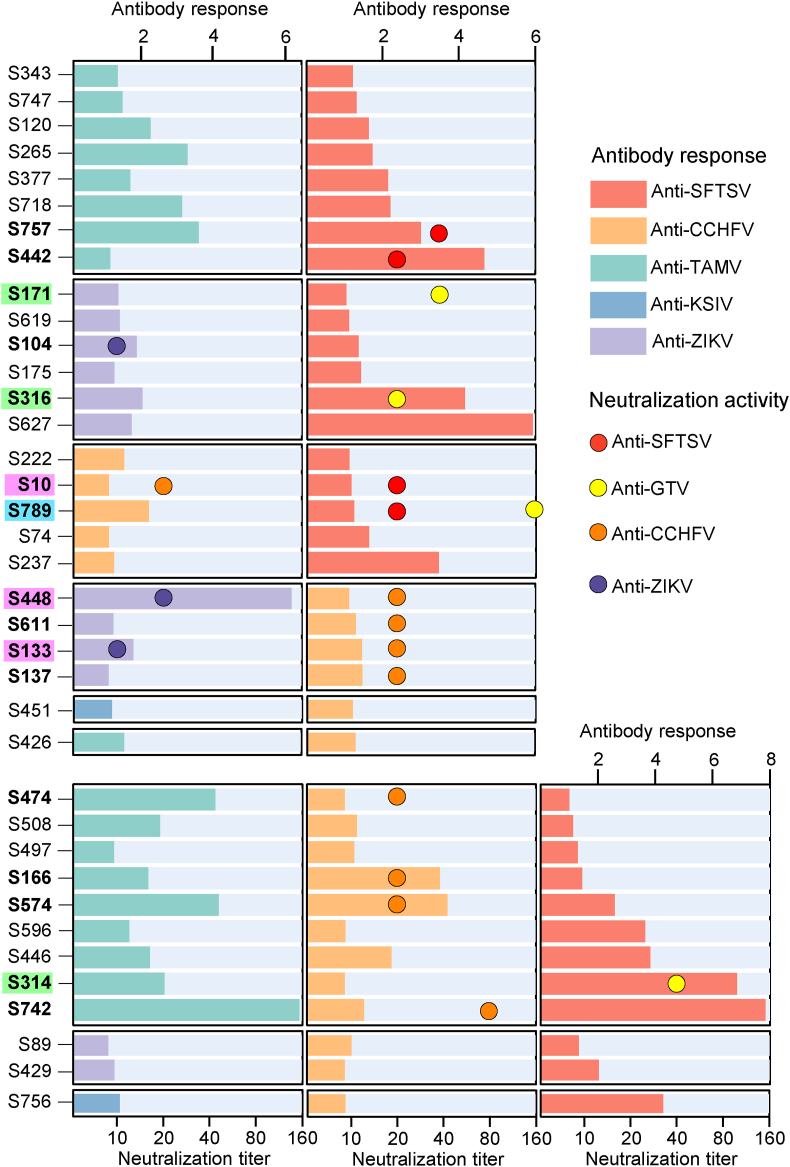
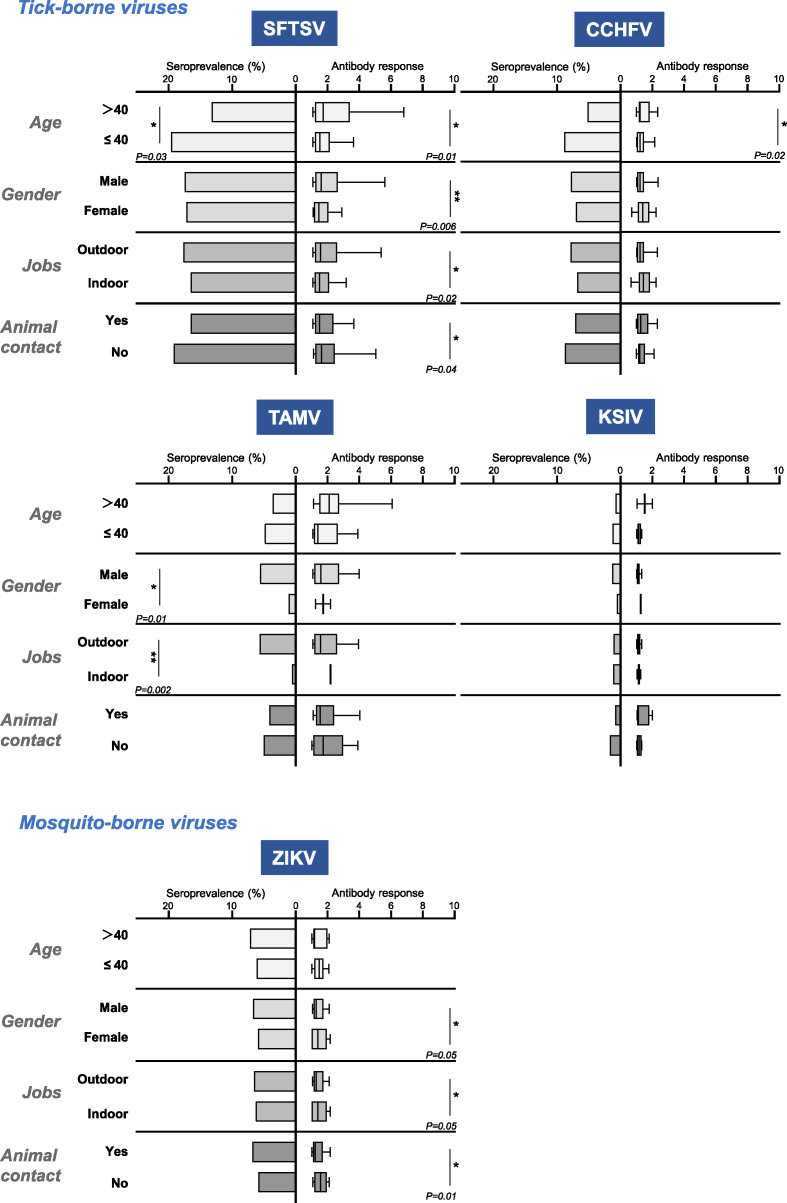
Infectious diseases caused by arboviruses are a public health concern in Pakistan. However, studies on data prevalence and threats posed by arboviruses are limited. This study investigated the seroprevalence of arboviruses in a healthy population in Pakistan, including severe fever with thrombocytopenia syndrome virus (SFTSV), Crimean-Congo hemorrhagic fever virus (CCHFV), Tamdy virus (TAMV), and Karshi virus (KSIV) based on a newly established luciferase immunoprecipitation system (LIPS) assays, and Zika virus (ZIKV) by enzyme-linked immunosorbent assays (ELISA). Neutralizing activities against these arboviruses were further examined from the antibody positive samples. The results showed that the seroprevalence of SFTSV, CCHFV, TAMV, KSIV, and ZIKV was 17.37%, 7.58%, 4.41%, 1.10%, and 6.48%, respectively, and neutralizing to SFTSV (1.79%), CCHFV (2.62%), and ZIKV (0.69%) were identified, as well as to the SFTSV-related Guertu virus (GTV, 0.83%). Risk factors associated with the incidence of exposure and levels of antibody response were analyzed. Moreover, co-exposure to different arboviruses was demonstrated, as thirty-seven individuals were having antibodies against multiple viruses and thirteen showed neutralizing activity. Males, individuals aged ≤40 years, and outdoor workers had a high risk of exposure to arboviruses. All these results reveal the substantial risks of infection with arboviruses in Pakistan, and indicate the threat from co-exposure to multiple arboviruses. The findings raise the need for further epidemiologic investigation in expanded regions and populations and the necessity to improve health surveillance in Pakistan.
Keywords: Arbovirus; Mosquito-borne virus; Pakistan; Seroprevalence; Tick-borne virus.
Copyright © 2024 The Authors. Publishing services by Elsevier B.V. All rights reserved.
Conflict of interest statement
Conflict of interest Professor Fei Deng and Professor Bo Zhang are editorial board members for Virologica Sinica and were not involved in the editorial review or the decision to publish this article. All authors declare that there are no competing interests.
Figures
References
-
- Begum F., Wisseman Cl J., Casals J. Tick-borne viruses of West Pakistan. 3. Dera Ghazi Khan virus, a new agent isolated from Hyalomma dromedarii ticks in the D. G. Khan District of West Pakistan. Am. J. Epidemiol. 1970;92(3):195–196. - PubMed
MeSH terms
Substances
LinkOut - more resources
Full Text Sources
