. 2024 Apr 10;7(1):435.
doi: 10.1038/s42003-024-06091-y.

Genetic associations of risk behaviours and educational achievement

Affiliations

Genetic associations of risk behaviours and educational achievement

Michelle Arellano Spano et al. Commun Biol. .

Abstract

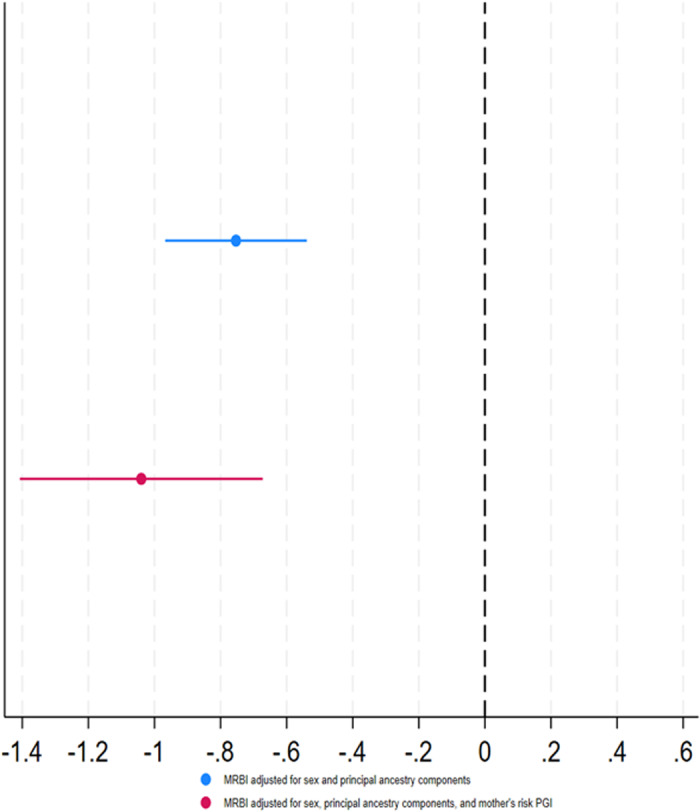
Risk behaviours are common in adolescent and persist into adulthood, people who engage in more risk behaviours are more likely to have lower educational attainment. We applied genetic causal inference methods to explore the causal relationship between adolescent risk behaviours and educational achievement. Risk behaviours were phenotypically associated with educational achievement at age 16 after adjusting for confounders (-0.11, 95%CI: -0.11, -0.09). Genomic-based restricted maximum likelihood (GREML) results indicated that both traits were heritable and have a shared genetic architecture (Risk h 2 = 0.18, 95% CI: -0.11,0.47; education h 2 = 0.60, 95%CI: 0.50,0.70). Consistent with the phenotypic results, genetic variation associated with risk behaviour was negatively associated with education ( r g = -0.51, 95%CI: -1.04,0.02). Lastly, the bidirectional MR results indicate that educational achievement or a closely related trait is likely to affect risk behaviours PGI (β=-1.04, 95% CI: -1.41, -0.67), but we found little evidence that the genetic variation associated with risk behaviours affected educational achievement (β=0.00, 95% CI: -0.24,0.24). The results suggest engagement in risk behaviour may be partly driven by educational achievement or a closely related trait.


Conflict of interest statement

The authors declare no competing interests.

Figures
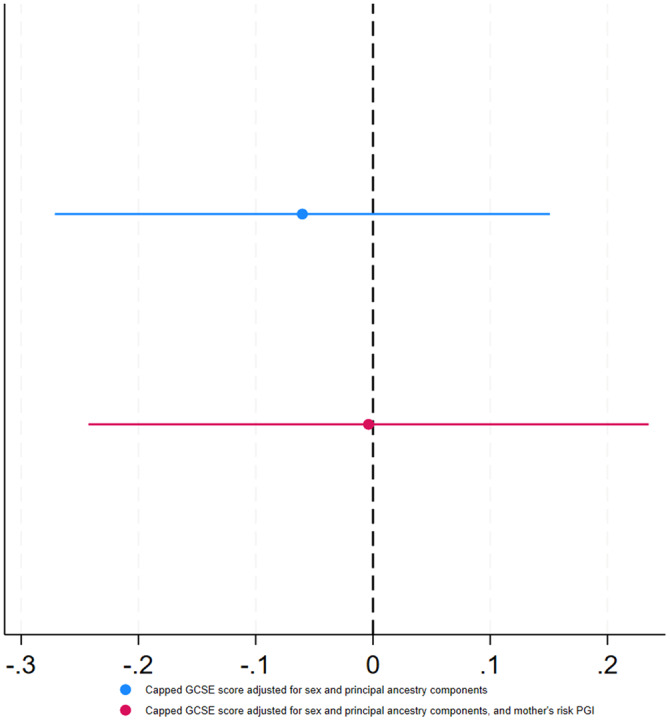
Fig. 1
Fig. 1. Association between the young person’s genetically instrumented MRB Index and their educational achievement.
Error bars represent the 95% confidence intervals.
Fig. 2
Fig. 2. Association between young people’s genetically instrumented educational achievement (capped GCSE score, standardised) and their MRB index.
Error bars represent the 95% confidence intervals.
Fig. 3
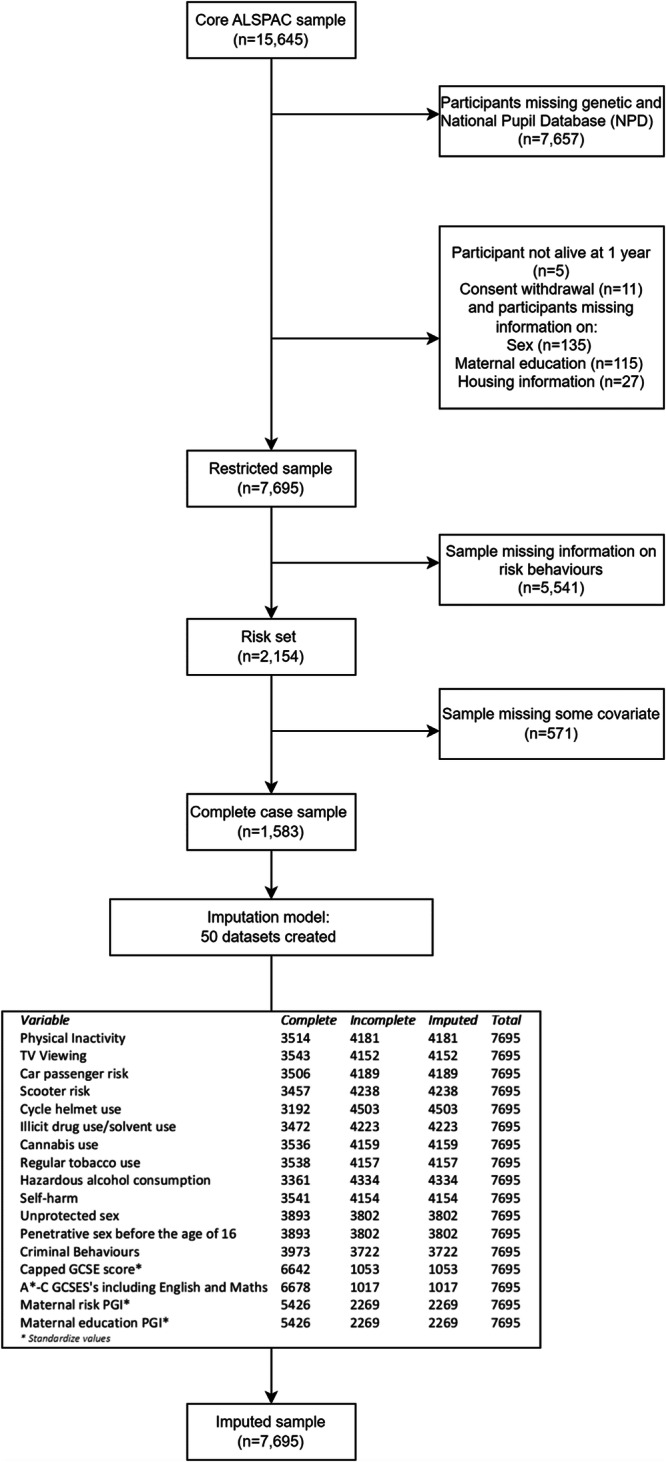
Fig. 3. STROBE diagram.
The diagram describes the selection of the complete case sample and the imputed sample.
Fig. 4
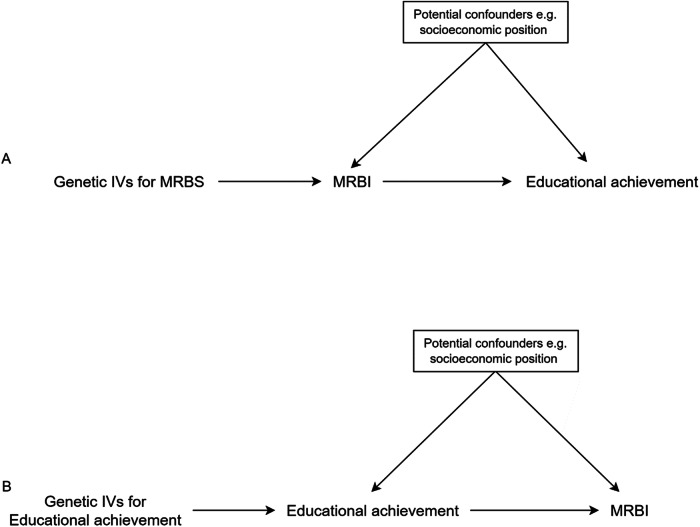
Fig. 4. Directed acyclic graph of a bidirectional MR presenting the relationship between the MRB Index and educational achievement.
Panel A depicts the relationship between the MRB index and educational achievement, while Panel B illustrates the bidirectional association between educational achievement and the MRB index. PGI refers to polygenic index and MRBI stands for multiple risk behaviour index.

References

    1. Teh, C. H. et al. Clustering of lifestyle risk behaviours and its determinants among school-going adolescents in a middle-income country: a cross-sectional study. BMC Public Health19, 1177 (2019). - PMC - PubMed
    1. Viner RM, et al. Adolescence and the social determinants of health. Lancet. 2012;379:1641–1652. doi: 10.1016/S0140-6736(12)60149-4. - DOI - PubMed
    1. Strawbridge RJ, et al. Genome-wide analysis of self-reported risk-taking behaviour and cross-disorder genetic correlations in the UK Biobank cohort. Transl. Psychiatry. 2018;8:1–11. doi: 10.1038/s41398-017-0079-1. - DOI - PMC - PubMed
    1. Wright C, Kipping R, Hickman M, Campbell R, Heron J. Effect of multiple risk behaviours in adolescence on educational attainment at age 16 years: a UK birth cohort study. BMJ Open. 2018;8:e020182. doi: 10.1136/bmjopen-2017-020182. - DOI - PMC - PubMed
    1. Meader N, et al. A systematic review on the clustering and co-occurrence of multiple risk behaviours. BMC Public Health. 2016;16:1–9. doi: 10.1186/s12889-016-3373-6. - DOI - PMC - PubMed

Publication types