


Cuproptosis in stroke: focusing on pathogenesis and treatment
- PMID: 38605864
- PMCID: PMC11007218
- DOI: 10.3389/fnmol.2024.1349123
Cuproptosis in stroke: focusing on pathogenesis and treatment
Abstract
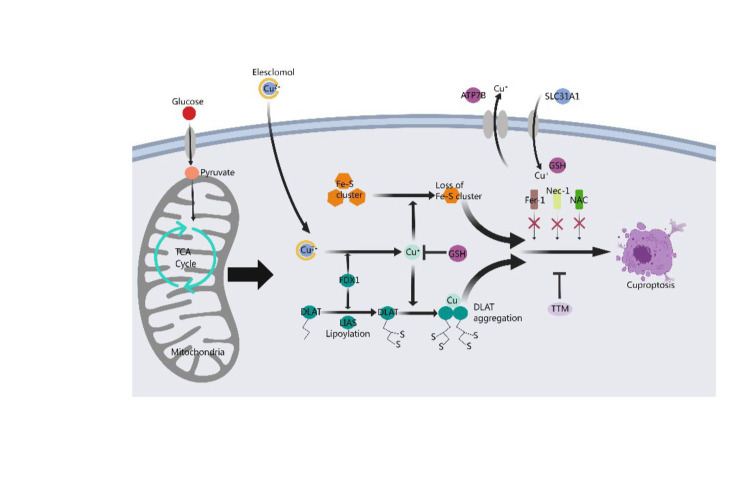
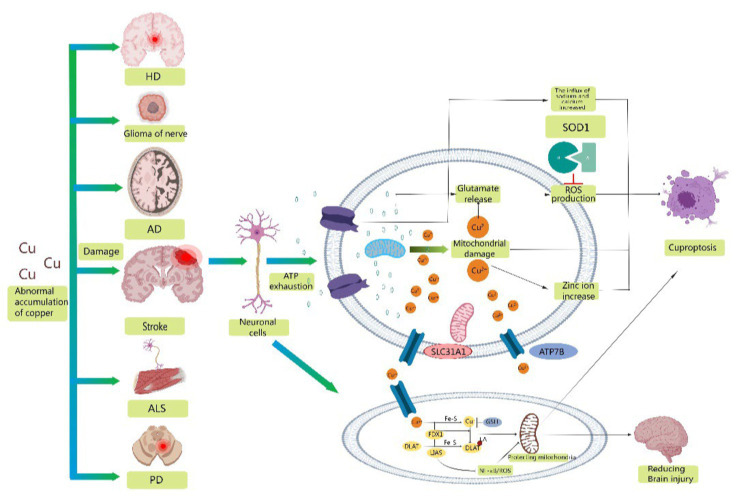
Annually, more than 15 million people worldwide suffer from stroke, a condition linked to high mortality and disability rates. This disease significantly affects daily life, impairing everyday functioning, executive function, and cognition. Moreover, stroke severely restricts patients' ability to perform daily activities, diminishing their overall quality of life. Recent scientific studies have identified cuproptosis, a newly discovered form of cell death, as a key factor in stroke development. However, the role of cuproptosis in stroke remains unclear to researchers. Therefore, it is crucial to investigate the mechanisms of cuproptosis in stroke's pathogenesis. This review examines the physiological role of copper, the characteristics and mechanisms of cuproptosis, the differences and similarities between cuproptosis and other cell death types, and the pathophysiology of cuproptosis in stroke, focusing on mitochondrial dysfunction and immune infiltration. Further research is necessary to understand the relationship between previous strokes and cuproptosis and to clarify the mechanisms behind these associations.
Keywords: cuproptosis; mechanism; pathogenesis; stroke; treatment.
Copyright © 2024 Xing, Wang, Hao, Pan, Yang and Wang.
Conflict of interest statement
The authors declare that the research was conducted in the absence of any commercial or financial relationships that could be construed as a potential conflict of interest.
Figures
References
Publication types
LinkOut - more resources
Full Text Sources
